• Skip to main content
  • Skip to primary sidebar

Flourish Tips & Tricks

Necklaces

How to Get Hair Out of Necklace Chain

February 14, 2024 by Meheran96 Leave a Comment

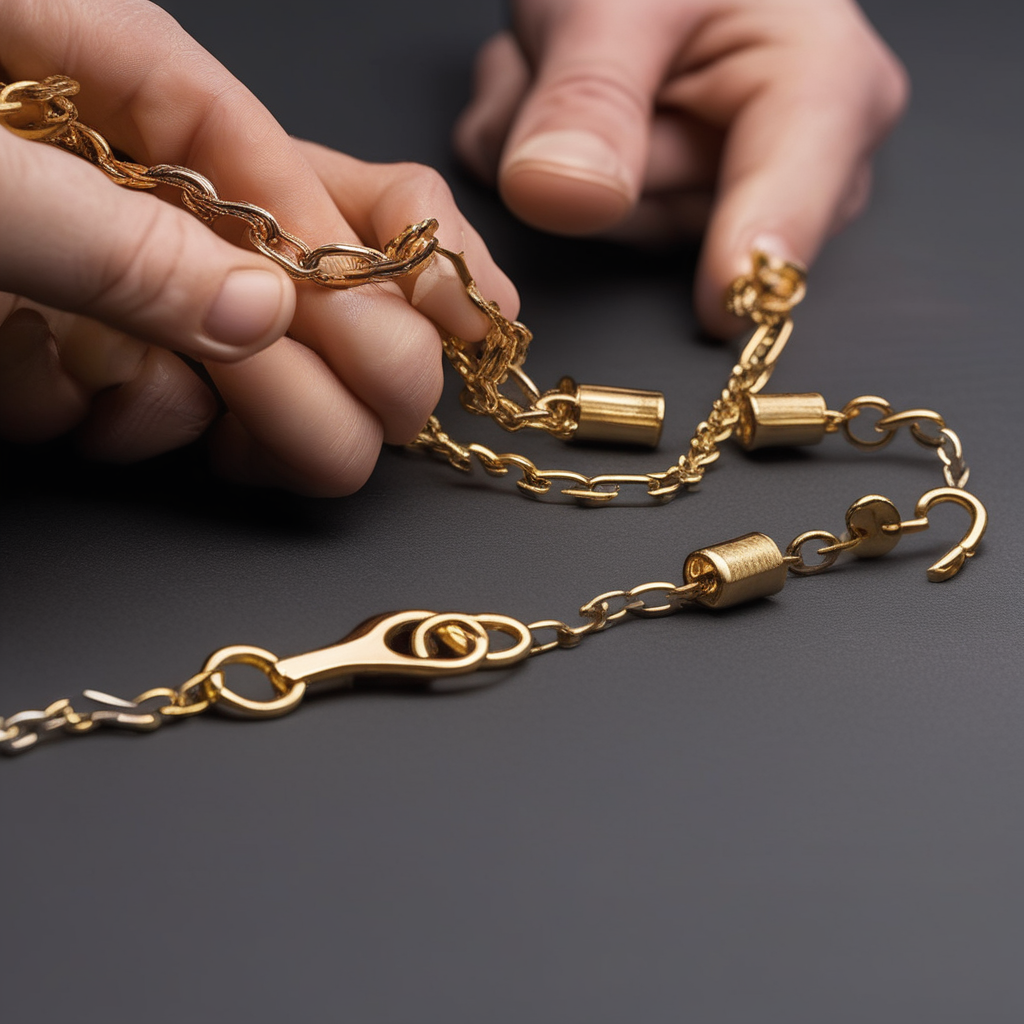
Nestled between precious gems or intertwined within the intricate mesh of gold and silver, tresses of hair often find their way into the delicate links of necklace chains. Despite the radiance of these adornments, the stubborn strands of hair, once entangled, can mar their beauty, diminishing their luster and elegance. The task of eliminating these unwelcome intrusions, although seemingly daunting, can be accomplished with a few strategic steps and the right tools.

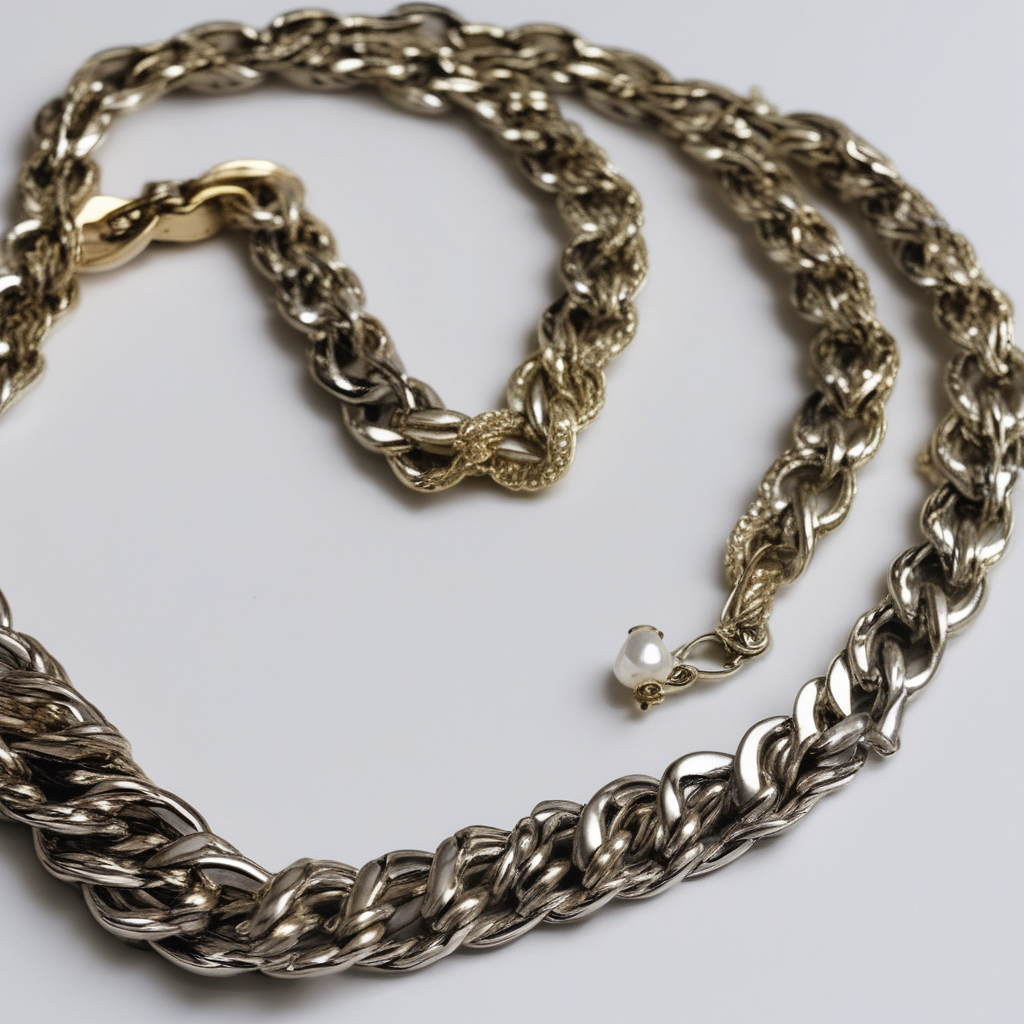
Imagine a serene Sunday afternoon, the sunlight casting a warm glow on the beloved necklace resting on the table. It’s a cherished piece, a symbol of a significant memory, or perhaps a treasured inheritance. But there, within the delicate intricacies of the chain, lie entwined strands of hair. Their presence tarnishes the necklace’s aesthetic appeal, turning the once-sparkling accessory into a less appealing version of its former self. This scene sets the stage for a journey, a step-by-step guide to navigate the delicate process of removing hair from a necklace chain. The mission is to restore the necklace to its original, captivating beauty.
Gather Your Supplies

Begin by assembling tools such as toothpicks, tweezers, baby oil, vinegar, and a soft cloth. This eclectic collection is essential for the intricate task ahead. Moving on, an understanding of the appropriate cleaning solutions is paramount; baby oil and vinegar provide gentle, effective options. Finally, preparing a workspace that is clean and clutter-free ensures a streamlined process and safeguards against potential damage or misplacement of items. A well-prepared workspace echoes the professionalism of the task, setting the stage for a successful cleaning endeavor.

Gather Toothpicks, Tweezers, Baby Oil, Vinegar, and a Soft Cloth

Transitioning from the fundamental understanding of why cleanliness is essential, let’s now embark on the enjoyable journey of gathering the necessary supplies. The first stage of preparation demands the collection of some seemingly ordinary items: toothpicks, tweezers, baby oil, vinegar, and a soft cloth. Each of these items, although commonplace in every household, will serve a specific purpose in the cleaning process.

Imagine an array of toothpicks, their sharp ends pointing towards the sky, ready to dig into those hard-to-reach corners and crevices. Equally useful, tweezers stand by, their slender arms prepared to pick up minute particles that resist capture by ordinary means. Then, there’s baby oil—a glossy liquid that not only cleans but also imparts a lustrous shine to the objects.

In contrast to the oil’s sleek shine, vinegar offers its powerful cleansing properties, ready to cut through stubborn grime and deposits. Last but certainly not least, envision a soft cloth, its plush texture ready to wipe away all that the toothpicks, tweezers, oil, and vinegar have loosened. Gathering these supplies marks the first practical step in the cleaning process, a step that brings you one step closer to immaculate items that gleam with cleanliness.

Selecting Appropriate Cleaning Solutions

Transitioning smoothly from the initial gathering of necessary tools, the focus now shifts towards selecting the appropriate cleaning solutions. A crucial step in the process, it ensures the effective and safe cleaning of the item, protecting it from potential damage.

Imagine a plethora of cleaning solutions, each designed for a specific purpose, lined up on a shelf. The sight can be overwhelming, but fear not. Begin with the basics: baby oil and vinegar. Baby oil, mild and gentle, proves excellent for cleaning sensitive surfaces without causing harm. Its slick nature allows it to seep into tiny crevices, loosening accumulated grime.

On the other hand, vinegar, a natural disinfectant, excels at removing stubborn stains and killing bacteria. Its acidic properties make it a formidable cleaner, capable of dissolving mineral deposits and polishing surfaces to a gleam. However, caution must be exercised when using vinegar due to its potentially corrosive effect on certain materials.

The selection of cleaning solutions, though seemingly straightforward, plays a pivotal role in the cleaning process. The wrong choice could result in irreparable damage, highlighting the importance of thoughtfulness in this decision. With the right tools and solutions at hand, the stage is now set for preparing a clean workspace.

Preparing a Clean Workspace

Embracing the tranquility that comes from a well-organized space, let the focus now shift to preparing a clean workspace. Imagine a sanctuary, free from distractions, where each item has its place and purpose.

Begin by selecting a flat, stable surface that is spacious enough to accommodate the necessary supplies. A broad table, preferably of a non-porous material, would serve admirably. The chosen locale should be well-lit, allowing for a clear, unobstructed view of the task at hand.

Next, clear the space of any unnecessary items. Clutter can be an impediment to productivity and efficiency, so ensure that only the tools needed for the task remain. Toothpicks, tweezers, baby oil, vinegar, and a soft cloth should find their place in this workspace, each within easy reach.

Cleanliness remains paramount. Clean the chosen workspace using a mild, non-abrasive cleaner, wiping it down until it gleams. Any dirt or dust can interfere with the cleaning process, so meticulousness at this stage will pay off later.

Lastly, arrange the supplies in a manner that suits the workflow. A logical, intuitive layout can streamline the process, increasing efficiency and reducing the chance of mistakes.

Lay Out the Necklace

Having gently placed the necklace on a pristine surface, the focus shifts to identifying the precise area entangled with stray hairs. This careful scrutiny necessitates a well-illuminated space, ensuring no knot goes unnoticed. Once located, the necklace is then repositioned on the flat surface, arranged in such a way that allows for meticulous untangling. This systematic approach significantly aids in preserving the jewelry’s integrity while attempting to free it from hair’s clutches.

Lay the Necklace Flat on a Clean Surface

Transitioning from the preparatory stage of gathering supplies, the heart starts to flutter with anticipation at the prospect of restoring the beloved necklace to its original glory.

A clean, flat surface is of utmost importance. An immaculate table, perhaps, or a large ceramic tile bathed in soft, natural light, proves ideal. The surface, gleaming under the soft rays of sunlight, serves as a sterile stage for the delicate operation.

The necklace, shimmering with hidden beauty beneath the entanglement, is laid out with a gentleness that mirrors the affection it symbolizes. Its slender chain, now marred by clumps of hair, spreads out like a river of gold, its course disrupted by unsightly debris. The pendant, perhaps a heart or a tiny locket, rests beside it, dulled by the unsettling mess.

The fingers, steadied by a sense of purpose, laid the necklace down. The intricate patterns and delicate links of this precious adornment are now spread out, ready for their transformation. The necklace, lying flat, seems to breathe a sigh of relief, ready for the tender ministrations that will restore its former luster.

In the quiet room, the stage is set, the necklace is laid out, and the journey of restoration is ready to commence.

Finding the Area with Hair Entangled

Transitioning from the preparation stage, the task now enters a more serious realm. A sense of anticipation fills the air. The necklace, once a symbol of beauty and elegance, now lies flat on a pristine surface.

Delicately, the necklace presents itself, resplendent in its craftsmanship yet marred by the entanglement of hair. The strands of hair have woven themselves into the intricate design, creating a tangle that marred the necklace’s once flawless beauty. This is the area of focus, the epicenter of the mission at hand.

The sight of the hair entangled in the necklace’s links can be disheartening. The distinct contrast between the gleaming metal and the dull strands of hair creates a stark image. The intricate dance between the hair and the necklace might seem like a daunting sight to an untrained eye. However, with the right tools and a determined spirit, even this formidable task can be conquered.

In the quiet stillness, the careful observer can discern the areas where the hair has wound itself tightly around the necklace’s links. These are the battle zones. The mission is clear: to restore the necklace to its original glory. The journey may be challenging, but the reward is invaluable. The task is set. The battleground is ready.

Positioning the Necklace on a Flat Surface

Transitioning from the gathering of supplies, attention now turns to the crucial step of positioning the necklace on a flat surface. The surface chosen should be clean, clear of clutter, and stable. A flat surface ensures that the necklace lies completely flat without any bends or twists, which could further entangle the hairs.

Imagine a pristine white table, its surface unblemished and gleaming under the soft glow of the overhead lamp. It offers a clean slate, a blank canvas on which the tangled necklace can be accurately laid out and assessed. The surface’s flatness provides a firm base, preventing the necklace from sliding or moving unexpectedly during the delicate detangling process.

Secure the necklace gently on this surface, taking care not to apply any unnecessary force that could potentially cause damage. Position it in such a way that the entangled area is clearly visible and accessible. The necklace should lie completely flat, its chain spreading out evenly on the surface, revealing its intricate details under the lamp’s subtle glow.

This step’s meticulous execution is essential as it sets the stage for the subsequent detangling process, ensuring optimal visibility and ease of access to the tangled area.

Use a Toothpick

Imagine a chain necklace entangled with stubborn hair strands. To resolve this, gently pick at the strands, like a watchmaker delicately adjusting a timepiece. The toothpick, an unassuming yet effective tool, can be used to gently pry loose the trapped hair, employing precision and patience. Once the liberation process is complete, cleanliness comes into focus. The necklace, now hair-free, needs a thorough cleaning. It’s essential to ensure that all residues from the toothpick and dislodged hair are removed, restoring the necklace to its original lustrous state.

Gently Pick at the Hair Strands to Loosen Them From the Chain

Transitioning from the meticulous layout of the necklace, one finds an intimate dance where precision and care come into play. This delicate ballet involves a toothpick, the silent hero of this procedure, and the stubborn strands of hair entwined within the necklace chain.

The strand of hair, once a symbol of beauty and elegance, now stands as a stubborn intruder entangled in the intricate weave of the necklace chain. It appears almost as a spiderweb, stubbornly clinging to the precious metal links. And like a skilled spider delicately tending to its web, the toothpick must carefully approach the entwined hair strand.

With the necklace laid out, the toothpick takes center stage. The act begins by gently prodding at the hair strands that have ensnared themselves in the necklace’s metallic embrace. The toothpick, in its humble simplicity, becomes an artist’s brush, its tip a gentle force teasing the hair strands away from the chain.

This process, while painstaking, should never be rushed. The intertwined hair must be coaxed, not coerced. Each strand must be given the respect it deserves and treated not as an enemy but as a misplaced guest that must be carefully escorted off the premises. This delicate operation requires patience, precision, and a steady hand.

Using the Toothpick to Gently Pry Hair

Moving from the stage of laying out the necklace, the next crucial step involves the careful manipulation of a toothpick to pry hair strands. The toothpick, a simple yet effective tool, serves as a gentle instrument to dislodge the entangled hair. After carefully selecting a thin and pointed toothpick, the process begins. The toothpick, held with the precision of a surgeon, is cautiously inserted into the tangle of hair ensnared around the delicate necklace chain.

The atmosphere grows silent, the only sound being the quiet breathing of concentration. The toothpick dances lightly around the hair, the hand wielding it exhibiting the same deftness as a maestro commanding a baton. The delicate choreography of the toothpick works to pry, not pull, the hair from its metallic cage, ensuring no damage is inflicted on the precious necklace.

Every subtle twist and turn of the toothpick is a calculated move, a strategic maneuver aimed at gently disengaging the hair from the necklace. The process, though painstaking, is necessary and must be performed with the utmost patience. The toothpick, unassuming in its role, reveals its true importance in the delicate process of necklace cleaning. Through careful execution, the stubborn strands slowly yield, leaving the necklace free from their unwelcome embrace.

Cleaning the Necklace After Using a Toothpick

With the necklace successfully laid out and the hair strands gently dislodged using a toothpick, it’s now time to turn our attention to the crucial task of cleaning the necklace.

After the painstaking process of freeing each hair strand from the necklace’s intricate chain, the necessity for a thorough cleanse becomes paramount. A gentle yet effective cleaning regimen ensures the necklace’s longevity, restoring its original luster and preserving its aesthetic appeal.

Start by preparing a mild, soapy solution in a small bowl. A few drops of a gentle dish soap mixed with warm water often come in handy for this. Ensuring the water is warm, not hot, is crucial to avoid damaging the necklace’s metal or any delicate gemstones it may adorn.

Next, immerse the necklace in this solution, allowing it to sit undisturbed for a few moments. This momentary soak assists in loosening any residual oils or dirt, making them easier to cleanse.

Following this, an old, soft-bristled toothbrush becomes the tool of choice. Using gentle, sweeping strokes, clean the necklace, paying special attention to the areas previously entangled with hair. Finely the necklace under warm, running water and pat it dry with a soft, lint-free cloth, restoring the shine and leaving no traces of the earlier mishap.

Use Tweezers

Impeccably handling hair strands with tweezers requires a gentle yet firm grasp to effectuate extraction. Moving onto a more intricate task, the art of tweezing to disentangle hair from delicate necklace chains necessitates precision and patience. This technique ensures the preservation of both the hair and the jewelry piece. Lastly, safety measures cannot be overlooked when implementing this dexterous task. Ensuring the tweezers are sterile and used correctly prevents potential skin injuries. Thus, when used responsibly, tweezers serve as an invaluable tool for various meticulous tasks.

Carefully Grasp the Hair Strands with the Tweezers and Pull Them Out

Moving on from the toothpick exploration, we now delve into the realm of tweezers, a tool of precision and patience. Tweezers offer a unique advantage when dealing with stubborn hair strands that have found their way into your necklace chain.

Imagine the tweezers as an extension of your fingertips, nimble yet strong, capable of grasping even the most elusive strands. Approach the hair strands with caution and intent. Position the tweezers such that the tips are on either side of the entangled hair. A careful, calculated grasp will prevent any unwanted damage to the necklace.

The hair strands, once trapped within the tweezers’ firm grip, should be gently pulled out. The swift, fluid movement of a practiced hand will ensure the hair strands’ successful extraction without causing harm to the necklace chain. The tautly held hair strand makes a swift exit, leaving behind a clean, hair-free necklace.

Even in the face of frustration, remember to exercise patience. Hastily yanking the hair strands out could lead to a broken necklace or a damaged tweezer tip. In the quiet, meticulous dance between tweezer and hair strand, patience always reigns supreme. This careful technique, when mastered, promises the restoration of your necklace to its original, hairless glory.

Tweezing Technique to Remove Hair From Necklace Chain

Moving beyond the toothpick technique, a more meticulous method involves the use of tweezers. Imagine a pair of sharp, pointed tweezers adeptly maneuvering within the minute cracks and crevices of a necklace chain.

An important strategy when utilizing tweezers to extract hair from a necklace chain involves a steady hand and a keen eye. Begin by isolating the tangled hair strands ensnared in the chain links. Once identified, position the tweezers’ pointed end towards the cluster of hair. The precision of tweezers allows for a more targeted approach than the toothpick.

Now, with a gentle yet firm grip, carefully grasp the hair strands with the tweezers. Avoid tugging or pulling harshly, as this could potentially damage the chain or, in worst-case scenarios, break it. Instead, pull the hair out slowly, maintaining a steady pressure.

Continue this process, methodically moving from one link to the next. The meticulous nature of this task may require patience, but the reward is a clean, hair-free necklace chain. This technique, though time-consuming, ensures the preservation of the jewelry’s integrity and aesthetic appeal. In the world of jewelry maintenance, tweezers indeed prove to be an indispensable tool.

Safety Measures when Using Tweezers

Moving from the precision of a toothpick to the gripping power of tweezers, understanding safe tweezing practices is paramount. Visualize a well-lit workspace with a sturdy table, enabling a clear view of the delicate necklace chain and the pesky hair strands entangled within. Imagine a pair of tweezers in hand, the metallic coolness exuding a sense of control.

Safety while using tweezers is not a topic to be taken lightly. The tweezers’ sharp points can cause harm if not handled with care. Always ensure to grip the tweezers firmly, but not tightly, to avoid any slips that could result in injury. The grip should be secure enough to control the tweezers but loose enough to allow for gentle movements.

Remember to only apply a reasonable amount of pressure when pulling out the hair strands from the necklace chain. Excessive force may not only damage the delicate jewelry but can also potentially cause injury. Furthermore, always disinfect the tweezers before and after use to prevent any potential spread of bacteria or germs.

Finally, in the event of an accidental puncture or scratch, cleanse the wound immediately and seek medical attention if necessary. Keeping a first-aid kit nearby is always a wise precaution.

Apply Baby Oil

To disentangle hair from a necklace chain, a small amount of baby oil can yield surprisingly effective results. This method’s efficacy stems from the oil’s lubricating properties, which ease the hair removal process. However, the technique of applying baby oil is paramount for successful outcomes. Tips for effective application include using a cotton swab for accurate placement, gentle swirling motions to loosen the hair, and a thorough clean-up to prevent residue. Thus, baby oil emerges as a practical solution in intricate situations.

Dab a Small Amount of Baby Oil Onto the Tangled Area to Help Loosen the Hair

Imagine the relief that washes over you when the last knot in a tangled necklace chain finally gives way. Delicate strands of metal, once hopelessly twisted, now fall smoothly and effortlessly. This sensation of triumph can be attained more easily with the aid of a simple household item: baby oil.

Begin by dabbing a minuscule amount of baby oil onto the entangled area of the necklace chain. The oil, which is light and non-sticky, acts as a lubricant, seeping into the most intricate crevices of the chain. It loosens the tightly bound strands, allowing them to glide over each other, reducing the friction that hinders the untangling process.

Applying the oil requires extreme precision. A single drop from the bottle suffices in most cases. Using a cotton swab for this purpose can help control the amount of oil being applied and ensure that it reaches the exact location of the knot.

Patience and a light hand are crucial during this step. Forceful manipulation of the necklace chain could lead to damage. Therefore, after applying the baby oil, allow it a moment to work its magic. The result is a tangle-free necklace chain, restored to its original elegance and beauty.

Effectiveness of Baby Oil in Removing Hair From Necklace Chain

Transitioning from the precise task of employing tweezers, let us delve into the realm of softer approaches. The effectiveness of baby oil in disentangling hair from delicate necklace chains justifies its popularity in this regard.

Baby oil, in its unassuming demeanor, works wonders in freeing the necklace chains from the stubborn grasp of entwined hair. Its slick texture and lubricating properties render it an ideal tool for this task. Where tweezers may struggle to gain a foothold or risk damage to the jewelry, baby oil slides in effortlessly, coaxing the strands to loosen their grip.

The oil, when applied gently, envelopes each strand of hair and seeps into the tiniest crevices of the chain. This creates a slippery environment that disrupts the frictional hold between the hair and the jewelry. Thus, the strands, which once seemed inseparable from the chain, begin to slither out, leaving the necklace free of any hairy encumbrances.

Moreover, baby oil exhibits dual functionality. Not only does it aid in the release of the hair, but it also imparts a glossy sheen to the jewelry, enhancing its aesthetic appeal.

Tips for Applying Baby Oil Effectively

Transitioning from the delicate task of using tweezers, we now approach the stage where baby oil becomes our ally. This common household item has a multitude of uses that extend far beyond baby care. However, the effective application of baby oil requires a certain level of finesse.

Imagine a droplet of dew poised on the edge of a leaf, about to fall. That’s the amount of baby oil needed to start with. More than this could damage the necklace or make the process messier than it needs to be. It’s like adding too much salt to a dish; it’s easier to add more later, if needed, than it is to take it away.

A soft cloth or cotton swab serves as an ideal tool for applying the oil. Picture a painter gently dabbing oil onto a canvas. That’s the level of care required here. The goal is to saturate the tangled area without drenching the entire necklace.

Patience plays a pivotal role in this process. Imagine a clock with its hands moving slowly and steadily. Allow the oil to penetrate the tangles for a few minutes before attempting to untangle them. Rushing this process could lead to further entanglement or damage.

Lastly, it’s vital to rinse and dry the necklace thoroughly post-application.

Use Vinegar

On the journey to untangle hair from a necklace chain, the first stop is immersing the entwined region in a vinegar-warm water concoction, a potent solution for dissolving hair. Then, one navigates the meticulous steps of applying vinegar to extract the ensnared hair. Finally, a detour to the crucial precautions is necessary to ensure the vinegar does not tarnish the jewelry’s pristine condition. This exploration unfolds the miraculous prowess of vinegar, transforming this common kitchen staple into a safe and effective jewelry cleaner.

Soak the Tangled Area in a Mixture of Vinegar and Warm Water to Dissolve the Hair

Transitioning from the oil application, this next phase introduces a household staple that’s about to become a jewelry lifesaver: vinegar. Immersing the tangled area in a concoction of vinegar and warm water makes for an effective solution to dissolve hair entanglements in necklace chains.

The chemistry behind this is simple and intriguing. Vinegar, which is acetic acid, has the ability to cut through the protein structure of the hair, thus loosening it from the necklace. Warm water, on the other hand, aids in the process by softening the hair and making the vinegar more effective.

To put this into practice, create a mixture with equal parts vinegar and warm water in a bowl. The warmth should be just enough to touch comfortably, as overheating may damage the necklace. Place the tangled jewelry into this solution, ensuring that the hair-wrapped area is fully submerged. Let this rest for approximately 15 minutes.

The effervescence and tangy aroma of vinegar mingling with warm water create a vivid visual, while the anticipation of untangling the stubborn hair lock generates an element of suspense. This practical yet fascinating process demonstrates why vinegar is not just for the kitchen but also a trusted ally in jewelry care.

Step-by-Step Guide on Using Vinegar to Get Hair Out of Necklace Chain

Moving away from the oil realm, another practical method to untangle hair from a necklace chain involves the use of an everyday kitchen staple—vinegar. Here’s a detailed step-by-step guide to employing this versatile substance effectively.

Start by preparing a mixture of equal parts white vinegar and warm water in a small bowl. Ensure that the warmth in the water aids in loosening the entangled hair while the vinegar acts as a solvent.

Next, submerge the necklace with the tangled hair into this mixture. Allow the piece to soak for a good 15 to 30 minutes. The idea here is to let the vinegar’s acidic nature work its magic, breaking down the hair protein and reducing the hair’s strength and flexibility.

After the soak, retrieve the necklace from the bowl and gently massage the knotted area with a soft cloth. This action should help dislodge the hair from the chain links.

Finally, rinse the necklace thoroughly under lukewarm water to remove any vinegar residue. Pat it dry with a soft, lint-free cloth.

By following this guide, the process of using vinegar to remove hair from a necklace chain becomes straightforward and effective. It’s a natural and cost-effective solution that promises to restore the accessory’s former glory.

Precautions when Using Vinegar on Jewelry

After the gentle application of baby oil, one might be tempted to leap straight into the vinegar treatment without forethought. However, this could lead to disastrous consequences. Let’s tread cautiously and look into the precautions necessary while using vinegar on jewelry.

Firstly, it is crucial to understand that vinegar is acidic, and its prolonged exposure can damage certain kinds of jewelry. Specifically, precious stones like pearls, opals, or gemstones can lose their luster or even get damaged when soaked in vinegar. Thus, always ensure to remove any such delicate elements before immersing the jewelry piece in the vinegar mixture.

Secondly, keep in mind that vinegar should be used sparingly and in dilution. A mixture of equal parts warm water and vinegar proves most effective without causing damage. A more concentrated solution may yield quicker results, but at the risk of harming the metal.

Lastly, remember that vinegar is not a gentle substance. It is vital to rinse the jewelry thoroughly under lukewarm water after the vinegar treatment, making sure no traces of vinegar remain. And, of course, always pat dry the jewelry piece immediately after rinsing to prevent any water spots or stains.

With these precautions in mind, the use of vinegar can prove an effective tool in the fight against tangled, hair-filled necklace chains.

Rinse and Dry

After thoroughly rinsing the necklace with warm water, a gentle approach is vital for damage prevention. A soft cloth serves as an ideal tool for cradling the delicate chain during the drying process. Pat it dry, ensuring no moisture lingers in the crevices. A careful examination of safe drying techniques is paramount to maintaining the necklace’s integrity. Finally, the right drying tools, including a soft cloth, are indispensable, offering a tender touch to the precious piece.

Rinse the Necklace with Warm Water and Pat It Dry with a Soft Cloth

Transitioning from the vinegar application, the journey of necklace rejuvenation progresses to the next essential step: rinsing and drying. Imagine a calm stream of warm water flowing gently over the necklace, washing away the vinegar solution meticulously. The necklace, once dull and tarnished, now glistens under the cascade, inviting admiration for its renewed sparkle.

Select a soft cloth, as tender and delicate as a mother’s touch. The cloth, preferably made of microfiber, should exhibit both softness and absorbency, qualities that ensure a scratch-free drying process for the precious necklace.

Now, introduce the necklace to the cloth, laying it flat on its surface. With a gentle patting motion, absorb the water droplets clinging stubbornly to the necklace. The task requires a certain level of patience, of course, but the result is a thoroughly dried necklace, shining in all its glory yet safe from any potential water damage.

Bear in mind that the warmth of the water should be just right—not too hot, not too cold. A lukewarm temperature works best, providing a careful cleanse without risking any thermal shock to the necklace. This balanced approach ensures the necklace’s longevity and preserves its aesthetic appeal.

Safe Drying Techniques to Prevent Necklace Damage

Shifting from the vinegar cleaning process, it becomes quite essential to delve into the importance of safe drying procedures, which are crucial in maintaining the integrity of the necklace. Imagine the careful attention and precision necessary to achieve an optimal result; it’s akin to crafting a fine piece of art.

When drying a necklace, avoiding damage becomes paramount. The process should not be rushed; instead, patience becomes a steadfast ally. Never expose the precious jewelry to extreme conditions such as direct sunlight or an artificial source of heat like a hairdryer, for the sudden temperature shift could cause a detrimental impact on the necklace’s material, leading to cracks, discoloration, and even deformation.

Alternatively, it’s recommended to let the necklace air dry in a shaded, well-ventilated area. If time is of essence, a soft, lint-free cloth serves as a gentle and effective drying tool. The cloth should be used to pat the necklace dry, not rub it, as vigorous motions could scratch or tarnish the precious metal.

A piece of jewelry, especially a necklace, is more than just a fashion accessory. It holds sentimental value, and each one tells a unique story. Therefore, maintaining its luster and longevity through safe drying techniques becomes essential. Remember, the goal is not only to clean but also to preserve.

Tools to Use in Drying a Necklace Chain

Transitioning from the vinegar cleaning method, it becomes crucial to master the art of effectively drying a necklace chain to preserve its sheen and integrity. The tools employed in this process can greatly impact the final outcome.

Consider using a soft, lint-free cloth, preferably one made of microfiber, to gently pat the necklace dry. This type of cloth effectively absorbs moisture without scratching or otherwise damaging the delicate surface of the jewelry. It’s a tool that combines efficiency with delicacy, making it the perfect choice for preserving the necklace’s luster.

Alternatively, a jewelry drying stand could be employed. This ingenious contraption allows the necklace to hang freely while it dries, ensuring that no moisture is trapped in the crevices of the chain links. The stand also prevents unnecessary tugging or pulling on the necklace, reducing the risk of accidental damage.

For those interested in a more high-tech solution, a jewelry-specific drying machine presents an enticing proposition. Using a gentle stream of warm air, these machines dry necklaces quickly and evenly without any physical contact, preventing potential abrasion or deformation.

In essence, selecting the right tools for drying a necklace chain can make a significant difference, not only in maintaining its pristine condition but also in prolonging its lifespan.

Store Properly

Safeguard precious ornaments by stowing the necklace in an organized jewelry box or pouch, effectively averting any potential entanglement. A subsequent concern requiring attention, the prevention of hair entanglement during necklace storage, demands careful consideration. Regular maintenance of necklace storage, a crucial aspect of jewelry preservation, ensures a long-lasting shine and longevity. These subtopics fall under the umbrella of ‘Store Properly’, a critical practice for preserving the aesthetic and functional integrity of necklaces.

Store the Necklace in a Jewelry Box or Pouch to Prevent Future Tangling

Gleaming gemstones and lustrous metals, dried and sparkling, are now ready to be tucked away. The secret to extending their longevity lies in the proper storage of these delicate trinkets.

Nestled in a velvet-lined jewelry box or enveloped in a silky pouch, a necklace finds its sanctuary. This not only provides a secure dwelling for it but also shields it from possible entanglements. As chains intertwine, they form intricate knots, challenging to disentangle and risking the integrity of the necklace. A jewelry box, with its separate compartments, ensures each necklace has its own private space, thereby eliminating the possibility of a tangled mess. A soft pouch also serves the same purpose, allowing one necklace per pouch and cushioning it in a cocoon of protection.

Even the most exquisite necklace can lose its charm if it becomes a tangled mass of metal and gemstones. Storing the necklace properly in a jewelry box or pouch can prevent such unfortunate incidents from happening. The preservation of the necklace’s beauty and durability is directly proportional to the care given during storage.

Thus, the simple act of storing a necklace correctly can extend its lifespan, preserving its allure and grandeur for countless future adornments.

Preventing Hair Entanglement in Necklace Storage

Once the necklace sparkles anew, is dried, and is free from any residue, it is time to consider its safekeeping. Imagine a delicate dance where the necklace is the dancer and the safety of its stage is of prime importance.

Preventing hair entanglement in necklace storage can be likened to choreographing this dance. One wrong move, and the beautiful performance descends into chaos. Hair entanglement is a familiar and annoying experience for many, turning the joy of wearing a necklace into a frustrating ordeal. The elegant strands of a necklace can attract hair like a magnet, leading to a tangled mess that can damage both hair and jewelry.

To prevent this, consider using a satin or velvet pouch for storage. These materials are not only soft, but their smooth surfaces also discourage hair from latching onto the necklace. When placing the necklace into the pouch, gently lay it out straight, ensuring no knots or loops form. The pouch should be large enough to allow the necklace to lie flat without coiling or bending, as these can invite entanglement.

Much like how a dancer needs a well-maintained stage for a flawless performance, a necklace requires a well-considered storage solution to remain tangle-free and ready for its next appearance.

Maintenance of Necklace Storage

Transitioning from the rinse and dry process, attention now shifts to the critical aspect of maintaining the storage of the necklace. An aspect that brooks no compromise in ensuring the longevity and pristine condition of the valued accessory.

The upkeep of necklace storage requires a meticulous approach, characterized by regular inspections and cleanings. The interior of the jewelry box or pouch should be kept dust-free and away from moisture, as these environmental factors can degrade the quality of the necklace over time. A soft, dry cloth suffices for wiping away dust particles from the storage unit. For stubborn stains or dirt, a gentle brush can be used.

The lining of the storage box or pouch also demands attention. Ideally, it should be made of soft, non-abrasive material to prevent scratching or damaging the necklace. Checking for any signs of wear and tear in the lining becomes paramount. Any deterioration necessitates immediate replacement.

Furthermore, the storage unit must be kept in a cool, dry place, away from direct sunlight. Extreme temperatures and sunlight can cause discoloration and damage to both the necklace and the storage unit.

In essence, a systematic and consistent maintenance routine preserves the quality of necklace storage, contributing to the overall longevity and aesthetic appeal of the necklace.

Conclusion

In summary, the intricate process of removing hair from a necklace chain calls for patience and precision. Utilizing tools like toothpicks and tweezers in combination with substances like baby oil and vinegar can effectively eliminate the tangled strands.

Proper storage, post-cleaning, is vital to prevent further entanglement. This professional guide provides an efficient way to maintain the luster and beauty of the cherished piece, keeping it free from unwanted hair strands and restoring its original sparkle.
Filed Under: Necklaces

How to cut stainless steel necklace chain

February 12, 2024 by Meheran96 Leave a Comment

The glint of stainless steel jewelry, particularly necklaces, often catches the eye, mesmerizing with its lustrous, mirror-like finish. These durable, corrosion-resistant pieces are frequently preferred for their longevity and their ability to withstand the rigors of everyday wear. However, there comes a time when adjustments are necessary, such as resizing a chain that’s longer than desired. This task, while seemingly daunting, can be accomplished with the right combination of tools, technique, and patience.

Imagine holding the cool, silvery chain in hand, its tiny links strung together in a dance of strength and sophistication. The task at hand is to trim this elegantly woven masterpiece to the perfect length without damaging its integrity or losing its captivating charm. Amidst the array of tools, a pair of high-quality jewelers’ pliers and a steady hand are key to navigating this delicate operation. The following guide will illuminate the journey, transforming this intricate task into a manageable, rewarding endeavor.

Gather the Necessary Tools and Materials

In gathering the necessary tools and materials, discerning the correct apparatus for cutting stainless steel chains is of essence. To ensure safety, protective equipment must be procured, which is pivotal for shielding against potential hazards. Additionally, suitable marking tools are necessary to ensure precision and accuracy, facilitating seamless workmanship. These three facets create a harmonious blend, vital for the successful execution of the task at hand.

Tools needed for cutting stainless steel chain

As one transitions from understanding the various types of stainless steel chains, it becomes essential to familiarize oneself with the requisite tools needed for cutting stainless steel chains.

A robust and reliable metal cutting tool stands at the forefront of this endeavor. Hacksaws, with their fine-toothed metal blades, are widely recognized as an excellent option. Their rigid frame and replaceable blades make them convenient and efficient for the task at hand. Ensure the selection of a model with a high tensile blade to ensure smooth and clean cuts.

Next on the list is the bolt cutter, the unsung hero in the world of metal cutting tools. While they may appear unwieldy, they provide unparalleled force and precision, particularly when dealing with thicker chains. Look for a model with adjustable jaws to accommodate different chain sizes.

For those looking for a more high-tech solution, an angle grinder offers a powerful and versatile option. Equipped with a cut-off wheel, it can slice through even the thickest chains like butter. However, it requires a steady hand and a keen eye for safety.

In conclusion, the choice between a hacksaw, bolt cutter, or angle grinder largely depends on the nature of the task, personal preference, and skill level. Regardless of the selection, ensuring the tools’ quality and functionality remains paramount to guaranteeing a successful operation.

Safety equipment for protection

Shifting gears from the previous discussion, the spotlight now turns to an element of crucial importance: safety equipment for protection. Picture a sturdy, well-ventilated pair of safety goggles resting on the bridge of the nose, acting as the first line of defense against errant metal shards. A must-have for any cutting operation, these goggles shield the delicate eyes from potential harm.

Imagine wearing a pair of heavy-duty gloves—the kind that can withstand sharp edges and extreme temperatures. They protect the hands, which are vital to the cutting operation, ensuring unscathed fingers and unmarred palms. Feel the snug fit as they envelop each hand, offering a secure grip on the cutting tools.

Imagine donning a hard-wearing apron made from thick leather or a similar material. It serves as a sturdy barrier between the stainless steel chain and the body, guarding against unfortunate accidents. As it wraps around the body, it provides a sense of security and confidence needed during the cutting process.

The sound of a safety helmet being fastened around the head serves as a reminder of its function. It protects the most vital part of the body, the head, against any flying debris or accidental hits.

Acquiring suitable marking tools

Transitioning from the initial planning stage, the quest for the perfect tools and materials begins. It becomes clear that acquiring suitable marking tools is paramount in the process of cutting stainless steel chains. These tools serve as a silent guide, providing precision and accuracy.

Imagine a landscape artist sketching a preliminary outline before filling in the details with his paintbrush. Similarly, the marking tools sketch the blueprint on the stainless steel chain, guiding the cutting tool along the intended path. A marker or a scriber, specially designed for metal, can serve this purpose. The sharp, hardened tip of a scriber can etch fine lines into the stainless steel surface, while a marker can provide a more visible guideline.

The choice of marking tool might depend on the particular project. For intricate designs requiring high precision, opt for a scriber. If the task requires less precision and more visibility, a marker would be a better choice.

Remember to choose a marking tool that leaves a clear, visible mark. A faint or blurred mark defeats the purpose and can lead to mistakes during the cutting process. Also, ensure it’s easy to handle and does not slip, providing a firm grip even after prolonged use. The quest for the right tools is not just about functionality but also about comfort and ease of use.

Measure and Mark the Chain

To ensure a perfect fit, it requires determining the desired length of the chain. This initial step paves the way for precision and accuracy. Equipped with a marker, exact measurements are then sketched onto the chain, providing a clear and visible guide. This leads to the crucial stage of marking the chain accurately, a meticulous task that demands attention to detail and accuracy. This process of measuring and marking lies at the heart of crafting a well-fit chain, bridging the gap between estimation and precise execution.

Determine the desired length of the chain

Transitioning from the preparation phase, where all the essential tools were meticulously gathered, anticipation begins to bubble up within. Stepping into the decisive stage of the task, establishing the desired length of the chain becomes paramount. It’s a moment that transforms the arbitrary into the particular, the vague into the specific.

Visualize the final product, the chain, with an ideal length that complements its purpose. Whether it’s for an elegant necklace that graces a slender neck, a robust chain for a weighty anchor, or a sturdy bicycle chain, the length plays a pivotal role.

Envision the chain in its working environment. Consider its application and the impact its length will have on its function. Does it need to fit snugly with no room for slippage? Or does it require some slack for flexibility? Define these parameters with clarity; precision here sets the stage for the remaining steps.

Determining the desired length of the chain is not merely a matter of numbers. It’s a balancing act, a careful calibration of form, function, and aesthetics. This step, though seemingly simple, forms the backbone of the entire process, requiring equal measures of foresight and precision.

Use a marker to make precise measurements

Having secured the necessary tools and materials with the utmost diligence, the next phase of the process unfolds like a craftsman’s dance. Precision is the melody, and the marker is the dancer. Marking, a seemingly simple task, now becomes an art form.

Imagine the marker as the poised quill of a scribe, ready to etch the blueprint of the final product onto the chain. Choose a marker that delivers a fine, clear line, ideally in stark contrast to the color of the chain. This will ensure the visibility of the markings, even in less than ideal light conditions.

When preparing to make the mark, steady hands are the key. Anticipate the movement, plan the trajectory, and then execute with a firm, confident stroke. This leaves no room for error, for even the slightest deviation can alter the final outcome.

Remember, the marker is not just a tool but an extension of the craftsman’s intent. It carries the burden of precision and accuracy, translating the imagined measurements into tangible reality.

Let every mark be a testament to the meticulous care taken, a silent assurance of the perfection that awaits. In this world of crafting, precision isn’t just a requirement—it’s the essence of the art.

Marking the Chain Accurately

Having gathered all the necessary tools and materials, it’s time to delve into the precise task of marking the chain accurately. Imagine the chain as a blank canvas, waiting for the artist’s hand to make the first defining stroke. The marker, held firmly between the fingers, is the instrument that will create the desired length.

Approach this task with meticulous attention, as the maker’s touch should be precise, unerring, and consistent. Visualize the individual links of the chain, and carefully select the link that corresponds with the predetermined length.

Gently tap the selected link with the marker, guided by unwavering accuracy. An indelible mark, a small dot or a line, will serve as the guiding beacon for the subsequent task of cutting. It’s crucial not to rush this process; haste may lead to inaccuracies, which can result in an undesired length of the chain.

Remember, the accuracy of this marking determines the final outcome. Therefore, double-check the mark before proceeding. This simple dot or line, though tiny, holds immense significance; it is the point of demarcation that separates the needed chain length from the excess.

Secure the Chain

In the realm of securing a chain, the significance of utilizing a vise or clamp to firmly hold the chain in place cannot be overstated. This ensures unwavering stability that eliminates the risk of movement during cutting operations. Specialized tools are indispensable in this process; their role is pivotal in establishing a secure, immovable chain. These tools, carefully selected, provide the requisite support to achieve a secure operation, laying the foundation for an efficient and safe work environment.

Use a vise or clamp to hold the chain in place

Transitioning from measuring and marking the chain, we now step into the realm of securing the chain. Imagine an artist preparing their canvas, except in this case, the canvas is the chain and the artist is you.

A vise or a clamp emerges as the hero of this stage. Picture this tool, forged in iron, with its jaws ready to bite down on the chain, holding it steady for the next step. Its grip is strong and unwavering, a symbol of stability in the otherwise fluctuating world of chain cutting.

The process begins by opening the vise or clamp and adjusting its jaws wide enough to accommodate the chain. Then, with a firm hand, place the marked section of the chain within the jaws, ensuring that the mark is clearly visible. Gradually tighten the vise or clamp until the chain is held securely in place. This stage requires patience and precision, akin to a sculptor chiseling away at a block of marble, piece by piece.

The vise or clamp, once tightened, should hold the chain with a grip of steel, rendering it immovable and ready for the next stage: cutting. A sense of satisfaction fills the air as the chain, now secure, awaits the decisive action of the cutting tool.

Ensure the chain is stable and won’t move during cutting

With the chain measured and marked, it’s time to secure it properly - a fundamental step that should not be overlooked. Stability during the cutting process is paramount to achieving precision and maintaining safety.

Envision a worktable. The chain is placed on its surface, its previously marked section clearly visible. Before making the first cut, it is crucial to ensure the chain is entirely immobile. Any movement can cause the cut to deviate from the intended mark, leading to an uneven result. Additionally, an unstable chain increases the risk of a slip, potentially causing harm.

Consider placing the chain in a vise or clamp that is tightly attached to the worktable. The chain should be held firmly in place, but not so tight as to deform it. Check for any signs of movement by lightly touching the chain. It should not shift or wiggle. If it does, tighten the vise or clamp until the chain is immobile.

Use rubber or leather gloves to protect the hands from potential sharp edges. Safety glasses should also be worn to shield the eyes from any flying debris during the cutting process.

Remember, safety and precision are intertwined. A stable chain leads to a safer, more accurate cut.

Tools Needed to Secure the Chain

Transitioning from the task of measuring and marking the chain, the next vital step involves securing the chain. Without proper anchoring, the chain might move during the cutting process, leading to inaccurate cuts and potential safety hazards. This is where the importance of having the right tools comes into play.

Stability is paramount, and the tools required to secure the chain primarily include a robust vise or clamp. This device, often made of high-strength steel or cast iron, works as an extra pair of hands, holding the chain firmly in place. Its jaws open and close, allowing for the accommodation of chains of various sizes.

Furthermore, consider the use of soft jaw covers for the vise. These protective covers, often crafted from plastic or rubber, prevent the chain from getting marred or scratched during the securing process.

Finally, non-slip mats are another tool that can play a significant role in securing the chain. By placing the mat under the vise, it provides an additional layer of stability, ensuring that the vise remains immobile throughout the cutting process.

Remember, using the appropriate tools not only guarantees precision but also significantly contributes to the overall safety of the operation.

Choose the Right Cutting Tool

Delving into the realm of cutting stainless steel chains, options abound, each with unique advantages. Consider the precision and control of a rotary tool equipped with a cutting wheel, or the intricate finesse of a jeweler’s saw. However, paramount in this process is safety. From donning protective gear to handling the tools with utmost care, prioritizing safety precautions ensures a successful, injury-free operation.

Options for cutting stainless steel chain

Having established the importance of securing the chain, it’s time to venture into the world of cutting tools. Imagine a craftsman’s den, brimming with various tools, each with its own unique purpose, size, and design. Among these, there are two types of tools that stand out when it comes to cutting stainless steel chains: a rotary tool with a cutting wheel and a jeweler’s saw.

Imagine the rotary tool, a handheld device that houses a high-speed motor. Attach a cutting wheel to it, and it becomes an efficient apparatus for slicing through chain links. Its flexibility allows one to maneuver it with ease, making precise cuts possible.

On the other hand, picture the jeweler’s saw, a tool with a thin, delicate blade held in a frame designed to cut intricate patterns in precious metals. Its elegance doesn’t compromise its strength, for it can carefully dissect the stainless steel chain, ensuring minimal waste and maximum efficiency.

These two, the rotary tool with a cutting wheel and the jeweler’s saw, represent the foremost options for cutting stainless steel chains. Their unique characteristics serve different needs, providing flexibility for various cutting requirements. Choose wisely, as the right tool can make the difference between a smooth, clean cut and a jagged, rough one.

Consider using a rotary tool with a cutting wheel or a jeweler’s saw

Moving on from securing the chain, let’s delve into the exciting realm of cutting tools. Specifically, consider the use of a rotary tool with a cutting wheel or a jeweler’s saw to slice through stainless steel chains.

Imagine a compact, robust rotary tool in hand, its high-speed motor humming with potential. A tiny, razor-sharp cutting wheel attached to the tool’s end is spinning so fast that it appears almost motionless. The tool’s ergonomic design ensures a comfortable grip, providing the wielder with precise control, even during prolonged use. A gentle squeeze of the trigger, and the wheel meets the stainless steel chain. Sparks fly, bright against the dim background, as the wheel bites into the metal, cutting through link by link with astonishing speed and accuracy.

In contrast, envision a jeweler’s saw, its thin, flexible blade glinting under the workshop lights. The saw’s handle, designed for a firm grip, fits snugly in the palm, promising a seamless connection between craftsperson and tool. With careful, deliberate strokes, the blade dances through the stainless steel chain, its teeth leaving a trail of fine, shiny dust as they slice through each link.

Both of these tools provide precision and control, vital factors when working with stainless steel chains, making them excellent choices.

Safety Precautions when Using Cutting Tools

Now that the chain’s security has been thoroughly discussed, it’s time to shift focus towards an equally important aspect - choosing the right cutting tool. However, before diving into the ocean of options for cutting stainless steel chains, it’s paramount to discuss the safety precautions one must keep in mind when using cutting tools.

Safety should always come first when using cutting tools. Remember, even the most experienced craftsman can fall victim to a moment’s carelessness. Therefore, never undermine the importance of wearing protective gear, including safety glasses, gloves, and long sleeves. It’s not uncommon for small fragments to fly off during the cutting process, posing a potential hazard.

Be mindful of the workspace as well. A clutter-free environment reduces the risk of accidents. Keep the work area well-lit and maintain a firm grip on the tool at all times to prevent any unexpected slips. Also, ensure the tool’s power cord is safely out of the way to avoid tripping or accidentally cutting it.

Always keep in mind that haste makes waste. Therefore, avoid rushing the process and take time to make accurate measurements and cuts. Remember, it’s not only about creating beautiful jewelry but also about maintaining a safe work environment.

Make the Cut

In the realm of precision cutting, meticulously controlled movements become paramount. Cutting through a chain demands steadiness, ensuring each link gets severed with finesse, not force. Patience, too, plays a pivotal role in achieving a flawless cut. The beauty of a stainless steel necklace chain rests on the cleanliness of each cut, necessitating a measured approach. Lastly, certain techniques can elevate a simple cut into a masterstroke. From the angle of the cut to the use of specialized tools, these tips create a polished finish, transforming a stainless steel necklace chain into a refined piece of jewelry.

Use steady and controlled movements to cut through the chain

Transitioning from the careful selection of the perfect cutting tool, it’s time now to delve into the art of making the cut.

When dealing with something as delicate as a chain, the technique employed in cutting becomes crucial. Consider the chain as a fragile element that requires a gentle yet firm touch. Like a skilled surgeon, the hand movements need to be steady and controlled.

Imagine holding the tool and the chain in hand. The world slows down. The main focus narrows down to the point of contact between the tool and the chain. There’s a sense of calm and control. The grip on the tool is firm, but not forceful. The pressure applied is just enough to hold the chain in place without causing damage.

The cutting action begins. It’s a slow, deliberate movement, like a dance choreographed to perfection. The tool glides through the chain, each link surrendering to the precision of the cut. There’s no rush. It’s the union of patience, precision, and technique that ensures a clean, precise cut.

Remember, haste leads to errors and potential damage. So, take a deep breath, steady the hand, control the movement, and let the cutting tool do its magic.

Take your time to ensure a clean and precise cut

Leaving behind the deliberations of tool selection, let’s dive into the meticulous process of making the cut. This stage requires patience, precision, and a steady hand.

One must take ample time to ensure a clean and precise cut. Rushing the process can lead to sloppy results or, even worse, irreversible damage to the stainless steel necklace chain. Instead, find comfort in the slower pace, embracing each meticulous motion as a step towards perfection.

Visualize the cut before it’s made. Draw an imaginary line where the cut needs to be, orienting the tool correctly. The steady click-clack of the cutting tool should be rhythmic, like a metronome keeping time. This rhythm is not just a sound; it’s a focus point, a guide to maintaining a steady hand and ensuring that each cut is precise and clean.

Remember, perfection takes time. Each cut should be considered a separate task deserving of undivided attention and care. With each slice, the chain becomes a masterpiece, a product of patience and precision. As the final cut is made, satisfaction washes over, a testament to the time well-invested in creating a flawless piece.

Tips to get a clean cut on a stainless steel necklace chain

Transitioning from the selection of an appropriate cutting tool, one now enters the realm of actual execution - the cutting process. The art of immaculate cutting demands not only the right tool but also the correct technique, especially when dealing with robust materials like stainless steel necklace chains.

To achieve a clean cut on a stainless steel necklace chain, attention to detail and precision are of paramount importance. First and foremost, ensure that the chain is held firm. A slight movement could result in a jagged cut or even damage to the chain. Opt for a flat, stable surface and use aids like a clamp if necessary.

Next, apply the right amount of pressure. Too much force can cause the chain to break unevenly or damage the cutting tool. Conversely, too little will make the process ineffective. Strive for a balance - a steady, controlled pressure that slices through the chain precisely.

Moreover, always remember to cut at the right angle. This tip ensures a straight cut, eliminating the risk of an angled or jagged edge. Lastly, consider lightly sanding the cut edge with a fine-grit sandpaper for a smooth finish.

Mastering these tips will undoubtedly enhance the cutting experience, paving the way for a clean and precise cut every time.

Smooth the Edges

Transitioning from raw edges to a polished finish, the use of a metal file or sandpaper becomes instrumental. This process, meticulously removing any roughness, ensures a smooth texture free from sharp or jagged edges. However, it is not without potential hazards. Strict safety precautions come into play, safeguarding against accidents during the smoothing process. Each subtopic seamlessly interlocks, forming a comprehensive guide on smoothing edges with precision and safety.

Use a metal file or sandpaper to smooth any rough edges

Having skillfully navigated through the cutting process, the journey continues towards refining the raw, newly cut ends. It is here that the use of a metal file or sandpaper becomes instrumental.

Imagine a block of wood, freshly sawn and rough, with splinters jutting out at random. To convert this block into a work of art, one must take time to smooth these harsh edges and uneven surfaces. The tool of choice can be a metal file or sandpaper, depending on the material in question.

With the assiduous application of the metal file across the jagged edges, the coarse areas gradually succumb to the file’s rhythmic back-and-forth movement. Each stroke of the file acts as a sculptor, chiseling away unwanted parts to reveal a smooth surface underneath.

On the other hand, sandpaper, with its granulated surface, acts as a gentle eraser. By methodically rubbing the sandpaper over the rough edges, the abrasive grains gradually wear down the irregularities. Within moments, what was once a rough, prickly surface transforms into a smooth, sleek end, devoid of any sharpness.

Delicate yet firm, slow yet steady, the process of smoothing any rough edges requires patience, precision, and the right tools.

Ensure the cut ends are free of sharp or jagged edges

Transitioning from the act of making the cut, one now enters the realm of refinement, where precision meets aesthetics. Ensuring the cut ends are free of sharp or jagged edges implies taking a proactive role in not only envisioning the final product but also in safeguarding the user against potential hazards.

As the newly formed cut ends come to life, a constellation of jagged edges and sharp points can often be seen, a testament to the raw power of the cutting process. Yet these remnants of unrefined strength are not meant for the final form of the creation. Imagine a diamond in the rough, each jagged edge a potential sparkle waiting to be unleashed.

Use a careful eye and a steady hand to inspect the cut ends. The goal is to find and eliminate any sharp points or jagged edges that could cause harm or detract from the final appearance. Each cut end should be as smooth as a polished stone, devoid of any remnants of its tumultuous birth. A symphony of light should dance off the edges, indicating the successful transition from rough and jagged to smooth and refined.

This careful attention to detail not only enhances the aesthetic appeal of the final creation but also minimizes the risk of cuts or injuries.

Safety Precautions while Smoothing Edges

Transitioning from the cutting process, it is vital to pay careful attention to the subsequent step: smoothing the edges. Safety must remain paramount during this process. Meticulous precautions should be taken to avoid any potential hazards associated with the task.

While employing a metal file or sandpaper to smooth rough edges, always don a pair of sturdy gloves. These will protect the hands from accidental scrapes or cuts and provide better grip on the tools. Additionally, protective eyewear should be worn to prevent any metal or wood shavings from entering the eyes. A dust mask should also be worn to prevent inhalation of any particulate matter generated during the smoothing process.

Vigilance is key when handling the tool, ensuring a firm grip and controlled movements. Erratic or hurried actions can lead to accidental slips, resulting in injuries. The workspace must be well-lit and free of any clutter, ensuring clear visibility and preventing any tripping hazards. Furthermore, it is recommended to take regular breaks during this process to prevent fatigue, which can impair concentration and increase the risk of accidents.

Lastly, after the smoothing process, ensure the disposal of any sharp residue with care to avoid any accidental injuries. By adhering to these safety precautions, the task of smoothing edges can be completed safely and efficiently.

Clean and Inspect the Cut

Upon meticulously removing any metal shavings or debris lodged in the chain, the focus shifts to scrutinizing the cut’s accuracy and quality. The precision of each cut mirrors the chain’s overall operational efficiency. Finally, the chain requires careful examination post-cleaning. This ensures the elimination of potential hindrances, guaranteeing a smooth, uninterrupted operation.

Remove any metal shavings or debris from the chain

Transitioning from the meticulous task of smoothing the edges, attention must now shift to a critical stage in the process: cleaning the chains. This step, though seemingly straightforward, requires a keen eye and a steady hand.

Commence by removing any lingering metal shavings or debris from the chain. Picture an archeologist brushing away centuries of dust to reveal a precious artifact underneath. Similarly, each chain link holds the potential to harbor tiny fragments that could compromise the integrity of the overall product. A soft, fine-bristled brush proves effective in dislodging these particles, gently coaxing them from their recesses without damaging the chain itself.

Visualize particles of metal, some nearly invisible, clinging stubbornly to the chain’s surface. With every brushstroke, these fragments loosen, become trapped within the bristles, and are removed from the chain. Each sweep of the brush opens up the potential for a more flawless, quality finish.

This process extends beyond mere aesthetics. The removal of these remnants ensures the longevity of the chain, preventing potential damage from unnoticed particles. The meticulous cleansing of each link, therefore, forms an essential step in the process, harmonizing the elements of safety, quality, and aesthetic appeal.

Check the cut for accuracy and quality

Having successfully smoothed the edges of the chain, it’s now time to meticulously inspect the cut for accuracy and precision. A well-crafted chain’s beauty lies not only in its polished smoothness but also in the precision of each link.

Begin this process by examining the cut area closely, paying keen attention to its exactness and quality. Look for uniformity and consistency across the chain. The slightest deviation could be indicative of a faulty cut, which might compromise the integrity of the chain. Use an appropriate measuring instrument, such as a vernier caliper, to ascertain the uniformity of the cut.

Next, scrutinize the quality of the cut. A perfect cut should exhibit a smooth surface without any rough patches or distortions. Any signs of unevenness or burrs are red flags, suggesting a need for further smoothing or even a re-cut.

Lastly, evaluate the chain’s overall appeal post-cut. It should not only be uniform and smooth but also visually pleasing. A beautifully cut chain exudes an air of elegance and sophistication, a testament to the meticulous craftsmanship that has gone into its creation.

Remember, a thorough and detailed inspection is critical to maintaining the high standards of quality inherent in expertly crafted chains.

Checking the Chain Post-Cleaning

Transitioning from the meticulous smoothing of edges, now comes the pivotal stage of checking the chain post-cleaning. This step, often overlooked yet crucial in the chain cutting process, ensures the longevity of the tool and guarantees precision in future uses.

Upon the removal of metal shavings or debris from the chain, one should not hasten to put the chain back to work. Instead, a thorough inspection needs to be done, with attention to detail being paramount. Look at the chain under a bright light source. The chain links should gleam without any dull spots or signs of residue.

Not only should one visually inspect, but one should also feel the chain’s surface. Run a gloved hand over the length of the chain. It should be smooth, without any jagged or sharp edges. This tactile examination ensures the safety of the user and prevents any unforeseen accidents.

Lastly, flex the chain gently. It should display a comfortable amount of give and should not be too rigid or too loose. This indicates that the chain’s structure hasn’t been compromised during the cutting process.

In essence, taking time to check the chain post-cleaning ensures the optimum performance and safety of the tool, making this step invaluable in the chain cutting process.

Attach Clasps or Connectors

Moving on to the vital step of adding clasps or connectors to the chain’s severed ends, this process requires precision to ensure a polished, professional finish. It’s not just about aesthetics; the security of the attachment is crucial to preventing any accidental losses. Safety precautions during these procedures also play an integral part. Ensure to handle tools with care to avoid any injuries. The goal is to create a customized chain that is not only visually pleasing but also safe and secure.

Add clasps or connectors to the cut ends of the chain

With the cut and inspected chain shimmering beneath the workshop light, the task now shifts to transforming this mere string of links into a piece of wearable art. The next step involves adding clasps or connectors to the cut ends of the chain.

Visualize two cut ends of the chain, raw and untamed, yearning to be united into a single piece. The clasp or connector serves as the bridge that brings these two ends together, turning a series of disconnected links into a cohesive piece of jewelry. This isn’t just an addition; it’s a transformation.

Imagine a selection of clasps or connectors spread out on the worktable, each with their own unique design and functionality. Some are simplistic, designed to blend seamlessly into the chain, while others are ornate, intended to stand out and make a statement. Select the one that best suits the style and purpose of the chain.

Firmly hold the cut end of the chain with a pair of pliers. Carefully, but decisively, attach the selected clasp or connector to the chain end. Ensure it is securely fastened, but avoid applying excessive force, which could damage the chain or clasp.

This process isn’t just functional; it’s an art form.

Ensure a secure and professional finish for your customized chain

Moving seamlessly from the meticulous task of cleaning and inspecting the cut, we delve into ensuring a secure and professional finish for the customized chain.

Attention to detail, precision, and finesse are key components in achieving a professional-grade finish. A symphony of meticulousness, where each note plays a pivotal role. Refinement and precision are not mere options, but necessities in the pursuit of perfection.

The cut ends of the chain, clean and devoid of irregularities, are now ready to be adorned with clasps or connectors. The clasps themselves, shining in their metallic glory, must be chosen with the utmost care. Their style, size, and color should complement the chain, creating an exquisite harmony between the two.

The connectors, on the other hand, are the unsung heroes, silently holding everything together. They should be strong yet flexible, capable of withstanding the test of time without compromising on aesthetics.

The act of attaching the clasps or connectors needs a delicate balance between force and gentleness. Too much force can damage the chain, while too little can result in a loose clasp, compromising the security of the chain.

Safety precautions when attaching clasps or connectors

Transitioning smoothly from the meticulous task of cleaning and inspecting the cut, attention shifts to the critical process of attaching clasps or connectors. The emphasis lies on the safety precautions paramount to this intricate procedure.

Imagine a workspace carefully organized with all necessary tools at hand. A pair of safety goggles rests nearby, a non-negotiable tool when dealing with tiny components under pressure. Don these before commencing to protect delicate eyes from inadvertent flying pieces.

Next, inspect the connectors or clasps for sharp edges. These minute, jagged edges pose a risk of unwanted injury. A gentle buffing with a fine-grit file effectively smooths these potential hazards, transforming them into safe, usable components.

For the actual attachment, a pair of flat-nose pliers proves invaluable. Their wide, flat surface provides a firm grip, reducing the risk of slippage. Yet, caution is necessary. Excessive pressure may damage the connectors or the chain itself, making a delicate touch vital.

Finally, consider the workspace. A clutter-free environment minimizes the risk of misplaced tools, unnecessary movements, or the dreaded dropped connector. Implementing these safety precautions ensures not only a secure, professional finish but also a safe and efficient crafting process.

Conclusion

Meticulous attention to detail ensures a clean, exact cut in a stainless steel necklace chain. The process, from securing the chain and making precise measurements to choosing the right cutting tool and making the cut, requires patience and precision. Ensuring the edges are smooth and the cut is clean, then attaching new clasps or connectors, culminates in the creation of a perfectly sized piece of jewelry.

By following these steps, anyone can achieve a professional result. The beauty of the finished product lies not only in its aesthetic appeal but also in the satisfaction derived from the mastery of the process. The understanding and application of these techniques open the door to endless possibilities for customization and personalization in jewelry design.

Filed Under: Necklaces

How do I shorten a necklace chain without cutting it?

February 11, 2024 by Meheran96 Leave a Comment

Immerse yourself in the world of jewelry alteration, a skill often overlooked but vital to achieving that perfect fit and look. This article aims to shed light on a commonly asked question in jewelry alteration: how can one shorten a necklace chain without resorting to cutting it? Whether the necklace holds sentimental value or its chain simply runs too long for one’s preference, learning to adjust it without permanent alteration can prove to be a handy skill.

Imagine the intricate detailing of the necklace chain, the cool metal links intertwined in a delicate dance that rests against the skin. Imagine the chain shortened to the optimal length, draping perfectly around the neckline without any signs of cutting or compromising its original design. The ability to alter the necklace’s length without a permanent cut not only preserves its original charm but also allows for future adjustments. This versatility enhances the jewelry’s functionality, meeting various fashion needs and styles. The following sections will provide a step-by-step guide to achieving this transformation, ensuring that the necklace chain maintains its aesthetic appeal and functionality.

Assess the Length You Want

In assessing the desired length for the necklace chain, contemplate the style. Visualize the necklace’s positioning on the neck, envisioning the fall and drape. Each style possesses a unique length, which influences its aesthetic and function. Yet, the decision should not solely depend on aesthetics. Comfort and personal preference play a pivotal role. The chain’s length should promote comfort, seamlessly integrating with daily wear. Personal preference, too, is a crucial consideration in shaping the final decision. Embrace individuality and allow it to guide the process.

Determine the desired length for your necklace chain

Transitioning from the selection of materials, the paramount step in the creation of a stunning necklace is deciding on the desired length for the necklace chain.

A symphony of considerations plays into this crucial decision. It’s not a mere matter of a chain being too long or too short; it’s a question of aesthetics, harmony, and proportion. The length of a necklace chain can dramatically alter the overall presentation of the jewelry piece, turning an otherwise elegant adornment into an awkward accessory.

It’s important to visualize the necklace as it will hang from the neck, imagining the drop length and how it complements the wearer’s attire. Does it gracefully drape over a high-necked blouse, or does it nestle subtly against the skin, peeking from the neckline of a low-cut dress?

For a more tangible approach, one can use a measuring tape to mimic the potential length of the chain, observing the anticipated look in front of a mirror. This hands-on method, though simple, provides a practical and accurate reflection of the desired length.

Remember, the length of the necklace chain is not just a measurement; it’s a statement of style, a reflection of taste, and a critical component in the creation of a beautiful necklace.

Consider the style of the necklace and where it will sit on your neck

Continuing our journey through the world of necklace selection, we find ourselves at a crossroad where aesthetics and comfort intersect—the choice of the necklace’s style and its positioning upon the neck. One must not underestimate the importance of these elements, as they directly influence the overall look and feel of the necklace.

A necklace’s style can significantly alter its perceived length, regardless of its actual measurements. For instance, chunky or bold statement pieces tend to appear shorter as they occupy more visual space, thus drawing the eye towards the neck. Conversely, slender, delicate chains give the illusion of added length, extending the viewer’s gaze along the line of the necklace.

The necklace’s position on the neck, too, holds a crucial role in the selection process. A choker, sitting tightly around the neck, gives a distinct and bold impression. Meanwhile, a princess-length necklace, draped slightly below the collarbone, adds a touch of elegance and refinement. An opera-length necklace, descending down towards the chest, can exude an aura of sophistication and grandeur.

In essence, the style of the necklace and its placement on the neck shape its overall visual impact. Each decision fine-tunes the aesthetic and creates a unique, personalized piece of jewelry.

Factoring in Comfort and Personal Preference

Transitioning from the meticulous process of selecting a style, consideration of comfort and personal preference becomes paramount. Paying heed to these factors can transform a simple piece of jewelry into a treasured keepsake that effortlessly complements the wearer’s personality and lifestyle.

Comfort, often an overlooked aspect, plays a significant role in selecting the perfect necklace length. One must consider the piece’s weight and the potential for skin irritation. A light, delicate chain might offer a sense of unobtrusiveness, while a heavier design could exude a bold statement, yet it may not suit those with sensitive skin or an aversion to weight around the neck.

Personal preference, on the other hand, is as diverse as the individuals wearing these adornments. Some may favor shorter chains that rest gently at the collarbone, while others might incline towards longer lengths that drape gracefully down the chest. Ultimately, the necklace should reflect the wearer’s unique style, bringing joy and confidence each time it graces the neck.

Remember, the choice of necklace length isn’t merely about aesthetics. It’s an amalgamation of individual comfort, personal style, and the ability to effortlessly meld with the wearer’s daily life. Factoring in these elements ensures a choice that is both beautiful and practical.

Use a Necklace Extender

Selecting a necklace extender of the desired length invites a world of possibilities. Once procured, assimilate this piece by attaching it to the necklace clasp, thus achieving an optimal fit. This process unfurls a bouquet of benefits, including versatility and comfort, which truly solidifies the necessity of a necklace extender in every jewelry collection.

Purchase a necklace extender in the desired length

Moving on from determining the ideal necklace length, one might find themselves needing a bit of flexibility. Enter the necklace extender, a handy tool aimed at providing just that.

Delving into a wide array of jewelry shops, both physical and online, one would come across a vast selection of necklace extenders. These nifty devices are available in various lengths, materials, and designs. Observing closely, one might notice that these extenders range from a mere inch to a few feet in length, catering to every possible need.

Choosing the correct length is of utmost importance. One would do well to remember the previous section’s discussion—the desired length of the necklace. Going by that measurement, it would be wise to select an extender that would best complement it. For instance, a short extender would work wonders for someone wanting only a slight modification, while a longer one would serve those looking for a more dramatic change in their necklace’s length.

Varying in price based on material and craftsmanship, necklace extenders are not a significant investment, but they do require thoughtful selection. When purchasing, it is crucial to consider the extender’s length, the necklace it will be attached to, and the overall aesthetic appeal.

Attach the extender to your necklace clasp to achieve the desired length

Having considered the desired length of the necklace, it is now time to navigate through the process of attaching the extender. A seamless transition of this sort requires a touch of finesse and a careful hand.

Immaculately crafted, the necklace extender sits waiting—a piece of functional jewelry art in its own right. The task begins by holding the extender in one hand and the necklace in the other. The miniature clasp of the extender, a marvel of precision engineering, is oriented towards the original clasp of the necklace.

The extender, with its delicate yet resilient chain, is maneuvered into position. A moment of concentration, a gentle press, and the tiny clasp clicks into place. The sound echoes in the quiet room, signifying a successful union—a perfect melding of jewelry pieces.

Now, the necklace hangs gracefully, its length augmented, and its beauty enhanced. The extender, unassuming and discrete, merges with the original chain as if it were a part of the original design. It is, in essence, an invisible helpmate, providing flexibility without forfeiting style.

Through this process, the necklace has achieved the desired length. The extender has fulfilled its purpose, demonstrating the elegance of functionality and the power of subtle modification.

Benefits of Using a Necklace Extender

Transitioning from the subject of assessing your ideal necklace length, let’s delve into the bountiful benefits that come with utilizing a necklace extender. A necklace extender, a simple yet ingenious accessory, can provide myriad advantages to any jewelry enthusiast.

Primarily, a necklace extender offers unparalleled flexibility. With this handy tool, one can effortlessly switch between varying necklace lengths, depending on the day’s outfit or mood. This flexibility eliminates the need for purchasing multiple necklaces in different lengths, hence providing a cost-effective solution.

Secondly, comfort and ease of use are inherent attributes of a necklace extender. One can bypass the often frustrating task of fastening a necklace clasp behind the neck. The extender provides additional length, making the clasp more accessible and easy to operate.

In addition, necklace extenders come in different designs, materials, and finishes. This variety presents an opportunity to enhance the aesthetic appeal of your jewelry. A tastefully chosen extender can complement your necklace, adding a touch of sophistication and elegance.

Finally, necklace extenders cater to those with allergies or skin sensitivities. Many are available in hypoallergenic materials, providing a safe and comfortable option for everyone.

Double Up the Chain

Proceeding to shorten the chain, a loop is created through the clasp, crafting a compact length. This loop, however, must be secured for stability—achieved with the assistance of a small jump ring or an extra clasp. To further enhance comprehension, a methodical guide is provided, detailing the art of doubling up a necklace chain. Each step, meticulously illustrated, ensures seamless execution. This process, though intricate, provides a polished, professional finish to the chain, transforming it into a versatile piece of jewelry.

Loop the chain through the clasp to create a shorter length

Transitioning from the topic of necklace extenders, let’s delve into a more creative approach to modifying necklace lengths: doubling up the chain. This method transforms a long necklace into a shorter, multi-strand piece, adding interest and depth to the jewelry piece.

The first step in this process involves looping the chain through the clasp to create a shorter length. Picture a long, golden chain dangling languidly from a delicate clasp, waiting to be transformed. To begin the process, take the free end of the necklace and gently thread it through the existing clasp. With meticulous precision and a delicate grip, pull the chain until it forms two distinct loops around the neck.

Visualize the metal links sliding against each other, creating a new silhouette for the necklace. Suddenly, the long, solitary strand metamorphoses into a chic, double-layered piece, adding depth and intrigue to its aesthetic appeal.

Creating a shorter length through this method allows for an innovative approach to wearing jewelry, providing a fresh perspective on the necklace’s potential. In the next section, further steps on securing this loop will be discussed to ensure the new design remains intact.

Secure the loop with a small jump ring or clasp

Transitioning from the world of extenders, let’s delve into the realm of doubling up necklace chains. The focus here is on securing the loop with a small jump ring or clasp.

Visualize the necklace chain looped through the clasp, creating a shorter length. It’s crucial to secure this loop to prevent it from unraveling. A small jump ring or a clasp serves this purpose with finesse and strength.

Imagine a delicate, tiny jump ring. It’s a small circle of metal, just a few millimeters in diameter. The jump ring needs to be pried open gently using a pair of pliers. It needs to be slipped through the loop of the chain and then closed again. The circle now holds the loop securely, like a guardian of the necklace chain.

Alternatively, envision a small clasp. It’s another practical choice for securing the necklace chain. The clasp, with its intricate mechanism, locks the loop in place. A petite lobster clasp or a sturdy spring ring clasp works wonders in this scenario.

Securing the loop with a jump ring or clasp not only doubles up the necklace chain but also ensures a stylish, layered look. It’s a simple yet effective technique to enhance the beauty of any necklace.

Step-by-step Guide on How to Double Up a Necklace Chain

Having explored the utility of a necklace extender, let’s now venture into another ingenious method of adjusting necklace length. This technique, known as “doubling up the chain,” offers a refreshing way to revamp your accessory game.

Here’s a step-by-step guide on how to double up a necklace chain:

  1. Begin by holding the necklace at its midpoint. The chain should hang evenly on both sides, creating a loop in your hand.
  2. Gently thread the loop through the necklace’s clasp. This will create two layers of chain, effectively halving the necklace’s length.
  3. Now comes the crucial part: securing the loop. Locate a small jump ring or a spare clasp. If a jump ring is not available, a small piece of string or ribbon can also work as a temporary solution.
  4. Carefully attach the jump ring or clasp to the spot where the loop meets the necklace chain. Ensure it is tight and secure to avoid any potential mishaps.
  5. Finally, check the newly created double chain. It should hang neatly around the neck, with both layers of chain in perfect symmetry.

Transforming a single chain into a double-layered necklace not only changes the appearance but also adds a dash of sophistication. And the best part?

Use a Rubber Band

In the realm of innovative solutions, a small rubber band can become an indispensable tool for adjusting necklace length. Expertly wrapping it around the chain ensures a custom fit, thereby enhancing the accessory’s overall appeal. Discreetly tucking the rubber band under hair or clothing not only maintains the aesthetic charm but also imparts a professional finish. This method demonstrates the versatility of a simple rubber band, turning it into a functional and effortless fashion hack. Thus, the rubber band serves as a silent yet significant contributor to personal style management.

Wrap a small rubber band around the chain to hold it at the desired length

Transitioning from the process of doubling up the chain, another ingenious solution comes in the form of an everyday item: a small rubber band. The simplicity of this method belies its effectiveness and practicality. Unnoticed in the corner of a stationery drawer, this humble item now takes center stage when adjusting the length of a necklace.

Begin by selecting a small, inconspicuous rubber band that blends with the chain’s color. A thorough examination of the necklace’s length is then required to determine the desired adjustment. Once this has been ascertained, the rubber band is carefully wrapped around the chain at this precise point.

The process requires a steady hand and an eye for detail. As the rubber band is wound around the chain, it secures the necklace at the established length. The tension of the rubber band must strike a perfect balance—not too tight to distort the chain yet firm enough to hold the necklace securely in place.

This method of adjustment merges simplicity with functionality, granting the wearer control over the necklace’s length. The rubber band, often overlooked, proves its worth as a versatile tool in jewelry adjustment, transforming an otherwise long chain into a perfect fit.

Conceal the rubber band under your hair or clothing

Having draped the chain around the neck and secured it with a diminutive rubber band, one might ponder how to best camouflage this tiny yet necessary accessory. A professional approach is required to keep the adornment from appearing out of place.

Consider an elegant cascade of hair or a turtleneck sweater as the perfect concealment. Casting a shadow over the rubber band, a waterfall of luscious locks can provide a natural veil, making the rubber band blend seamlessly. A simple yet chic hairstyle, such as a high bun or a loose braid, can also provide enough coverage to hide the rubber band while further accentuating the beautiful chain.

Alternatively, a subtly rolled collar or a well-placed piece of clothing can serve as an adept disguise. A turtleneck sweater, a high-collared blouse, or even an artfully draped scarf can perform the task of shrouding the rubber band, making it disappear into the fabric folds.

Remember, the goal is to create a balance between function and fashion and to ensure the rubber band’s invisibility without compromising the elegance of the necklace. With a little finesse and creativity, an unnoticed adjustment can transform into a fashion statement.

Adjusting Necklace Length Using a Rubber Band

Moving on from doubling up the chain, we now shift our attention to a more flexible method of adjusting necklace length: using a rubber band.

Imagine holding a small, unassuming rubber band in your hand. This seemingly insignificant item can alter the length of a necklace with simple finesse. To begin, select a rubber band that closely matches the color of the chain to ensure it blends seamlessly.

Take the necklace and gently wrap the rubber band around the chain at the desired length. The rubber band should be tight enough to hold the chain securely, but not so tight that it distorts the link formation.

Next, position the rubber band so that it is concealed under hair or clothing. This not only hides the rubber band but also secures it, offering an additional layer of assurance that the necklace will stay at the desired length.

By using a rubber band, one can customize the necklace length to suit any outfit or occasion. This method is not only practical but also cost-effective, as it repurposes a common household item into a useful jewelry tool. The rubber band technique provides a versatile solution for adjusting necklace length, offering an easy, quick, and affordable way to personalize jewelry wear.

Knot the Chain

Embarking on the technique of knotting a chain to reduce its length, the intricacy of tying a small knot is a skill worth mastering. This aids in customizing chains to desired sizes. Subsequently, the application of clear nail polish or glue fortifies the knot, ensuring its stability and longevity. An exploration of the aftermath for diverse chain types reveals the varying impacts of knotting, a testament to the careful consideration required in this process.

Tie a small knot in the chain to shorten it

Transitioning from the rubber band trick, the heart now flutters with anticipation for the next step, knotting the chain. Imagine the chain as a long, winding river, and the knot as a dam that shortens the course.

Begin by selecting a point along the chain that requires adjustment. In the same manner that a seamstress threads a needle, slide the chain through the loop, creating a delicate knot. The finesse required for this task is akin to the careful, precise movements of a jeweler setting a diamond into a ring.

Gently pull at both ends of the chain, allowing the knot to slide into position. This knot, small yet significant, effectively shortens the chain, creating a customized fit. Its presence introduces a new dynamic to the chain, adding character and personal flair.

Attention to detail is of utmost importance in this process. The knot should be tight enough to hold its position, yet it must also maintain the chain’s integrity. Too tight, and the chain may snap; too loose, and it might unravel. The art of knotting a chain is an exercise in precision, a task that demands patience and a careful hand.

Use a clear nail polish or glue to secure the knot and prevent it from unraveling

Evolving from the rubber band technique, the artistry of knotting brings a new dimension to the process of chain adjustment. A crucial step following the creation of a knot is ensuring its security and longevity. This is where the application of clear nail polish or glue becomes indispensable.

Imagine a transparent shield, an invisible fortress that protects the knot from the assaults of daily wear and tear. That’s exactly what clear nail polish or adhesive does. Once the knot is neatly tied in the chain, a small dab of this substance acts as a safeguard. It seeps into the intricate twists and loops of the knot, solidifying its structure and preventing the risk of unraveling.

The application process requires keen precision. A small brush, akin to the ones found in nail polish bottles, proves to be the perfect tool for this task. It enables the careful and controlled application of the polish or glue on the knot. Thus preventing any overflow that might mar the appearance of the chain.

In essence, the use of clear nail polish or glue serves a dual purpose. It not only secures the knot in place but also ensures the aesthetic appeal of the chain remains unblemished. A testament to the brilliance of this technique, this method weaves the perfect balance between functionality and style.

Impact of knotting on different kinds of chains

Let’s now examine the process of knotting chains, motivated by the power of a simple rubber band to make a difference. Moving on to the next phase of our journey, it is crucial to analyze the impact of knotting on various types of chains.

Imagine a delicate gold chain threaded through a tiny knot. This method may shorten the length, but the lustrous beauty of the gold can withstand such interventions. Gold chains, both yellow and white, show high resilience and flexibility, making them suitable for this process.

Now, consider a sterling silver necklace. A knot may add a unique aesthetic, but remember, silver is softer than gold. The process requires the utmost care to avoid damaging the links.

Turning our attention to the ever-popular stainless steel chains, these sturdy accessories can handle a knot with ease. However, their strength can make the knotting process slightly challenging.

Finally, picture a bead or pearl chain. Here, knotting can be a double-edged sword. While it may enhance the design, the risk of breaking the chain or dislodging the pearls is high.

Through this exploration, it becomes clear that knotting influences chains differently. A keen understanding of each chain’s characteristics is essential to achieving the desired outcome without causing damage.

Use a Hair Clip or Bobby Pin

Slide a hair clip or bobby pin onto the chain, a masterstroke in adjusting the necklace to the desired length. The magic lies in the concealment, as the clip or pin disappears beneath a cascade of hair or fabric. The final step in this style hack involves the careful selection of the right-sized hair clip or bobby pin. A decision influenced by the thickness of the chain ensures a secure hold without compromising the aesthetic appeal of the necklace.

Slide a hair clip or bobby pin onto the chain to hold it at the desired length

Transitioning from the artistry of knotting the chain, let’s venture into the realm of using a hair clip or bobby pin to control the length of your necklace. An unconventional but effective method, this technique opens a new horizon of possibility for a customized look.

Imagine a small, unassuming bobby pin or a delicate hair clip, typically used to hold back strands of hair, transforming into a practical tool for controlling necklace length. Start by selecting the desired length of the chain. Then, with the precision of a jeweler, slide the bobby pin or hair clip onto the chain at the designated point. It clings tightly, its grip firm and unyielding, holding the chain with a resolute determination.

The beauty of this technique lies in the subtleties. The bobby pin or hair clip, once attached, becomes a silent but important part of the necklace, assisting in creating the desired look. It adjusts the length with such subtlety that it seems as if the necklace was designed that way from the start. The bobby pin or hair clip, in their new role, seamlessly blends with the chain, offering a solution to manage the length of necklaces with a touch of ingenuity.

Hide the clip or pin under your hair or clothing

After expertly knotting the chain to the desired length, the next stage involves artfully concealing the hair clip or bobby pin utilized to secure it. The strategic placement of the clip or pin determines the overall aesthetic of the necklace, creating the illusion of a seamless length adjustment.

The secret lies in tactfully hiding the clip or pin under a curtain of hair or a piece of clothing. If the necklace wearer possesses a longer mane, the hair can effortlessly cascade over the chain, cloaking the clip or pin from sight. On the other hand, those with shorter hair or updo hairstyles can resort to using a scarf or a collar to subtly mask the clip or pin.

A slightly open collar of a blouse or shirt can provide an excellent cover, allowing the necklace to drape beautifully without revealing the hidden adjustment tool. In colder weather, a stylish scarf loosely wrapped around the neck doubles as a fashionable accessory and a clever disguise for the hair clip or bobby pin.

In essence, the trick to maintaining the elegance of the necklace lies in the clever hiding of the clip or pin, ensuring a flawless look regardless of the chain length desired.

Selecting the Right Size of Hair Clip or Bobby Pin for Necklace Chain

Having unraveled the puzzle of knotting the chain, now comes another intriguing facet of this art: choosing the right size of hair clip or bobby pin for the necklace chain. This choice, though seemingly simple, holds immense significance in ensuring the necklace sits perfectly around the collarbone, radiating elegance and charm.

Imagine a vast array of hair clips and bobby pins, differing in size, shape, and design. The first step towards the perfect selection starts with identifying the thickness of the necklace chain. A too-large clip or pin may slip off, while a tiny one may strain the chain.

Consider the weight of the necklace as well. A delicate, lightweight chain would pair well with a small, inconspicuous bobby pin. Meanwhile, a robust, heavy chain may require a sturdier and larger hair clip for secure fastening.

The choice of hair clip or bobby pin should be not only practical but aesthetic as well. An ornate hair clip might add a dash of flair to a simple chain, while a sleek, minimalist bobby pin could complement a statement necklace beautifully. Choose wisely, for the right accessory can enhance the necklace’s allure and ensure it graces the neck flawlessly.

Seek Professional Help

Stepping into the sophisticated world of a jewelry repair shop or consulting a professional jeweler reveals the art of professionally shortening a necklace without resorting to cutting. This method, often overlooked, ensures the chain’s integrity and overall aesthetic. Ignoring the expertise and opting for a do-it-yourself approach can pose risks. The necklace might sustain irreparable damage, thereby devaluing its worth and spoiling its beauty. Hence, seeking professional help becomes of paramount importance for necklace shortening.

Visit a jewelry repair shop or a professional jeweler

Transitioning from the simplicity of using a hair clip or bobby pin, let’s delve into the more intricate and professional route for necklace shortening—visiting a jewelry repair shop or a professional jeweler.

Imagine the scene: a quaint, charming jewelry repair shop nestled in the heart of town. Upon entering, the delicate chime of the doorbell resounds, followed by the welcoming scent of polished metal and distilled oils. The warm, soft glow of overhead lights illuminates glass cases filled with dazzling delights—rings, necklaces, and earrings—each meticulously crafted.

Behind the counter, a knowledgeable professional waits—a jeweler with years of experience and a magnifying eyepiece—signifying a world of precision and skill. This expert, with dexterous hands and a keen eye, offers an array of services, including the delicate task of necklace shortening. One may also find a grander establishment, perhaps a high-end jewelry store, where the air hums with quiet sophistication. Here, a professional jeweler, trained in the precise artistry of fine jewelry modification, stands ready to provide personalized service.

Whether it’s a modest repair shop or a plush jeweler’s boutique, these places promise a professional touch in necklace shortening that ensures both beauty and longevity.

Inquire about having the chain professionally shortened without cutting

When transitioning from makeshift solutions, one might consider seeking the expertise of a professional to shorten a necklace without resorting to cutting. Visiting a jewelry repair shop or engaging a professional jeweler opens up possibilities that may not be readily available otherwise.

The seasoned hands of a professional jeweler, skilled in their craft, can work wonders with a long chain. One can inquire about having the necklace professionally shortened without the need for cutting. This method involves the careful repositioning of the clasp along the chain and the removal of any excess links to achieve the desired length.

Imagine the jeweler hunching over a workbench, magnifying eyepieces in place, meticulously moving the clasp, or removing redundant links with precision. The gentle click as the clasp is repositioned and the soft clink of the discarded links falling into a trap are signs of an experienced hand at work. The necklace, once long and unwieldy, transforms under the jeweler’s expert touch into a piece that rests perfectly against the collarbone.

Enlisting the services of a professional ensures the preservation of the chain’s integrity, allowing for a seamless transformation.  The necklace’s aesthetic appeal is unaffected, and the ideal fit only highlights its attractiveness.

Risks of not seeking professional help for necklace shortening

Having attempted a DIY method with a humble hair clip or bobby pin, let’s now delve into the potential repercussions of not enlisting professional assistance for necklace shortening.

Imagine holding a cherished piece of jewelry, perhaps an antique locket with intricate designs passed down through generations, only to have it irreparably damaged during an amateur shortening attempt. The delicate chain links, each crafted meticulously, may get distorted or broken. Even the most careful hands may fail to preserve the intricate detailing, leading to a loss of aesthetic appeal.

Even with the simplest of designs, the risk of uneven shortening looms large. Picture a necklace, once symmetrical and balanced, now lopsided due to the uneven removal of chain links. It is no longer the elegant piece it once was; its beauty is marred by a lack of professional expertise.

Moreover, the value of the necklace may significantly depreciate if not professionally handled. Precious metals and gemstones require expert handling to maintain their quality and brilliance. A botched DIY job may not only lead to physical damage but also cause severe financial loss due to depreciation in value.

Therefore, the potential risks associated with not seeking professional assistance for necklace shortening extend beyond mere aesthetics into the realms of financial and sentimental loss.

Experiment with Different Methods

In the quest to find an optimum shortening method for necklaces, an experimental approach can be adopted. This involves testing diverse techniques until an ideal fit is discovered. A critical aspect to consider during this process is the chain’s flexibility and weight. Certain methods may work better with heavier or more flexible chains. Furthermore, the application of necklace shortener clasps could offer a simple yet effective solution. This innovative device, while ensuring the jewelry’s structural integrity, provides a seamless adjustment of the necklace length.

Try out different techniques to find the best option for your necklace

Emerging from the cocoon of professional assistance, the journey to find the perfect length for your necklace now enters the realm of experimentation. This path, full of winding turns and myriad possibilities, urges the exploration of different techniques to find the most suitable option for your cherished piece of jewelry.

Imagine the necklace, with its delicate links, as a river of gleaming metal flowing with grace and elegance around the neck. The task at hand, to shorten it, requires thoughtful experimentation with various methods, each offering its own unique blend of advantages and considerations.

Picture the process of threading a ribbon through a chain, perhaps, to both add color and reduce the length. Visualize the application of knots or loops, creating a stylish detail while achieving the desired shortening. Consider employing a pendant to draw up the chain, transforming the necklace into an adjustable, versatile piece.

Every technique presents a different scenario, a different effect, and a different outcome. As in any experiment, the outcome may vary, sometimes producing unexpected but delightful results. This step, therefore, encourages an open mind, a steady hand, and a discerning eye to find the perfect technique for your necklace’s unique personality.

Consider the flexibility and weight of the chain when choosing a method to shorten it

Stepping away from the comfort of professional assistance and venturing into the realm of individual experimentation, the journey towards a perfectly proportioned necklace continues. An essential aspect to consider during this quest is the flexibility and weight of the chain, as these are pivotal factors that will influence the selection of the appropriate shortening method.

A necklace chain, akin to a nimble dancer, boasts fluidity and flexibility, twisting and turning with ease. This characteristic enables easy manipulation, bending, and reshaping without the risk of causing damage. Consequently, methods such as knotting or looping can be employed with flexible chains to achieve the desired length.

On the other hand, the chain’s weight, much like the anchor of a ship, provides stability and structure. Heavier chains require robust shortening methods capable of withstanding the substantial pull of gravity. These chains, unlike their lighter counterparts, cannot be easily manipulated, and therefore, techniques such as removing or adding links or repositioning the clasp are more suitable.

In conclusion, the flexibility and weight of the chain act as guiding stars, leading the way towards the most suitable method of shortening. Never underestimate these aspects; they hold the key to a perfectly fitting necklace.

Applying Necklace Shortener Clasps

As people transition from seeking professional help, the realm of personal experimentation opens up, offering a diversity of methods tailored to individual preferences. Amongst these methods, applying necklace shortener clasps stands out as a noteworthy option, merging both practicality and aesthetics.

Imagine a shiny, delicate clasp glinting at the nape of the neck, not only serving a functional purpose but also rendering an additional charm to the necklace. These shortener clasps come in a variety of designs, providing a wide range of options to choose from. Whether it is a simple, minimalist clasp or an ornate, intricate one, these can add a touch of personal style while effectively shortening a necklace.

The process of applying these clasps is straightforward. Begin by opening the clasp and threading the necklace through it. Once threaded through, close the clasp securely. This method allows for a significant degree of flexibility, enabling adjustments to the necklace length as per specific needs and preferences.

Additionally, these clasps prove to be an excellent choice for heavier chains, providing robust support without compromising on the necklace’s aesthetic appeal. The result is a versatile, customized piece of jewelry, reflecting both beauty and functionality.

Conclusion

In conclusion, modifying the length of a necklace chain without resorting to cutting can be accomplished through various innovative methods. The use of accessories such as extenders, rubber bands, hair clips, or even the simple technique of knotting the chain offers flexibility in achieving the desired length.

Choosing the most suitable method will depend on individual preference and the type of chain. However, should the task prove too intricate, seeking professional help ensures a well-executed adjustment. Experimentation and creativity can lead to satisfying results in this endeavor.

Filed Under: Necklaces

What is the difference between a necklace and a chain?

February 11, 2024 by Meheran96 Leave a Comment

In the world of jewelry, pieces like necklaces and chains grace necklines and express personal style, often becoming a subtle reflection of the wearer’s persona. However, distinguishing between these two jewelry items - a necklace and a chain - can sometimes be a complex task for the uninitiated. Despite their similar usage, they possess unique characteristics and are distinct in their design, material, and adornment.

Delving into the intricate world of jewelry, the voyage begins with understanding the basic difference between a necklace and a chain. The subtleties that set them apart are as fascinating as the histories they carry and as intriguing as the cultural significance they bear. The purpose of this article is to shed light on these nuances, unearthing the subtle and not-so-subtle differences that set a necklace apart from a chain and enhancing the reader’s knowledge and appreciation of these timeless pieces of jewelry.

Definition of a Necklace

A necklace encapsulates a wealth of features and characteristics, from simple strands to intricate designs. Different styles and lengths, from chokers to opera styles, offer versatility, suiting various occasions and attire. Equally important, the material used in necklace making ranges from precious gems to metals, wood, or even fabric, each contributing to the necklace’s aesthetics and durability. Understanding these aspects provides a comprehensive definition of a necklace.

Features and characteristics of a necklace

Striding elegantly over the threshold from general adornments, the focus now turns towards the illustrious necklace. An intimate symbol of personal expression, its features and characteristics are as diverse and distinct as the individuals who wear them.

A necklace is not merely a piece of jewelry; it is an intricate blend of artistry and craftsmanship. The centerpiece or pendant, often garnished with gemstones or pearls, serves as the heart of the necklace, forming a visual anchor. This can be a simple charm, a complex piece of metalwork, or a precious gemstone, each offering a unique depth and allure to the wearer.

The chain, the backbone of a necklace, plays an equally significant role. This can range from delicate, fine chains of gold or silver to robust, chunky links, each providing a different aesthetic and feel. The chain’s length also influences the necklace’s overall appeal, dictating how it drapes across the wearer’s neck and chest.

The clasp, though small and often overlooked, is a crucial component. It not only secures the necklace around the neck but also contributes to the piece’s overall harmony and balance. Whether it’s a traditional spring ring or a more contemporary lobster clasp, the choice of clasp can subtly alter the necklace’s character.

Different styles and lengths of necklaces

Transitioning from the historical context of the necklace, let’s delve into the labyrinth of its diverse styles and lengths. The necklace, a versatile piece of jewelry, boasts a plethora of styles and lengths, each imbued with its own unique charm and significance.

Delicate chokers, sitting snugly around the neck, echo the elegance of eras past. Princess necklaces, traditionally measuring 18 inches, complement the necklines of many wardrobes, making them a popular choice for many. Matinee style necklaces, with lengths ranging from 20 to 24 inches, add a touch of sophistication to business and casual attire.

For an air of regality, opera necklaces extend from 28 to 36 inches, often making a statement when knotted at the neckline or worn double-looped. The longest of them all, the rope necklace, exceeds 36 inches and offers a myriad of styling options, from multi-layered loops to dramatic knots.

The world of necklaces also includes bibs, lariats, and torsades, each with their own distinct allure. The variety of styles and lengths of necklaces caters to a broad spectrum of personal aesthetics and occasions, making them an indispensable accessory in the world of fashion.

Material used in Necklace Making

Delving deeper into the world of necklaces, let’s unearth the integral role that minerals play in their creation. The choice of material in crafting a necklace can single-handedly dictate its appearance, durability, cost, and aura. A wide palette of materials, from precious metals to organic substances, can be employed to weave the intricate fabric of a necklace.

Gold, the symbol of opulence and timeless elegance, is often the preferred material for crafting high-end necklaces. Its lustrous yellow hue and excellent malleability make it an ideal choice for intricate designs. On the other end of the spectrum are silver necklaces, embodying a more casual and contemporary vibe while still maintaining a certain level of sophistication.

For those seeking a touch of grandeur and rarity, platinum and diamonds offer an unrivaled allure. Their dazzling brilliance and durability make an undeniable statement of luxury. However, not all necklaces are forged from metal. Organic materials like pearls, gemstones, wood, and even leather can be used to create unique pieces, each carrying its own distinct charm and story.

In essence, the material used in a necklace is not just a component, but the very soul that fuels its charisma and allure.

Definition of a Chain

Delving into the concept of a chain, attention turns to its intrinsic features and unique characteristics—a world of links and loops embedded with strength and endurance. Further exploration reveals the diversity within chains. Rope, box, snake, and other varieties, each carrying a distinctive design and function, add depth to the otherwise straightforward definition. Beyond their physicality, chains bear cultural significance, resonating deeply with various societies and embodying symbols of strength, unity, and continuity, thus transcending their pragmatic function into an emblem of cultural identity.

Features and characteristics of a chain

Transitioning from the delicate elegance of necklaces, the conversation now shifts towards the robust and versatile world of chains. Imagine a piece of jewelry that, despite its simple structure, exudes an aura of strength and versatility. That is the essence of a chain.

A chain, in its most basic form, is a series of connected links that can be made of various materials like gold, silver, platinum, or stainless steel. These links interlock in a specific pattern, giving the chain its distinctive appearance. Chains are notable for their durability and flexibility, making them an ideal choice for everyday wear. The thickness and length of a chain can vary greatly, offering a plethora of choices for different style preferences and needs.

The structure of a chain is its defining characteristic, contributing significantly to its overall charm. The links can be flat, round, oval, or square, each shape providing a unique look and feel. Some chains feature twisted links for an added touch of sophistication, while others incorporate decorative elements like gemstones or charms.

The beauty of a chain lies in its simplicity. Its unpretentious design, combined with its robust and adaptable nature, makes it a timeless piece in any jewelry collection.

Different types of chains (rope, box, snake, etc.)

Transitioning from the delicate intricacies of necklaces, we now turn our attention to a more robust piece of jewelry – the chain. Possessing a distinctive allure, chains lend themselves to a wide array of designs, each with its own unique charm and character.

Embarking on an exploration of different types of chains, a journey unfolds that reveals the diversity of this versatile accessory. The robust rope chain, aptly named for its twisted design, mimics the look of a tightly wound rope, presenting a striking blend of strength and elegance. Contrasting this, the box chain, characterized by squared-off links that form a continuous, unbroken surface, exudes a sense of modern sophistication.

The Snake chain, living up to its name, features a sleek, flexible design that allows it to move with a fluid, serpentine grace. This chain, with its smooth, round metal plates tightly woven together, creates a visually arresting play of light and shadow.

Finally, the Curb chain, with its interlocking links, projects a bold statement of power and dominance. Each link lies flat, allowing for a seamless, streamlined aesthetic.

Each chain variation, with its unique design and aesthetic appeal, offers an insight into the rich diversity of this enduring piece of jewelry.

Cultural Significance of Chains

Transitioning from the elegance of necklaces, let’s immerse ourselves in the robust realm of chains, specifically their cultural significance. Chains, far more than simple metallic links, serve as potent symbols across diverse cultures and periods.

In the ancient world, chains symbolized both binding and connection. They were used as a metaphor for the unbreakable bonds of loyalty and love. For instance, the Egyptians saw it as a symbol of eternal love, while the Greeks used it as a representation of unity. In medieval times, gold chains became symbols of chivalry and valor, worn by knights and kings alike.

In contemporary society, chains hold a spot in the spheres of fashion and personal expression. Be it the chunky gold chains favored by hip-hop artists, symbolizing success and status, or the delicate silver chains popular in bohemian styles, representing free spirit and independence,. They also serve as a form of identity in certain subcultures, such as bikers and punks.

Moreover, religious significance is attributed to chains as well, serving as the medium for crucifixes, lockets, and amulets. So versatile and universally significant, chains indeed hold an intriguing multi-dimensional cultural significance.

Purpose and Function of a Necklace

Necklaces, in their radiant elegance, lend themselves to ornamental and decorative pursuits, gracefully adorning the wearer and enriching the ambiance of various settings. They transition seamlessly into being a statement piece or an accent, embodying the attributes of the wearer’s outfit and enhancing their overall appearance. The allure of necklaces as a fashion accessory remains timeless; their transformative power, whether subtle or conspicuous, adds an unspoken narrative to the fashion ensemble. Ultimately, the purpose and function of a necklace are multifaceted, steeped in aesthetic appeal, personal expression, and fashion-forward trends.

Ornamental and decorative purposes

Transitioning from the intricate details of the chain, the necklace, as a whole, plays an undeniably significant role as an ornament, enhancing the charm and elegance of the wearer. Intricately crafted necklaces serve as an embodiment of artistry and innovation, transforming the mundane into the extraordinary and breathing life into the inanimate.

In the realm of ornamental and decorative purposes, necklaces are a spectacle to behold. Exquisite gemstones, precious metals, and even humble beads unite to form a symphony of beauty and elegance around the wearer’s neck. Each piece serves as a testament to the skilled artisans who pour their heart and soul into creating a work of wearable art.

The aesthetic appeal of a necklace is undeniable. From simple, understated designs to elaborate, ornate creations, these adornments have the power to transform an ensemble, infusing it with personality and style. They can serve as a focal point, drawing the eye and commanding attention, or as a subtle enhancement, complementing and elevating an outfit without overpowering it.

Whether it’s a sparkling diamond pendant that catches the light just so or a delicate strand of pearls that exudes timeless elegance, necklaces have the power to captivate and enchant; their ornamental and decorative purposes far surpass their simple function as accessories.

Statements or accents to an outfit

Having explored the fundamental concept of a chain, it becomes imperative to now shift the spotlight to the vibrant arena of necklaces and their pivotal role in enhancing an outfit. In the world of fashion, a necklace is more than just an accessory; it is a proclamation of style, a statement piece that can instantly elevate an ensemble from ordinary to extraordinary.

Imagine a simple black dress, an iconic staple in many wardrobes. While elegant in its simplicity, this outfit yearns for an element of intrigue and a dash of panache. Enter the statement necklace. A dazzling cascade of gemstones or a bold, geometric choker can transform this plain garment into a striking ensemble, catching the eye and leaving a lasting impression.

Similarly, a delicate, understated outfit can be given an edge with an avant-garde, oversized necklace, adding drama and depth. On the other hand, a casual, everyday look can be infused with a dash of elegance with a dainty, chic pendant.

Thus, a statement necklace serves as an accent, a fashion-forward punctuation mark for an outfit. It is the embodiment of personal style, helping to express individuality while amplifying the overall aesthetic appeal of any attire. It’s a silent yet eloquent testament to the transformative power of fashion.

Necklaces as a fashion accessory

Moving away from the technical realm of chains, one finds a more aesthetic application in the form of necklaces. Embellishing the neckline with a touch of elegance, necklaces have always been an integral part of fashion accessories.

Imagine a velvet black dress, simple yet sophisticated, worn at an upscale event. What better way to enhance its allure than with an exquisite diamond necklace? The twinkling stones catch the light, casting an enchanting glow on the wearer. The necklace, in this instance, becomes more than just an accessory; it is a highlight that frames and accentuates the attire.

Consider, too, a casual day outfit. A plain white t-shirt layered with a weathered leather jacket. Even here, a chunky metal necklace can add a dash of edginess. The metallic sheen offers a stark contrast against the soft fabric, upgrading a simple ensemble to a fashion-forward look.

A necklace, therefore, is not merely an adornment. It is a statement piece, a fashion accessory that holds the power to transform an outfit from ordinary to extraordinary. It is a testament to the wearer’s style, their fashion sensibilities, and their personal brand. The necklace, in essence, completes the fashion narrative, adding the final touches to a carefully curated look.

Purpose and Function of a Chain

The purpose and function of a chain extend far beyond mere adornment. Considered a base for adding pendants or charms, it allows for personal expression and style customization. Additionally, layering with other necklaces can create a unique fashion statement, demonstrating the versatility of chains. Crucially, chains hold profound symbolism and cultural significance across various societies, often representing ideas of connection, strength, and eternity. Thus, the humbleness of chains transcends simple aesthetics; it becomes a medium for personal, fashion, and cultural expression.

Base for adding pendants or charms

Moving from the broader necklace category, let’s delve into the specific world of chains. Resilient and versatile, chains serve as a strong base for adding pendants or charms, transforming a simple accessory into an item of personal significance.

Imagine a sleek, silver chain effortlessly draped around the neck. As the light hits it, the chain glimmers, catching attention yet not overpowering the overall ensemble. Now, picture a pendant or charm added to it. Suddenly, the chain takes on a new life. It becomes a canvas, bearing the weight of ornate pendants or intricate charms that reflect personal style or hold sentimental value.

Whether it is a vintage locket with a cherished photograph inside, a cross symbolizing faith, or a birthstone representing the month of birth, these additions transform the chain from a mere accessory into a personal statement. The chain, with its strength and simplicity, provides the perfect backdrop for these adornments, allowing them to take center stage.

In essence, the chain acts not just as an accessory but as a vehicle for storytelling. Through the addition of pendants or charms, the wearer is able to communicate aspects of their personality, beliefs, or memories in a visually stunning and unique way.

Layering with other necklaces

Continuing on the journey through the realm of personal adornments, the focus subtly shifts from the purpose of necklaces to the versatile role of chains. In the world of fashion, chains function as a remarkable tool for layering with other necklaces. The purposeful juxtaposition of chains with different necklaces can create a striking aesthetic that is both pleasing to the eye and speaks volumes about the wearer’s sense of style.

Carefully layered chains can harmonize with the overall outfit, adding depth and intricacy. The elegant simplicity of a delicate chain can provide a counterpoint to a bold statement piece, or multiple chains of varying lengths and designs can be arranged in a cascading fashion, creating a sense of flowing movement around the neck.

The layering of chains with necklaces can also add a touch of drama to the ensemble, lending an edge of boldness and rebellion. The metallic sheen of chains, whether gold, silver, or even colored, can mirror the light and create a captivating sparkle that draws the eye. This artful layering of chains and necklaces underscores the creative potential and stylistic versatility of chains, cementing their place in the world of fashion.

Symbolism and Cultural Significance of Chains

Stepping away from the realm of necklaces, the world of chains unfolds with a distinct flavor of symbolism and cultural significance, enhancing its allure. Chains, much like necklaces, carry a rich tapestry of meaning and representation that cuts across different cultures and societies.

In the annals of history, chains have often symbolized strength, unity, and connection. Link by link, they echo the idea of strong bonds and interconnections, reflecting societal values and beliefs. In some cultures, chains serve as a symbol of eternal love and everlasting relationships, the unbroken series of links expressing the enduring nature of such bonds.

Moreover, chains have also been used as a status symbol. In ancient civilizations, gold chains were the preserve of the elite, signifying wealth and power. This symbolism still resonates today, particularly in the world of hip-hop culture, where large, ornate chains are a mark of success and status.

In addition, chains have often been associated with religious and spiritual beliefs. Some people wear them as a form of talisman or amulet, believing they offer protection or blessings. Thus, chains, far from being just a fashion accessory, hold profound cultural and symbolic significance, reflecting a myriad of personal and societal narratives.

Design and Style Differences

Diving into the heart of necklace design, one cannot overlook the decorative elements such as pendants and gemstones. Their intricate designs and vibrant colors imbue the necklace with personality and charm. On the other hand, the simplicity and continuity of the chain provide a seamless backdrop, complementing the adornments without overwhelming them. Variation in lengths and sizes further diversifies the necklace designs, making each piece unique. From short chokers to long opera necklaces, the variance provides an array of styling options, catering to different preferences and occasions.

Decorative elements of a necklace (pendants, gemstones, etc.)

Having examined the functional significance of a chain, the discourse now pivots to the aesthetic elements that contribute to the allure and charm of a necklace. Foremost among these are the pendants and gemstones that often serve as the centerpiece of the ornament.

These decorative elements possess an extraordinary capability to capture light and attention, adding sparks of color and a unique personality to every necklace. Pendants, whether crafted in intricate gold filigree or sleek silver geometrics, have the power to tell a story or symbolize a cherished sentiment. They serve as the visual anchor, drawing the eye towards the heart of the necklace’s design.

Gemstones, on the other hand, lend their own distinctive allure. Each gemstone, whether it be the shimmering blue of a sapphire, the deep red of a ruby, or the alluring clarity of a diamond, contributes its own melody to the symphony of design. They refract light in mesmerizing patterns, adding a level of depth and sophistication to the ensemble.

The fusion of pendants and gemstones within a necklace’s design creates a visual feast, transforming a simple chain into an exquisite piece of art. Their purpose extends beyond mere ornamentation; they inject life, meaning, and personality into each necklace.

Simplicity and continuity of a chain

By shifting focus from the utilitarian function to the aesthetic appeal of chains, one can appreciate the inherent beauty in their simplicity. Purity of design and continuity define the charm of a necklace chain.

The unbroken, continuous loop of small interlocking links presents an image of unity, strength, and timelessness. Each link, seemingly insignificant in isolation, gains importance when connected to form a chain, much like individual moments that conjoin to create a lifetime. The simplicity of the chain’s design allows it to be a perfect companion to more complex and ornate elements of a necklace, such as pendants or gemstones.

The chain’s design maintains a balance between form and function. While its primary purpose is to hold the decorative elements and secure them around the neck, its secondary function as an aesthetic component cannot be overlooked. It complements the other parts of the necklace, providing a subtle backdrop that enhances the overall beauty of the piece.

In its simplicity, the chain holds a certain allure—an understated elegance that is both timeless and ever-evolving. It has an enduring appeal that transcends fleeting fashion trends, making it an integral part of any jewelry piece.

Variation in lengths and sizes

Transitioning from the functional aspects, the design and style of a chain merit significant attention, particularly the variation in lengths and sizes.

In a symphony of intricate craftsmanship, chains exhibit a range of sizes, from delicate whispers of gold and silver to bold declarations of style. A choker chain, resting at the hollow of the neck, offers an intimate embrace, its presence a soft whisper against the skin. Its compact size contributes a subtle elegance to the ensemble, exuding a quiet confidence.

In contrast, opera length chains drape gracefully down the torso, their grandeur unmissable. The length of these chains provides ample canvas for a jeweler’s creativity, allowing for intricate patterns and designs to be woven into the strands of metal. The echo of a princess length chain around the collarbone serves as a statement piece; its size is an expression of personal style and boldness.

Each length and size of chain holds its own charm and speaks volumes about the wearer’s style and personality. Therefore, the size and length variants provide an expansive playground for personal expression and style, creating a significant impact on the overall design and aesthetic of the necklace.

Versatility and Wearability

Transitioning into the realm of versatility and wearability, the styling of necklaces with varying outfits emerges as a significant subtopic. Exploring the dynamic interplay between chains and attire, one discovers the aesthetic appeal of layered chains against the solo elegance of a single strand. Finally, examining the wearability factors of chains reveals their inherent flexibility, endurance, and versatility, truly cementing their place as indispensable accessories in the fashion world.

How necklaces can be styled with different outfits

Transitioning from the aesthetic characteristics of chains, let’s now delve into the incredible versatility they offer when it comes to styling.

Necklaces, particularly chains, serve as the quintessential chameleon in the realm of accessories. They can seamlessly blend with a myriad of outfits, metamorphosing themselves to augment the overall appeal of any ensemble. A simple, understated chain can add just the right touch of elegance to a classic black dress, subtly accentuating the neckline without diverting attention from the outfit itself.

On the other hand, a bold, chunky chain necklace serves as the perfect companion to a plain white tee or a casual denim shirt, instantly elevating the outfit to a realm of chic sophistication. It becomes the focal point, drawing the eye and making a statement.

Even a corporate suit can benefit from the right chain necklace. A delicate, thin chain paired with a small pendant can sharpen the professional look, infusing both a touch of femininity and power.

In essence, the seamless adaptability of chains makes them a versatile accessory, capable of styling with different outfits to create a unique fashion statement every time. It is, indeed, the ultimate tool in a fashion aficionado’s arsenal, enabling them to make a mark with their distinctive style.

How can chains be layered or worn alone?

Moving away from the discussion of design and style differences, let’s delve into the realm of versatility and wearability, particularly focusing on the styling possibilities with chains.

Imagine a simple, elegant gold chain. Worn alone, it whispers a story of refined sophistication, its lustrous sheen catching the light at every movement. Its solitary elegance can act as a statement piece, yet it remains subtle enough not to overshadow the wearer’s attire.

Imagine layering it with another chain, perhaps one encrusted with a dazzling array of gemstones. Suddenly, the look transforms from understated elegance to an intriguing narrative of bold individuality. Layering chains offers an extraordinary opportunity to experiment with lengths, textures, and designs, creating a layered symphony of style that is unique to the wearer.

But what about a trio of chains? Here, the style narrative escalates, with each chain contributing its own unique voice to the ensemble. The result is a vibrant cacophony of style, a testament to the limitless potential of chain layering.

Ultimately, whether the choice is a single, unadorned chain or a medley of layered pieces, chains offer a versatile styling option that can be tailored to suit any personality, occasion, or mood.

Wearability Factors of Chains

Transitioning from design and style considerations, delving into the realm of wearability becomes paramount. The wearability factors of chains, though often overlooked, contribute significantly to the overall aesthetic and comfort of the wearer.

A foremost consideration pertains to the weight of the chain. Intricate, heavy designs may offer aesthetic appeal, but prolonged wear can cause discomfort. The material plays a key role in this, with precious metals like gold and platinum typically exerting greater weight than their silver or stainless steel counterparts.

Another determinant of wearability involves the length of the chain. Shorter chains, such as chokers, may prove restrictive over time, while longer ones provide more flexibility but risk becoming tangled or snagged.

In addition, the texture of the chain can impact wearability. Smooth, rounded links generally provide a more comfortable wearing experience than sharp, angular designs.

Finally, the clasp type can influence wearability. Lobster clasps, known for their reliability, are often chosen over the more traditional spring-ring clasp, which can be challenging to manipulate.

In essence, the wearability of chains hinges on these factors. Understanding them can aid in making informed decisions, ensuring the chain not only enhances style but also offers optimum comfort.

Popular Materials and Metals

Jewelry creation employs a variety of precious materials, with necklaces often crafted from gleaming gold or radiant silver, each lending its own distinct allure. In the realm of chains, similar materials make a mark. Gold and silver, renowned for their timeless appeal, often share the limelight with robust stainless steel, revered for its durability. The discussion then transitions to the epitome of luxury - Platinum. Be it chains or necklaces, platinum’s understated elegance and longevity make it a favored choice among connoisseurs.

Common materials used for necklaces (gold, silver, etc.)

Shifting focus from the adaptable nature and wearability of necklaces, the exploration now ventures into the realm of materials that make these pieces of jewelry captivating. One cannot help but marvel at the wealth of elements at the jeweler’s disposal.

An understanding of the common materials used for necklaces is essential. Gold, a timeless classic, imparts an everlasting glow. The richness and opulence of gold necklaces have been appreciated for centuries, their luster symbolizing wealth and prosperity. The hues range from yellow to white to rose, each offering a unique aesthetic appeal.

Silver, another popular choice, presents a more understated elegance. This versatile metal complements a range of skin tones and outfits. Its cool, luminous sheen is favored for its modern, minimalist charm. Silver necklaces often bear intricate designs, reflecting the fine artistry involved.

Then there are gemstone necklaces, encapsulating the earth’s bounty. From fiery rubies to tranquil aquamarines, these precious stones embedded in necklaces add a dash of color and persona. Each gem, with its distinctive color and symbolism, adds a unique story to the necklace.

These materials, chosen with care and precision, breathe life into the necklaces, transforming them from simple adornments into personal statements of style and elegance.

Common materials used for chains (gold, silver, stainless steel, etc.)

From the versatile allure of necklaces and their wearability, the narrative takes a turn towards the building blocks of these cherished adornments. The heart of the matter lies in the materials used for chains. The selection of materials stands as the backbone of chains, lending them strength, durability, and a sparkling charm.

The most common materials for chains include gold, silver, and stainless steel. Gold, with its rich, warm hue and timeless glamor, has been a favorite for centuries. It offers a shared language of opulence and prestige across cultures and epochs. Silver, on the other hand, with its cool, sleek elegance and affordability, entices those who prefer a minimalistic, modern aesthetic. It gives chains a subtle radiance, making them perfect for everyday wear.

Stainless steel, the newcomer in the world of chains, impresses with its robustness and resistance to rust, corrosion, and tarnishing. Its industrial chic appeals to those seeking a contemporary edge. The durability of stainless steel chains makes them an excellent choice for those who lead active lifestyles.

In essence, the selection of chain materials is a testament to the individual’s personal style, a reflection of their taste, personality, and lifestyle. It is a pivotal decision that dictates the longevity and aesthetic appeal of the piece.

Platinum Chains and Necklaces

Transitioning from the versatile and wearable nature of necklaces and chains, we now delve into the realm of materials and metals that add the finishing touch to these timeless pieces. Platinum, often deemed the ‘king of metals’, takes center stage in this exploration.

Platinum, a precious white metal, is celebrated for its exceptional durability and unparalleled density. Necklaces and chains crafted from this noble metal exhibit a refined elegance and timeless sophistication. Worn close to the skin, they emanate a subtle yet distinctive gleam, adding an air of sophistication to any ensemble.

Platinum chains, with their characteristic luminosity, are versatile enough to be worn alone, exuding a minimalist charm, or paired with a pendant for a dash of flamboyance. The dense, malleable nature of platinum allows for intricate designs, resulting in finely detailed necklaces that are masterpieces in their own right.

The allure of platinum necklaces extends beyond their aesthetic appeal. Their hypoallergenic properties make them suitable for all skin types, while their resistance to tarnish ensures longevity. Despite its high price point, the durability and timeless elegance of platinum make it a worthy investment for discerning jewelry enthusiasts.

Choosing the Right Piece

In choosing the perfect adornment, certain considerations for selecting a necklace beckon attention. Appropriate length, design intricacy, and the pendant’s relevance play crucial roles. Further, the selection of a suitable chain is just as pivotal. The material, thickness, and style should align with the wearer’s taste and lifestyle. Lastly, not to be overshadowed, evaluating the quality and durability of the piece ensures a lasting investment. The strength of the clasp, the weight of the metal, and the reliability of the gemstone settings are key indicators.

Considerations for selecting a necklace

Having garnered a wealth of knowledge on popular materials and metals, it becomes essential to apply this understanding while choosing the right piece of jewelry. Let’s dive into the enchanting world of necklaces and understand the key considerations involved in selecting one.

Visualize the plethora of styles available - from minimalist chokers to extravagant bib necklaces, the choice is vast but must align with personal preference and occasion. A dainty pendant necklace may complement a casual brunch, while an opera necklace would make a bold statement at a black-tie event.

Next, the design plays a vital role. Delicate filigree work or heavy embellishments? A single diamond solitaire or an elaborate pearl-clustered ensemble? The necklace’s design often dictates the style and formality of the outfit it accessories.

Another critical factor is the length of the necklace. A matinee length can accentuate a woman’s collarbones, while a princess length might showcase a pendant perfectly. The selection, however, should complement the wearer’s overall physique and attire.

As the exploration continues, a journey into the realm of chains awaits. However, armed with this understanding of necklaces, the selection process will no longer seem daunting, but rather an exciting exploration of personal style and expression.

Considerations for selecting a chain

Transitioning from the vibrant world of materials and metals, it’s time to delve into the specifics of choosing the perfect chain. What makes a chain stand out isn’t just its glimmering metal, but also its design and construction.

Start by observing the chain’s length. It influences not just how the chain falls around the neck but also the overall style it imparts. Short chains, usually ranging from 14 to 16 inches, sit comfortably around the neck, perfect for a minimalist look. Conversely, long chains, reaching up to 24 inches and beyond, add an element of drama and elegance.

Next, consider the chain’s style. From the simplicity of a box chain to the intricate design of a herringbone, each type brings a unique aesthetic. The choice often depends on the wearer’s personal preference and the occasion.

Finally, inspect the clasp. A sturdy clasp ensures the chain stays secure around the neck. Lobster clasps and spring ring clasps are common choices known for their reliability.

In essence, choosing a chain is an art in itself, involving a careful balance of length, style, and security. It’s a journey that requires keen attention to detail and a discerning eye.

Evaluating the Quality and Durability

Having dissected the diverse materials and metals used in necklaces and chains, the stage now shifts to the crucial task of selecting the right piece. Central to this selection process is the evaluation of quality and durability.

Imagine standing before a glittering array of necklaces and chains, the air laden with the promise of luxury. The key to unlocking that promise lies in the skill of discerning high quality and durability.

For necklaces, consider factors like the intricacy of the design, the smoothness of the finish, and the sturdiness of the clasp. A well-crafted piece should feel substantial but not overly heavy. The links should fit together seamlessly, allowing for fluid movement without any hint of stiffness.

When it comes to chains, the thickness and weight provide an initial clue to their durability. A chain that feels too light might not withstand prolonged use. The quality of the soldering where the links join is also a significant factor. Poor soldering could lead to breakage over time.

The hallmark is another critical aspect to consider. This mark of authenticity indicates the purity of the metal and stands as a testament to the piece’s quality.

Remember, the allure of a necklace or chain extends beyond its aesthetic appeal. It lies in its ability to endure, a shining testament to meticulous craftsmanship and quality control.

Conclusion

Understanding the nuances between a necklace and a chain aids in making a more informed decision when seeking jewelry for personal wear or gifting. Their distinct design, function, and material composition underline the idea that, while all necklaces can be considered chains, not all chains qualify as necklaces.

Choosing the right piece involves considering factors such as style, versatility, and the type of materials used. The distinction between necklace and chain, therefore, provides a foundation for appreciating the beauty and purpose of these beloved adornments.

Filed Under: Necklaces

How do I shorten a thin chain necklace?

February 10, 2024 by Meheran96 Leave a Comment

A thin chain necklace, shimmering subtly as it captures the light, can be a versatile accessory, adding a touch of elegance to any outfit. Whether it’s a golden strand draped delicately around the neck or a silver whisper resting lightly against the skin, the allure of such a piece is undeniable. However, when the length of the chain is not quite right, it can detract from its charm. Too long, and it may not sit right with the desired outfit; too short, and it may feel uncomfortable. This is where the ability to adjust the length of a chain necklace comes into play.

Taking on the task of shortening a thin chain necklace is not as daunting as it may initially seem. With the aid of a few simple tools, an eye for detail, and a steady hand, one can easily modify the length to suit personal preference. An understanding of the basic construction of a chain necklace, coupled with a methodical approach, can transform this seemingly intricate task into a manageable undertaking. The following steps will guide you through the process of shortening a chain necklace, ensuring it perfectly complements every ensemble. The wearer will be able to drape this piece of jewelry with confidence, knowing it hangs at just the right length.

Gather Your Materials

Under the umbrella of ‘Gather Your Materials,’ three important subtopics merit exploration. The first, ‘What You’ll Need to Shorten a Thin Chain Necklace,’ will provide a comprehensive list of essentials for the task. Next, ‘Tools Required for the Process,’ delves into the specific instruments needed for this delicate endeavor. Lastly, in ‘Getting a Jewelry Pliers,’ guidance on acquiring this crucial tool sets the stage for a successful project. These subtopics coalesce to provide the necessary foundation for conducting your jewelry alteration with precision and ease.

What you’ll need to shorten a thin chain necklace

Shifting gears from the theoretical to the practical, imagine a small workspace bathed in warm, diffused light with a clean table surface spread before you. Nestled on this table, a thin chain necklace glimmers, its delicate links whispering of an intimate connection between art and craft. This ordinary necklace holds within it the promise of a transformation, waiting to be shortened to a desired length.

At hand, a pair of jewelry pliers rests, their ergonomic handles promising a comfortable grip and precision. These pliers, specifically designed for intricate tasks such as this, are the artisan’s best friend. Their hardened steel jaws, capable of gripping, bending, and cutting, are essential for the task at hand.

Also within reach, a set of replacement links shimmers, ready to be deployed if necessary. These links, perfectly matching the existing chain, ensure a seamless transition when shortening the necklace.

Lastly, a soft, lint-free cloth lies expectantly on the table; its primary role is to protect the chain from potential damage during the alteration process. It serves as a gentle reminder of the care required when handling such delicate pieces of art.

This tableau of tools and materials sets the stage for the task of shortening the thin chain necklace, a process that combines precision, patience, and a touch of artistry.

Tools required for the process

Transitioning from the concept of a shorter necklace, the next crucial step involves the essential tools for the process. Much like a skilled craftsman in a workshop, you need the appropriate equipment to ensure the job is done efficiently and effectively, and in this case, it is no different.

A pair of jewelry pliers is a must-have tool. Designed for precision work, they are typically small with a fine tip that can deftly manipulate tiny links without causing any damage. A good quality pair of pliers will have a comfortable grip and a spring mechanism to reduce hand fatigue during prolonged use.

Additionally, a secure workspace is essential. A smooth, flat surface offers an adequate area for working, and a soft cloth or mat can prevent damage to both the necklace and the work surface. Moreover, it prevents tiny components from rolling away and getting lost.

Furthermore, a fine-toothed metal file is a useful tool to smooth any rough edges on the cut link. This minor detail can make a significant difference in the end product, ensuring comfortable wear without any jagged edges nicking the skin.

Lastly, good lighting is indispensable. A bright, well-lit work area facilitates attention to detail and precision in the task at hand.

Getting Jewelry Pliers

Transitioning from understanding the why and how of shortening a thin chain necklace, let’s delve into the practical aspects of the process. Essential tools and materials form the backbone of any task, and this one is no different.

First and foremost on the list of requisites is a jewelry plier. A quintessential element in the toolbox of any jeweler, this tool is a must-have for the task at hand. Imagine a tool with a sleek, elongated structure adorned with a sharp, pointed nose designed to offer precision and control. Its compact size belies its strength, with the ability to deftly handle the delicate intricacies of a thin chain necklace.

The tool’s metallic body gleams under the light, a testament to its durability. It’s the perfect balance between robustness and finesse, designed to manipulate precious metals without causing damage. In the realm of jewelry adjustments, no other tool holds such a high level of significance.

This specialized tool, the jewelry pliers, can be obtained from a variety of sources. Local craft stores and online platforms offer a range of types and brands, each with its own unique features. Investing in a high-quality pair ensures better results and longevity.

Determine the Desired Length

In determining the desired length of a necklace, three pivotal factors warrant meticulous contemplation. Firstly, the style and purpose of the necklace are determinants of both aesthetics and functionality. Whether for a sophisticated soirée or a casual day out, the choice impacts. Secondly, the act of measuring and marking the desired length is a precise procedure that ensures the necklace sits flawlessly on the wearer. Lastly, the pendant size is a crucial consideration that can alter the perceived length. Each element interlinks, contributing to a harmonious balance of proportion, style, and comfort.

Consider the style and purpose of the necklace

Transitioning from the initial stage of gathering materials, the creation of a compelling necklace design begins with a thoughtful consideration of its style and purpose. Ponder the intended aesthetic and function of the jewelry piece. Will it serve as an everyday accessory or be reserved for formal events? Should it exude a timeless elegance or embody a contemporary edge?

The style of the necklace plays a pivotal role in carving its identity. A simple minimalist design may command quiet elegance and versatility, seamlessly blending with various outfits and occasions. On the other hand, a richly encrusted statement piece can capture a bold, daring spirit, demanding attention and admiration.

The purpose of the necklace, meanwhile, dictates its practical aspects. A necklace intended for daily wear should prioritize comfort and durability, while a piece designed for special occasions may emphasize flash and spectacle. For instance, necklaces for professional settings often aim for a balance of understated sophistication and subtle impact.

In essence, the style and purpose of the necklace dictate not only its visual appeal but also its practicality and wearability. It’s a delicate balance that requires careful consideration and creativity. This vital step sets the groundwork for the next stage: determining the desired length of the necklace.

Measure and mark the desired length

Transitioning from the preliminary stage of gathering materials, we now delve into the crucial task of determining the desired length of the necklace. Imagine a tape measure unfurling across a smooth surface, its numerical increments whispering possibilities. The measured span of the forthcoming necklace lies in the gentle grip of your fingers, held taut against the tape measure.

Using a fine-point marking tool, a small, inconspicuous mark is made, signifying the necklace’s destined length. This mark serves as a beacon guiding the creation process, a silent reminder of the space the necklace will ultimately occupy.

As the tape measure retracts, it leaves behind a sense of anticipation. A necklace’s length can alter its entire aesthetic, transforming it from a subtle accessory to a bold statement piece. The mark on the tape measure is not merely a point; it is a decision, a commitment to the artistry that will soon unfold.

In this act of measuring and marking, a vital step in the creation of a necklace is completed, setting the stage for the incorporation of the pendant. Let the mark on the tape measure be a reflection of the careful consideration given to the style and purpose of the necklace.

Considering the pendant size

Transitioning from the initial step of material accumulation, the next vital stage involves taking into account the size of the pendant. This process requires a delicate balance of aesthetics and practicality, as the pendant size plays a pivotal role in determining the overall look and feel of the necklace.

Imagine the pendant as the central character in a theatrical play; it is the heart and soul of the necklace. Its size can command attention, evoke emotion, and set the tone for the rest of the ensemble. A large, ostentatious pendant lends an air of grandeur and opulence, perfect for formal occasions or as a statement piece. Conversely, a small and delicate pendant provides a subtler touch, adding a whisper of elegance to everyday wear.

However, pendant size is not just about visual appeal. Practical considerations come into play as well. Large pendants can be heavy and may require a stronger chain, while smaller ones may get lost on a lengthy or chunky necklace. Thus, the size of the pendant should harmonize with the desired length and style of the chain, creating a beautiful, cohesive piece of jewelry.

Remove Excess Links

In the journey to remove excess links, one must first master the art of using jewelry pliers, the key tool for this task. This instrument, when expertly maneuvered, can open the links with remarkable precision. Once this step is completed, the focus shifts to the careful removal of excess links. This stage requires a meticulous eye and steady hands to maintain the integrity of the piece. The final stage of this process hinges on adjusting the necklace length by removing surplus links, ensuring the perfect fit for its wearer. Each stage requires a blend of dexterity and patience, culminating in a piece tailored to perfection.

Use jewelry pliers to open the links

Transitioning from determining the desired length of the necklace, we now move on to a crucial stage: using jewelry pliers to open the links. This delicate process requires precision, patience, and a keen eye for detail.

Picture the jewelry pliers in your hand. The cold, smooth handles press against your palm, while the sharp tips gleam under light. These tools are your allies in this intricate task. Carefully, with the poise of a seasoned artisan, place the tip of the pliers in the small gap of the link. This tiny space, barely visible to the naked eye, is your target.

Feel your concentration deepen and your heartbeat sync with the silent rhythm of the task at hand. The world narrows down to the tiny metal circle held between the pliers. Gently, apply pressure. The metal link starts to yield, and the gap begins to widen.

Watch as the link opens, revealing the interconnected intricacies of the necklace. The once closed circle is now an open gateway, allowing for adjustments. The first step towards modifying the length of the necklace has been successfully accomplished. The mastery over the jewelry pliers and the opened link signifies a triumph in the world of jewelry modification.

Carefully remove the excess links

Transitioning from the critical step of determining the desired length, the next stage of the process involves the careful and meticulous removal of excess links. A task that may appear simple but requires steady hands and a keen eye to maintain the integrity of the necklace.

Imagine a craftsman in a quiet workshop, a magnifying glass in one hand and a set of precise tools in the other. The necklace, arranged neatly on a soft cloth to protect its delicate surface from scratches, glows under the muted light. With the determined length earmarked, it’s time to meticulously remove the surplus links.

The jewelry pliers, with their thin, agile jaws, take center stage. With steady hands and an astute eye, they approach each connection carefully, taking care not to damage anything. A slight pressure is applied to the pliers, and the link opens, setting free the unwanted excess.

Each link detached is done with precision, ensuring the necklace remains intact. With every link removed, the necklace inches closer to the desired length.

The process is slow, deliberate, and almost meditative, drawing on the craftsman’s skills and patience. It’s a dance of metal and tools, a spectacle of precision and care in pursuit of aesthetic perfection. The removal of excess links isn’t just a process; it’s an art.

Adjusting Necklace Length by Removing Excess Links

Transitioning from determining the desired length, the next critical step involves adjusting the necklace length by removing excess links. This stage requires precision and meticulousness.

Imagine a necklace shimmering with potential, but just a bit too long for the wearer’s preference. It rests on a velvet cloth, its chain links glinting under soft lighting. To start, one must identify the excess links that extend beyond the desired length. These are the links that disrupt the harmony of the necklace’s fit, the ones that need to be parted from the rest.

Imagine a pair of jewelry pliers in hand, poised and ready. Carefully, these are used to open the link connecting the excess section to the rest of the necklace. The metals may be stubborn and resistant, but with a gentle yet firm grip, they yield.

Once the link is opened, the excess chain slips away and is discarded, leaving behind a necklace of the perfect length. It’s a process that demands focus and patience, a gentle balancing act between too short and too long. The end result? A necklace transformed, its length tailored to the wearer’s exact preferences. With the excess links eradicated, the necklace regains its symmetry and balance, ready to adorn its wearer in the most fitting manner.

Reattach the Clasp

Delicate manipulation of jump rings brings about a successful reattachment of the clasp, a process requiring careful precision and attention to detail. The subsequent subtopic, ensuring a secure closure, emphasizes the necessity of a firm, reliable seal, a crucial element ensuring the longevity of the repaired item. Finally, the process culminates in testing the reattached clasp. This critical step unveils the efficacy of the restoration, providing reassurance of a job well done.

Use jump rings to reattach the clasp

Having successfully removed any excess links from the chain, the next stage in the process invites attention towards reassembling the jewelry piece. This requires the use of a particular component known as a ‘jump ring’ to secure the clasp back onto the chain.

The jump ring, in essence, is a metal circle with a tiny split, resembling a miniature keyring. It serves as a critical link, connecting the clasp and the chain together. To reattach the clasp, the jump ring needs to be delicately opened. Utilize a pair of needle-nose pliers for this task, gently twisting the ends apart just enough to slide the clasp and chain onto it.

The end of the chain and the clasp loop should slide seamlessly into the opened jump ring. It’s pivotal to ensure that the clasp loop and the last link of the chain sit comfortably within the curve of the jump ring. Once the clasp and chain are in place, utilize the pliers again, cautiously closing the jump ring.

This step is critical. A poorly attached clasp can lead to the loss of the piece; hence, it’s necessary to take the time to attach it correctly. The clasp is now reconnected with the chain, and the jewelry piece is one step closer to being wearable again.

Ensure a secure closure

Transitioning from the task of removing excess links, attention can now be turned towards ensuring a secure closure of the clasp.

Just as the foundation of a skyscraper guarantees its steadfastness against tempestuous winds, the secure attachment of a clasp to a piece of jewelry certifies the long-lasting durability and the personal comfort of the wearer.

Initiate this process by carefully threading the jump ring through the loop of the clasp. Also, pass the jump ring through the last link of the bracelet or necklace. With a pair of pliers, gently close the jump ring until there’s no visible gap. An impeccable alignment between the jump ring ends should be sought after, as this ensures the clasp’s steadfastness.

To cement the security of the closure, double-check that the jump ring is closed tightly. The importance of this step cannot be underestimated. A single loose jump ring can cause the jewelry to fall off unexpectedly. Therefore, giving a second look to confirm that the jump ring is tightly sealed forms an essential part of this process.

In the journey of reattaching a clasp, ensuring a secure closure presents itself as a crucial checkpoint.

Testing the Reattached Clasp

Transitioning from eliminating superfluous links, one now finds themselves at the juncture of reestablishing unity—the reattachment of the clasp. However, the process does not conclude here.

The final act in this ballet of precision is the testing of the reattached clasp. This step is not to be overlooked, for it ensures the secure and reliable use of the bracelet. Imagine the clasp as the gatekeeper, the sentinel standing guard to secure the treasure—the wrist adorned with the bracelet.

Gently flex the clasp with a firm but non-aggressive pressure, watching the movement to ensure it operates with smoothness and ease. A stiff or jerky motion could signal potential issues in the future. Listen carefully. A crisp, clear click should be audible as the clasp secures, echoing the promise of a steadfast connection.

Inspect the closure visually. There should be no gaps or spaces; the clasp must sit flush with the bracelet, forming a continuous, unbroken line. To test for strength, give it a gentle tug. There should be resistance, a quiet assertion of durability.

In the world of bracelet adjustment, the proof, as always, lies in the testing of the reattached clasp.

Use a Necklace Shortener

In the quest for the perfect necklace length, consider the use of a necklace shortener or extender, a practical accessory to personalize the fit. To utilize this tool, understanding the attachment and usage of a necklace shortener proves crucial. The process, seemingly intricate, becomes simple with a step-by-step guide. Lastly, the selection process for the right necklace shortener comes into play. With a myriad of options, the choice depends on the necklace’s design, material, and personal preference, ensuring a harmonious blend of aesthetics and functionality.

Consider using a necklace shortener or extender

As the soothing sigh of satisfaction escapes from one’s lips after successfully reattaching the clasp, a new thought might dawn - what if the necklace needs a little adjustment? Could it be the perfect time to consider using a necklace shortener or extender?

A necklace shortener or extender, a seemingly small but amazingly versatile accessory, is there to overcome the quandary of a necklace that doesn’t sit quite right. Imagine the scenario - an exquisite piece of jewelry that feels just a tad too long, or perhaps a choker that’s a little too snug. The solution? A necklace shortener or extender.

While the term ‘necklace shortener’ might be a tad misleading, it indeed does more than just shortening. It can add a delightful twist to the necklace, transforming it into a double-strand piece for an added layer of elegance. On the other hand, a necklace extender brings in that extra bit of length that can make all the difference between a tight squeeze and a comfortable fit.

In essence, the necklace shortener or extender steps in as a savior, a small piece with a big impact. It has the power to transform jewelry, making it adaptable to any outfit, any occasion, and any style.

How to attach and use a necklace shortener

Fresh from mastering the art of reattaching a clasp, let’s now explore how to effectively use a necklace shortener. This useful tool can transform long, unwieldy necklaces into chic chokers or multi-strand designs with an elegant drape.

Imagine an exquisite piece of jewelry, the necklace shortener. Crafted of metal, it may sport a gleaming gold or silver finish, or perhaps a more subdued antique patina. Two loops grace either end, ready to receive the ends of a necklace.

To attach the shortener, begin by unclasping the necklace. Pass one end through one of the shortener’s loops, then reattach the clasp. Repeat this process with the other end of the necklace and the second loop on the shortener. With a gentle tug, ensure the necklace is securely attached at both ends.

To use the shortener, simply adjust the length until the necklace sits in the desired position. The drape of the necklace can be changed by moving the shortener along the chain. The result? A transformed piece of jewelry, offering a new aesthetic and versatility.

Remember, using a necklace shortener can breathe new life into long, underused necklaces, morphing them into unique, eye-catching accessories.

Selecting the Right Necklace Shortener

Having successfully reattached the clasp, it’s now time to delve into the world of necklace shorteners. Selecting the right necklace shortener can be a pivotal decision in enhancing the look of your piece of jewelry.

Peruse a myriad of necklace shorteners before settling on one. Consider factors such as the material, size, and design. Ideally, it should harmonize with the necklace, neither overshadowing the necklace’s beauty nor diminishing its charm.

Examine the material of the shortener carefully. Choose one that complements the necklace’s material for a seamless aesthetic. For instance, a silver shortener would blend well with a silver necklace, while a gold shortener would best suit a gold necklace.

Size also plays a significant role. A shortener that is too small may not adequately hold the necklace, while one that is too large may be too conspicuous. Hence, select a shortener that is proportional to the necklace’s width and thickness.

Lastly, consider the design of the shortener. Some shorteners come adorned with intricate patterns and gems, adding an extra flair to the necklace. Others are understated and simplistic, allowing the necklace’s design to take center stage.

In conclusion, selecting the right necklace shortener involves careful consideration of the material, size, and design.

Consider Professional Help

In the quest for perfection, recognising the right moment to engage a professional jeweler is key. Unveiling the tangible benefits of professional resizing becomes imperative here. It ensures precision, protects the integrity of the piece, and provides a seamless fit. The final frontier in this journey is the assessment of the quality of professional work. A meticulous analysis of the craftsmanship, adherence to specifications, and the overall finish holds paramount importance.

When to seek help from a professional jeweler

Transitioning from the DIY technique of necklace shortening, one might encounter situations where professional intervention becomes necessary. Certain circumstances may necessitate the expertise of an esteemed jeweler.

With particularly delicate pieces or intricate designs, the risk of damage escalates. The delicacy of an antique necklace or the complexity of an heirloom piece may outstrip the skills of even the most patient and careful amateur. It is in such instances that a professional jeweler becomes invaluable.

Besides, a necklace composed of precious stones or metals, such as platinum, diamonds, or pearls, demands a professional touch. The high value of these materials and the potential for irrevocable damage should a mishap occur dictate the need for advanced skills and specialized equipment. A professional jeweler possesses both, thus ensuring the integrity of the necklace.

In addition, when a necklace is too short or too long beyond the capacity of a necklace shortener to adjust, professional resizing becomes vital. The jeweler, with years of training and experience, can make precise adjustments to the length without compromising the necklace’s original design or aesthetic appeal.

In conclusion, for delicate, intricate, valuable, or hard-to-adjust necklaces, the expertise of a professional jeweler is recommended.

The benefits of professional resizing

Transitioning from the realm of simple necklace shortening solutions, one may find themselves in situations where the need for professional intervention becomes apparent. The prospect of engaging a professional jeweler for necklace resizing comes with numerous benefits that provide both peace of mind and assurance of quality.

At the core of professional resizing lies meticulous precision. Trained jewelers are equipped with the requisite skills and tools to ensure an impeccable fit, avoiding the pitfalls of DIY methods. These craftspeople dance deftly with a delicate balance between comfort and elegance. 

Furthermore, a professional jeweler provides an additional layer of security with their services. They assure the integrity of the necklace, guaranteeing that the precious stones and metal will not be compromised during the resizing process. This assurance can be particularly comforting when dealing with heirlooms or valuable pieces.

Another undeniable advantage stems from the jeweler’s in-depth knowledge of different materials. They understand the intricacies of working with various metals and gems, ensuring that your necklace’s unique characteristics are preserved during resizing.

Ultimately, professional resizing transforms the daunting task of altering your necklace into a stress-free experience, filled with the surety of expert craftsmanship and the promise of a perfect fit.

Assessing the quality of professional work

Transitioning from the realm of do-it-yourself solutions, we now enter the domain of expert craftsmanship. A crucial element in this journey is the ability to assess the quality of professional work.

Start with an examination of the finished piece. Meticulous attention to detail, a key attribute of quality craftsmanship, should be evident in the work. Look for uniformity in the added links, ensuring that they match the original chain in color, size, and style. Scrutinize the clasp. It should operate smoothly, with no indication of strain or sticking.

Next, move on to the feel of the necklace. A well-executed resizing should make the necklace feel just as comfortable and natural as it did prior to alteration. There should be no rough edges or protruding links that could snag on clothing or cause discomfort.

Finally, inspect the piece under different lighting conditions. Quality work will shine, literally and figuratively, under such scrutiny. The added links should reflect light uniformly, with no dull or discolored areas suggesting substandard materials or craftsmanship.

Remember, the work of a professional jeweler should not only resize the necklace but also preserve, or even enhance, its beauty and wearability. This discerning approach to assessing the quality of professional work guarantees satisfaction with the end result.

Maintenance and Care Tips

Maintaining a shortened necklace’s pristine condition requires meticulous care, which involves regular cleaning and proper storage. Incorporating these routines will retain its shine and prevent it from weathering. However, thin chain necklaces can easily become tangled, causing damage and reducing their longevity. Learning the correct techniques to untangle these delicate pieces can save not only time but also preserve their aesthetic appeal. Each subtopic provides vital steps in the overall maintenance and care of necklaces.

How to keep your shortened necklace in good condition

Stepping away from the realm of professional assistance, let’s delve into the art of keeping your shortened necklace gleaming and in prime condition. Picture this: a well-maintained piece of jewelry shines, capturing the light and twinkling like a constellation suspended around the neck. This radiance can remain consistent, a testament to meticulous care.

First and foremost, regular inspection plays a crucial role. Impurities or defects, even minuscule ones, can be harmful over time. Look closely, ensuring the clasps are secure and the chain isn’t showing signs of wear or damage.

Subsequently, invest time in careful cleaning. Gentle cleaning solutions specifically designed for jewelry work wonders in preserving the luster and preventing any potential tarnishing. Avoid harsh chemicals that can damage the delicate metal or gemstones adorning the necklace.

Moreover, consider the environment in which the necklace is worn. Chlorine from swimming pools, sweat from workouts, or even an everyday diet can affect the necklace’s integrity. Remove the necklace before engaging in such activities, ensuring it remains free from potential harm.

Imagine the satisfaction of maintaining the beauty of a treasured necklace, keeping it as vibrant and captivating as the day it was shortened. This is a much-cherished reward for diligence and care.

Cleaning and storing your necklace properly

Transitioning from the need for professional assistance to caring for complex issues, attention must now be directed towards everyday maintenance. This includes the essential task of cleaning and storing your necklace properly to ensure its longevity and preserve its magnificent beauty.

Dirt and dust accumulate gradually, tainting the shine and sparkle of your necklace. Regular cleaning, therefore, becomes imperative. Begin with a gentle rub using a soft, lint-free cloth. For stubborn grime, immerse the necklace in a solution of warm water and mild dish soap, allowing it to soak for a few moments. Gentle brushing with a soft toothbrush can dislodge any remaining particles. Rinse thoroughly and pat dry with a soft towel.

Storing your necklace correctly also plays a significant role in its upkeep. Avoid tangling by hanging them on a necklace tree or laying flat in a jewelry box with separate compartments. A velvet-lined drawer serves as a luxurious abode for these precious pieces, safeguarding them from scratches. Wrapping them individually in soft tissue also helps in maintaining their luster.

In essence, proper cleaning and storage not only extend the life of your necklace but also sustain the aesthetic appeal that makes it a cherished possession.

Tips for Untangling Thin Chain Necklaces

Transitioning from the realm of professional assistance, we now delve into the intricate ballet of necklace maintenance, where each delicate chain demands its own unique care. Specifically, we will guide you through the process of untangling thin chain necklaces, an endeavor that often proves as tricky as threading a needle in a windstorm.

Imagine for a moment a thin chain necklace, crumpled into a nearly impenetrable knot. The first step in this delicate operation involves laying it flat on a smooth, clean surface, preferably in ample light. The sight of the knot, no longer a chaotic mess but a challenge awaiting resolution, becomes less intimidating.

The secret weapon in this battle of precision is a simple, everyday item: a sewing needle. The thin point provides the precision necessary to gently tease out the most stubborn of knots. Patience is an ally in this endeavor, as hasty movements can tighten knots further or risk damaging the necklace.

Once the knot begins to give, a pair of tweezers provides the grip required to pull the loosened links apart. With each gently untangled knot, the necklace begins to regain its original form, glowing in the soft light, free from the clutches of entanglement.

Enjoy your shortened necklace!

In the journey of showcasing an impeccably sized necklace, one must first master the art of wearing and styling the shortened piece. Understanding how to position it seamlessly to accentuate the neckline is key. Further down the path lies the art of pairing this piece with other jewelry. Exploring the world of mix and match and finding the perfect balance to create a harmonious ensemble completes the adventure of enjoying a shortened necklace.

Show off your perfectly sized necklace

Transitioning from the critical maintenance and care guidelines, let’s now embark on the exciting journey of flaunting that meticulously shortened necklace.

The perfectly sized necklace, a symbol of refined elegance, commands attention and admiration alike. It whispers stories of grace and sophistication; its allure instantly draws gazes. Whether it’s an intricate piece of craftsmanship with a rich history or a simplistic design reflecting modernity, a well-fitted necklace can effortlessly underscore the wearer’s personality and style.

The allure of a perfectly sized necklace is further amplified when it sits just right, accentuating the contours of the neck and enhancing the wearer’s poise. Every flash of light that bounces off its surface becomes a spotlight, calling for admiration and appreciation. The charm of the necklace, combined with the mystique of the wearer, creates an irresistible aura that’s impossible to ignore.

A shortened necklace can be the missing piece in the puzzle of creating a distinctive style statement. It not only complements the attire but also amplifies the overall aesthetic appeal, turning an ordinary look into an extraordinary fashion statement. The magic of a well-fitted necklace lies in its ability to make the ordinary extraordinary and the simple sophisticated. Embrace this magic, and let the journey of showcasing the perfectly sized necklace begin!

Tips for wearing and styling your shortened necklace

Switching from the practical aspects of maintaining your necklace, let’s dive into the thrilling world of fashion. Here lies the magic in understanding how to wear and style your shortened necklace to command attention and admiration.

Imagine stepping into a room with the shortened necklace around the neck twinkling subtly, complementing the outfit while enhancing its overall appeal. The secret to achieving this lies in understanding the versatility of the shortened necklace. Turtleneck sweaters and boatneck tops, for example, pair exceptionally well with shortened necklaces. The snug fit of the necklace perfectly follows the neckline, creating a harmonious and balanced look.

Also, consider the type of fabric being worn. With delicate fabrics such as silk or satin, a dainty shortened necklace adds an element of refined elegance. Conversely, with heavier fabrics like wool or denim, a bold, chunky, shortened necklace creates a striking contrast, adding a touch of edginess to the ensemble.

Another tip lies in matching the necklace with the color of the outfit. Monochromatic looks work well with metallic shortened necklaces, while colorful outfits pair beautifully with shortened necklaces featuring gemstones or beads.

In conclusion, the art of wearing and styling a shortened necklace relies on the perfect balance between the necklace and the outfit. The result?

Pairing your shortened necklace with other jewelry

Transitioning from meticulous care to the captivating act of styling, the emphasis now shifts to the art of pairing your newly shortened necklace with other pieces of jewelry. A seamlessly shortened necklace can act as a focal point, an anchor of sorts, for a well-curated jewelry ensemble.

Accustomed to the sweeping elegance of long necklaces, adopting a daintier, shortened necklace may initially seem like a daunting task. However, with a few thoughtful combinations, the shortened necklace can redefine the aesthetic of one’s ensemble.

When paired with longer necklaces, a shortened necklace offers an effortless, layered look. The graduated lengths create a cascading effect, drawing attention to the neckline and enhancing its appeal. A delicate gold choker, when paired with long, thin chains, brings an air of sophistication to an otherwise casual outfit.

Another approach involves pairing the shortened necklace with statement earrings. The necklace, with its shortened length, does not compete but rather complements the earrings, allowing them to take center stage.

Finally, consider pairing a shortened necklace with a bold bracelet. The visual balance between the arm and the neck exudes a sense of symmetry and wholeness, a testament to the wearer’s keen sense of style.

Conclusion

In a graceful fusion of precision and creativity, one can successfully shorten a thin chain necklace and wear it with renewed delight. This process not only enhances the visual appeal but also ensures a comfortable fit, adding to its overall charm.

Consideration for professional help, necklace shorteners, and proper maintenance further enhance the longevity and allure of the necklace. Through these steps, the beauty of a perfectly shortened necklace becomes a testament to one’s personal style and ingenuity.

Filed Under: Necklaces

How to Shorten a Necklace Chain Temporarily

February 9, 2024 by Meheran96 Leave a Comment

Imagine a chic necklace chain gracefully draped around a neck, its pendant resting just above the heart, accenting the neckline of an evening dress. It’s a focal point, a conversation starter, and a small accessory that makes a big statement. But what if the chain is a tad too long, causing the pendant to dangle awkwardly? No need to fret, because even without a jeweler’s expertise, adjusting the length of a necklace chain temporarily is achievable.

Visualize this simple technique with household items, transforming the lengthy necklace into the perfect accessory. Imagine the satisfaction of tailoring jewelry to personal preference; the eye-catching pendant is now sitting in the perfect spot, enhancing the overall look. This article will present easy-to-follow steps on how to temporarily shorten a necklace chain, allowing readers to embrace the beauty of customization. Tune in to the rhythm of this DIY guide and witness the transformation of an awkwardly long necklace into a statement piece that aligns with personal style.

Assess the Length Needed

To accurately assess the necessary necklace chain length, one needs to consider a triad of crucial aspects. Firstly, determining the ideal chain length requires a reflection of personal comfort and aesthetic desires. Secondly, the style of the attire and the type of necklace play a significant role in determining the necessary length. A chunky bead necklace, for instance, might demand a different length than a delicate pendant. Finally, precise measurements, using a soft measuring tape around the collarbone area, ensure the chain sits perfectly on the neckline. Each aspect weaves into the next, creating a harmonious balance.

Determine the Ideal Length for Your Necklace Chain

Dancing from the embrace of the neckline, the perfect necklace chain adds the ideal finishing touch to any outfit. The quest for this perfect piece begins with determining the ideal length for the chain, a decisive factor that shapes the overall aesthetic.

Imagine a chain, not too short to choke, not too long to dangle awkwardly, but just the right length that falls gracefully on your chest. The artistry of necklace length lies in its uncanny ability to subtly highlight the wearer’s features.

The grandeur of a choker, snugly around the neck, emphasizes the elegance of the neck and shoulders. A princess length, falling on the collarbone, draws attention to the wearer’s delicate bone structure. A matinee length, gracing the top of the chest, accentuates the beauty of your clothing. The opera length, extending past the chest, adds a dash of drama, while the rope length, wrapping around twice, screams sophistication and opulence.

Understanding the language of necklace lengths and their corresponding impact helps in deciding the ideal chain length. The decision is not merely a matter of personal preference but a strategic choice that enhances one’s appearance and style. It’s the first step towards ensuring the necklace chain is the right length for the wearer.

Consider the Style of Your Outfit and the Type of Necklace

Having gathered a solid understanding of the desired necklace chain length, it’s time to delve into the fascinating world of fashion, style, and ornamentation. The ensemble adorning one’s figure and the specific necklace design play pivotal roles in determining the chain length.

Imagine an elegant evening gown elegantly draping the silhouette. Consider the neckline, the fabric’s fall, and the overall style. In such instances, a longer chain, perhaps even an opera length, enhances the outfit’s sophisticated allure, drawing attention to the gown’s intricate details. Alternatively, picture a casual ensemble, perhaps a simple tee and jeans. A shorter, more modest chain complements this relaxed style, adding just a touch of sparkle without overpowering the simplicity of the outfit.

Equally important is the necklace design. Imagine an ornate pendant, resplendent with gemstones and intricate metalwork. A shorter chain ensures the pendant sits proudly on the chest, capturing and reflecting the light, a beacon of beauty and craftsmanship. On the other hand, a simple, understated charm might be better served with a longer chain, offering a subtle hint of elegance that doesn’t steal the limelight.

In essence, the style of attire and necklace design play influential roles in determining the ideal length of a necklace chain.

Take Measurements to Ensure the Chain Is the Right Length

Transitioning from the realm of design and style, we now delve into the practical consideration of sizing. With an eye for precision, the next step in the journey involves taking accurate measurements to ensure the chain lands at the perfect length. Picture this: a tape measure drapes around the neck, mimicking the future necklace’s path, giving a tangible sense of where it will rest against the skin or fabric.

The art of measuring for a necklace chain is not merely a task; it is a dance of numbers, aligning the desired aesthetics with comfort and wearability. Start at the nape of the neck, allowing the tape measure to fall naturally down the chest. This will provide an accurate representation of where the chain will lie, taking into account the natural contours of the body.

If a pendant is part of the equation, incorporate its length into the overall measurement. This ensures the final piece does not hang too low or sit too high, but nestles perfectly into its designated space.

The act of measuring is an interplay between reality and anticipation, a tangible step towards the creation of a piece that will become an extension of the wearer’s style and personality.

Use a Hair Tie

To personalize necklace length, a simple hair tie serves as an ingenious tool. First, the hair tie intricately loops through the necklace chain’s end, establishing an initial connection. Following this, adjustments to the necklace’s length become effortless by securing the hair tie at the requisite point, allowing for a customized, comfortable fit. For an unobtrusive appearance, a small, clear hair tie renders itself almost invisible, effortlessly blending into the necklace while maintaining its practical purpose.

Loop the Hair Tie Through the End of the Necklace Chain

After meticulously assessing the length required for the necklace, the next step brings a sense of creativity and finesse to the process. The familiar hair tie, often found gracing the wrists or adorning the manes, now serves as a tool of transformation for the necklace chain.

Start with the hair tie, which should be small and sturdy. Visualize it not just as a daily hair accessory but as the key to unlocking the desired length of the necklace. Take a moment to admire the necklace chain in hand; its gleaming links catch the light, and it’s cool metallic touch is a reminder of its inherent strength and durability. Now, gently loop the hair tie through the last link of the chain.

The action should be smooth and unhurried. As the hair tie threads through the link, it becomes part of the necklace, almost as if it was always meant to be there. Once looped, pull it until it forms a secure loop, a temporary end point for the necklace chain. The hair tie, once a humble accessory, now holds the ability to transform the necklace and modify it according to the wearer’s whims and desires.

Adjust the Length by Securing the Hair Tie at the Desired Point

Having identified the desired necklace length, the next step involves the strategic positioning of the hair tie. Imagine the hair tie as a tiny, flexible anchor, the key to achieving the perfect necklace length.

Begin by holding the necklace up, allowing it to dangle in front of the mirror. The reflective surface plays an essential role in this process, offering an accurate visual of how the necklace will ultimately lay against the skin. Now, slide the hair tie along the chain, observing as the necklace’s shape and position shift with each small movement.

Once the hair tie reaches the point on the chain that aligns with the predetermined length, pause. With a gentle yet firm grasp, secure the hair tie in place. Ensure it is tight enough to hold its position but not so tight as to risk damaging the chain. This is a crucial moment—the point at which the necklace takes on its new, customized length.

This process can require patience and precision, but the result is a perfectly tailored accessory. The hair tie, almost invisible in its subtlety, allows for a dynamic and personalized approach to wearing necklaces.

Use a small, Clear Hair Tie for a Discreet Look

Transitioning from the previously discussed topic of measurement, imagine the following scene: A small, clear hair tie, almost invisible, holds the end of a necklace chain together, seamlessly blending into the design, making it appear as if it were part of the original piece.

For those who seek a discreet and professional look, consider using a small, clear hair tie. This inconspicuous tool possesses the power to maintain the integrity of the necklace’s aesthetic while performing its function. Its translucent nature makes it almost invisible to the naked eye, allowing the beauty of the necklace to take center stage.

In the world of jewelry, subtlety often equates to elegance. A small, clear hair tie can offer this subtlety, ensuring that attention remains focused on the necklace’s design and not the adjustments made. By integrating this simple tool, a perfect balance between functionality and elegance is achieved.

However, the true beauty of this method lies in its simplicity. No fancy tools or skills are required; a small, clear hair tie is all that’s needed. This approach not only offers a discreet look but also provides an easy and effective solution to adjusting the length of the necklace.

In conclusion, if discretion and simplicity are the goals, using a small, clear hair tie will undoubtedly meet these requirements.

Try a Paper Clip

Venture into an innovative technique, “Try a Paper Clip.”. Start by unfurling the paper clip to create a hook, and attach it to one end of the necklace chain. This paper clip phenomenon aids in adjusting the necklace length. Simply clasp the paper clip at the desired point, meticulously crafting the perfect fit. To accomplish a lavish, uninterrupted look, fold the surplus chain behind the neck, effectively hiding any visible extensions. This unique strategy not only ensures a personalized fit but also enhances the sophistication of the necklace.

Open the Paper Clip and Attach It to the End of the Necklace Chain

Moving beyond the realm of hair ties, a prevalent household item emerges as an ingenious solution to necklace length issues: the humble paper clip. To commence this process, one must first open the paper clip. A gentle application of pressure on either end of the paper clip with the fingers will suffice to straighten it. The aim here is to transform the paper clip into a makeshift hook.

With the paper clip now straightened and the necklace laid flat, the next task awaits. The end of the necklace chain, often a small, delicate link of metal, must be securely attached to the paper clip. This involves threading the last link of the necklace chain onto the straightened paper clip. A sense of careful precision is required as the two elements are joined together, with the paper clip essentially becoming an extension of the necklace chain.

This process, while seemingly simple, requires a measured approach and a steady hand. The beauty of this method lies in its simplicity and the availability of the materials required. The use of a paper clip as a necklace extender exemplifies resourcefulness and innovation, turning an everyday object into a tool of convenience.

Use the Paper Clip to Adjust the Length by Clasping It at the Desired Point

Transitioning from hair tie mechanics to the nimble adaptation of a paper clip, one finds a technique that offers an even greater degree of flexibility. In the realm of necklace length adjustment, the humble paper clip emerges as an unexpected yet effective tool.

Imagine a typical paper clip, slender and silver, normally used to hold together sheets of paper. Now, visualize it as an adjustable clasp for a necklace chain. Open it slightly, just enough to thread the end of the necklace chain through it. With the necklace chain now attached, the paper clip assumes a new role: it no longer merely binds but also adjusts.

The manipulation of the paper clip is crucial here. The goal is to adjust the length of the necklace by clasping the paper clip at the desired point along the chain. Employing the tip of the paper clip, one can fasten it anywhere along the length of the chain, therefore controlling the overall length. This simple yet precise action allows for an incredible degree of customization.

The result? A necklace of perfect length was achieved through the clever utilization of a common office supply. The paper clip is a mundane object turned into an effective jewelry accessory.

Fold the Excess Chain Behind Your Neck for a Seamless Look

Transitioning from the method of using a hair tie, one embarks on the ingenious approach of employing a paper clip for modulating the length of a necklace. An individual’s nimble fingers, now holding a paper clip, have adjusted the necklace to the desired length. Now, it’s time to address the surplus chain.

The art of folding the excess chain provides a seamless look and a polished finish that enhances the sophistication of the wearer. Imagine the surplus chain tucked neatly behind the neck, like a concealed secret. Start with a gentle grasp of the excess chain, feeling the cool metal links against the fingertips. Carefully raise the chain towards the nape, folding it with a meticulous precision that only comes with practice.

Feel the chain as it nestles against the skin, the coolness of the metal contrasting with the warmth of the skin. The chain folds into itself, becoming a part of the silhouette, invisible to prying eyes. The necklace, once dangling and unmanageable, now sits snugly against the neck, a perfect fit.

In this manner, the surplus chain, once a nuisance, transforms into a tool for achieving a seamless, professional appearance. Through careful adjustment and folding, the necklace becomes a sophisticated accessory, enhancing one’s overall look.

Use a Safety Pin

For a swift, temporary modification of necklace length, a safety pin serves as an effective tool. By affixing it to the terminating point of the chain, it enables precise control of its length. Thereafter, folding any surplus chain and fastening it with the pin ensures the necklace hangs at the preferred length. To uphold aesthetic integrity, conceal the safety pin deftly behind the nape or beneath cascading tresses, thereby maintaining the necklace’s elegance while affording personalization.

Attach a Safety Pin to the End of the Necklace Chain

Transitioning from the modest utility of the paperclip, the brilliance of a safety pin presents itself as a more refined alternative. As if a chameleon in the world of trinkets, a safety pin, with its sharp point and secure clasp, offers a solution to the problem at hand.

Imagine a safety pin, its metallic sheen catching the light, its pointed end an elegant threat, and its clasp a promise of security. It’s a simple, unassuming object, but in its design, one can find a world of possibilities.

Begin by taking the safety pin and carefully opening its clasp. Observe the chain of the necklace, each link shimmering under the light, a dance of light and shadow playing across its surface. At the end of this glittering river of metal, find the last link—an isolated island just waiting to be connected.

Bring the safety pin close; its sharp point is ready to pierce through the solitude. With a swift but careful motion, guide the pin through the link, the metal yielding gently under the force. A perfect union forms between the safety pin and the necklace chain, their metallic bodies merging into one.

The safety pin, once a humble tool, now serves as a vital link, a bridge connecting the disconnected.

Fold the Excess Chain and Secure It with the Safety Pin at the Desired Length

Moving on from the paperclip method, another effective alternative involves the use of a safety pin. Having attached the safety pin to one end of the necklace chain, the next step requires meticulous folding and securing of the excess chain.

Imagine the necklace chain as a shimmering golden snake, its tail being the excess chain. This tail, dangling with a coy charm, needs taming. Carefully, with nimble agility, gather the tail, folding it with precision. A sense of balance should guide this process, as the aim is to achieve the desired length—not too long to dangle awkwardly nor too short to choke elegance.

Once the chain is folded to satisfaction, the safety pin enters the picture. Its sharp end offers the promise of a secure hold. Plunge it through the folded chain, the cold metal piercing through the golden links. A sense of resistance might be encountered, but the safety pin, steadfast and reliable, holds its ground. The folded chain, once a wild tail, is now tamed and secure, held firmly in place by the safety pin. The desired length is achieved, a testament to careful planning and precise execution.

Hide the Safety Pin Behind Your Neck or Under Your Hair

Shifting from the paperclip method, let’s now explore how to masterfully conceal the safety pin in the final steps of this necklace shortening process.

The final act in this symphony of jewelry adjustments involves the art of hiding the safety pin. It’s not just about placing the safety pin behind the neck or under the tufts of hair; it’s about making it disappear while ensuring comfort and security.

Imagine a magician performing an illusion, leaving the audience captivated, unaware of the hidden mechanisms making the magic happen. Similarly, dexterity and subtlety become crucial in this step. Carefully slide the safety pin upward, tucking it beneath the nape of the neck. The soft hair cascading down provides a perfect veil.

The silver gleam of the safety pin now vanishes, enveloped by the soft strands, as if it were never there. The necklace lies gracefully against the skin, the excess chain hidden masterfully. Even in the case of hairstyles that expose the nape, a well-placed safety pin under the collar of clothing or subtly obscured by the necklace itself can achieve the same result.

Remember, the goal here is invisibility, and the result is a perfectly fitted necklace, the safety pin a secret shared between the wearer and their jewelry.

Knot the Chain

Commencing with the task of knotting a necklace chain, an artful manipulation is essential to shorten it. A delicate, small knot offers an elegant solution. Following this, the application of clear nail polish acts as a safeguard. Its utility is twofold, not only securing the knot but also preventing its disintegration over time. Lastly, a crucial aspect involves the knot’s adjustment. This step brings about the desired length, facilitating a customized experience. Each of these steps, executed with precision, contributes to mastering the art of knotting a necklace chain.

Tie a Small Knot in the Necklace Chain to Shorten It

Transitioning from the use of a safety pin, the focus now shifts to the delicate task of knotting the necklace chain. Imagine the chain, shimmering silver or gleaming gold in the soft light, laying on a dark velvet cloth, waiting to be transformed. The challenge here involves tying a small knot, an action that will effectively shorten the chain.

The task requires deftness, patience, and precision; the chain is not just a piece of metal but a delicate piece of art. Every link interlaces with another, forming harmonious continuity. To tie a knot in this intertwined beauty is to introduce a new character to its story.

Take up the chain gently, holding it between the thumb and forefinger, feeling the cool metal against the warm skin. Begin by teasing out a small loop in the chain. The tools at hand should be small, sharp, and precise—like a pair of tweezers—to manipulate the chain into place. Slowly, carefully, twist the chain into a knot, pulling it tight but not so tight as to strain the links.

In this way, the necklace chain shortens. The knot, a tiny bump along the smooth expanse, serves a purpose and adds a unique touch to the jewelry piece.

Use Clear Nail Polish to Secure the Knot and Prevent It From Unraveling

Gliding smoothly from the previous section, we now delve into an ingenious technique to ensure the knot’s longevity—using clear nail polish. This typical beauty accessory, often found resting on dressing tables, serves a crucial role in preserving the newly formed knot in the chain.

Imagine a bottle of clear nail polish, its sleek, glass body filled with the translucent substance. This unsung hero is about to play a pivotal role in the jewelry customization process. Carefully unscrew the cap, revealing the brush, shiny with the clear liquid. Now, with the finesse of an artist, lightly apply the nail polish to the knot in the chain. Do this with the utmost caution, ensuring that the polish does not seep into the other parts of the necklace.

This application acts as a sealant, almost invisible yet powerfully effective. It forms a protective layer around the knot, preventing it from unraveling or sliding out of place. The nail polish, once dried, offers sturdy reinforcement to the knot, ensuring its endurance and robustness. The necklace, now shortened to the desired length, holds firm with the aid of this simple yet effective solution. Therefore, a bottle of clear nail polish can be a valuable ally in jewelry customization, providing a secure and lasting knot.

Adjust the Knot as Needed to Achieve the Perfect Length

Transitioning from the safety pin methodology, an alternative approach finds its roots in the delicate art of knotting. The intricacies of this method demand attention, finesse, and a bit of patience. Yet, what is the result? A personalized piece of jewelry, perfectly customized to the wearer’s desired length.

The final step in the knotting process—the true test of precision—involves adjusting the knot. A simple task yet one that requires a steady hand and a keen eye for balance. The goal is to find the perfect equilibrium between aesthetics and functionality.

Begin by gently coaxing the knot along the chain, observing how it behaves as it moves. Does it slide with ease, or does it resist? This information will be pivotal in determining how much adjustment is needed.

Next, focus on the necklace’s draping on the collarbone. Does it sit comfortably, neither too tight nor too loose? Adjust accordingly, moving the knot incrementally along the chain until it sits in the most favorable position.

Lastly, reassess. If the necklace hangs in a pleasing manner and the knot remains secure, the task is a success. If not, patience and persistence will eventually yield the desired result.

Use a Necklace Extender

The remarkable utility of a necklace extender unfolds through its capacity to seamlessly modify necklace chain lengths. Imagine possessing a single tool that allows for a myriad of length options, adding a dynamic touch of versatility to your adornments. Consider the practicality of keeping a selection of extenders at the ready, each tailored to complement different necklace styles and lengths. The vision of a well-organized jewelry collection, each piece customizable in length at a moment’s notice, manifests through the use of necklace extenders.

Purchase a Necklace Extender to Easily Adjust the Length of Your Necklace Chain

Moving away from the complexity of knotting a necklace chain, a more accessible solution emerges: the purchase of a necklace extender. This ingenious innovation, designed with simplicity and flexibility in mind, offers an effortless way to adjust a necklace’s length to suit personal style and comfort.

Imagine walking into a jewelry store or browsing an online catalog, eyes caught by the vast variety of necklace extenders available. These small yet transformative pieces come in an array of materials. Some shine with the sheen of sterling silver, their polished surface reflecting the light. Others glow with the warm hues of rose gold or the classic allure of yellow gold, their metallic tones adding a touch of luxury to any necklace.

Imagine slipping one end of the extender onto the necklace’s clasp. It clicks into place, securely fastening yet easily removable when needed. The other end of the extender is fastened to the remaining chain, extending its length just enough to offer a comfortable fit.

The simplicity of the process allows for a quick adjustment of the necklace’s length, making it ideal for those who value convenience and versatility in their accessories. By purchasing a necklace extender, the power to customize the fit and style of a necklace becomes a reality. The world of jewelry becomes a playground, with limitless possibilities for personal expression.

Choose an Extender with Multiple Length Options for Versatility

Transitioning from the art of knotting a necklace chain, let’s delve into the realm of necklace extenders—a world of convenience and versatility. Imagine a tool—a small but transformative accessory—that instantly allows the adjustment of a necklace’s length to suit any outfit or occasion. This tool, known as a necklace extender, can add as little as one inch or several, providing an array of options for a tailored fit.

Choosing a necklace extender with multiple length options offers a level of versatility that is both practical and empowering. One could opt for a shorter length to highlight the neckline of a cocktail dress or add more length to drape a pendant over a cozy winter sweater. Possessing an extender with a variety of lengths can transform a static piece of jewelry into a dynamic accessory, adaptable to any style, mood, or setting.

The extender, usually equipped with a series of loops or links, allows for easy adjustment, providing the wearer with the freedom to customize their necklace length as they please. This versatility does not just offer a solution to the issue of length but also invites a creative approach to accessorizing. Thus, choosing a necklace extender with multiple length options becomes not just a practical decision but a creative one too.

Keep a Few Extenders on Hand for Different Necklace Styles and Lengths

From the meticulous task of knotting a chain to a more straightforward solution, extenders promise a world of convenience. Imagine an arsenal of necklace extenders at your disposal, each designed to cater to a variety of necklace styles and lengths. Picture an ornate chest, its polished wooden exterior gleaming in the soft light. Upon opening the lid, one would find a veritable treasure trove of extenders, each one a promise of versatility and convenience.

Among the collection, one might find delicate, thin extenders for dainty chains or heavy-duty extenders for more robust pieces. Each extender is unique and offers a different length option, ensuring an ideal fit for every necklace in your collection. Diverse extenders, like the shimmering silver and lustrous gold ones, blend seamlessly with the existing chains, enhancing their beauty rather than detracting from it.

Having an assortment of extenders on hand is like possessing a key to unlocking a world of possibilities. It allows for personalization and customization on a whim, without the need for permanent alterations or modifications to cherished pieces. So, do not hesitate to stock up on these handy tools. With the right extender, every necklace in the collection will always fit just right.

Consider Layering

Consider layering as a creative avenue to revamp any outfit. Start by pairing shorter necklaces with longer ones to craft a unique aesthetic. Don’t shy away from mixing differing styles and lengths, as this generates a trendy, personalized touch. The beauty of layering lies in its flexibility, leaving room for experimentation. Draping different combinations over various attire will expose the perfect blend for every ensemble. Layering is not merely a fashion statement but a means to express individuality and personal style.

Layer Shorter Necklaces with Your Longer Necklace to Create a Customized Look

Having explored the realm of necklace extenders, one may now venture into the exciting world of necklace layering. A truly innovative way to accentuate personal style, layering shorter necklaces with a longer necklace can create a unique and captivating look.

Imagine this: a long, elegant gold chain graces the chest, its simple charm adding a hint of sophistication. Imagine the addition of a shorter, more ornate necklace, its pendant resting just above the heart. The shorter chain draws attention to the intricate design of its pendant, while the longer necklace enhances the overall elegance of the ensemble. The result? A beautifully curated, customized look that exudes style and personality.

This technique allows for an endless array of combinations. Whether one chooses a delicate choker to pair with a pendant necklace or decides to match a bold statement piece with a minimalist chain, the opportunity for creativity is boundless. The layered look not only elevates the outfit but also offers a chance to express personal style in a subtle yet striking manner.

With this approach, every necklace in the jewelry box becomes a potential player in a fashion-forward ensemble. Layering shorter necklaces with longer necklaces opens up a world of possibilities for customization and style innovation.

Mix and Match Different Necklace Styles and Lengths for a Trendy and Personalized Ensemble

Transitioning from the convenience of necklace extenders, let’s delve into the exciting world of jewelry layering. Mixing and matching various necklace styles and lengths can result in a trendy and personalized ensemble that screams sophistication and originality.

Imagine a cascade of necklaces, each with a different style and length, blending harmoniously to create a unique aesthetic appeal. Perhaps a dainty, delicate chain lies against the collarbone, followed by a mid-length pendant that draws attention to the heart, and finally, a long, dramatic piece that plunges towards the waistline. Every piece contributes to a beautifully choreographed medley of glimmering gold, silver, or rose-tinted hues.

Consider the intriguing juxtaposition of a minimalist geometric pendant with a vintage heirloom piece. Think about the breathtaking effect of mixing a bold, chunky chain with a fine, understated string of pearls. The styles and lengths are numerous, offering endless possibilities for creativity and personalization.

Experimentation is key here. The goal is to create an ensemble that not only complements the outfit but also reflects the wearer’s unique personality and style. It’s not just about making a fashion statement; it’s about creating an unforgettable impression. So don’t hold back; let your imagination run wild and create a layered necklace ensemble that truly stands out.

Experiment with Layering to Find the Perfect Combination for Your Outfit

Having explored the use of necklace extenders, the creative journey of accessorizing does not end there. Venture into the realm of experimentation, where individual expression transforms into wearable art—the art of layering necklaces.

Visualize an array of necklaces, varying in length, style, and material, beckoning to be combined. The process of experimentation begins with an open mind, allowing for the creation of unique and eye-catching combinations. Each necklace becomes a component of a larger ensemble, contributing its distinct character to the overall aesthetic.

Consider the outfit as a canvas, ready to be adorned with a carefully curated selection of necklaces. The layering should harmoniously blend with the colors, patterns, and style of the attire, enhancing rather than overwhelming its appeal. The art of layering necklaces is a balancing act—combining delicate chains with chunky pendants or pairing a simple strand of pearls with an edgy metallic piece.

Experimentation is key to mastering this art. With each trial, understanding of the interplay between different elements deepens, leading to the discovery of that perfect combination that seamlessly complements the outfit. Remember, there is no right or wrong in this creative process. The goal is to create a personalized style statement that reflects the wearer’s personality and aesthetic sense.

Seek Professional Help

Venture into a jeweler’s world, where the glint of precious metals and sparkling gems meets skilled craftsmanship. Unveil the necklace craving an upgrade, entrusting it to the adept hands of a professional. Convey the envisioned length, allowing the jeweler to create the perfect piece through permanent alteration. The allure of consistency and convenience might inspire simultaneous adjustments of multiple necklaces, transforming them into harmonized adornments. Trust in the jeweler’s expertise and revel in the transformation of beloved trinkets.

Take Your Necklace to a Jeweler for a Professional Adjustment

Shifting focus from the art of layering, the subject of professional intervention arises. A necklace, experienced in the hands of a skilled jeweler, can transform into a piece that fits flawlessly around the wearer’s neck. Imagine the intricate ballet of the jeweler’s hands as they meticulously adjust the necklace, their years of experience evident in the smooth, deft movements.

The jeweler’s counter, a battlefield of precision tools specifically designed for such delicate operations, sparkles under the bright overhead lights. Each tool has a specific purpose, from the tiny pliers for gripping minute chain links to the sharp cutters for snipping excess length. The jeweler’s eyes, magnified through a jeweler’s loupe, scrutinize every detail, ensuring the necklace’s seamless transformation.

The process is not rushed but rather savored, as the jeweler respects the relationship between the wearer and their necklace. Their expert hands handle the piece with care, understanding that each adjustment, no matter how minimal, can significantly influence the necklace’s fit and appearance.

Involving a professional jeweler in the adjustment process ensures that the necklace, whether it is a cherished family heirloom or a recent acquisition, receives the meticulous attention it deserves.

Discuss Your Desired Length with the Jeweler and Have Them Make a Permanent Alteration

Transcending from the realm of self-adjustments and layering, one steps into the auspicious territory of professional help. A skilled jeweler with years of experience can shape the destiny of a necklace with precision and finesse.

A critical conversation to have with a jeweler revolves around the desired length of the necklace. No detail is too small when discussing the future of a precious piece. The desired length should be determined considering various factors, such as the wearer’s neck size, the neckline of the outfits the necklace will complement, as well as the overall style and preference of the wearer.

Once the ideal length is decided, the jeweler takes up the task of making a permanent alteration. A meticulous process, it involves shortening or lengthening the chain, ensuring that the necklace retains its original charm while adapting to the desired length. The skilled hands of a professional jeweler ensure the alteration is seamless and unnoticeable, enhancing the beauty of the necklace while making it more wearable and comfortable.

Trust in the expertise of a jeweler to make a permanent alteration to your necklace. An experience that promises transformation requires the highest level of precision and a keen understanding of the wearer’s desires.

Consider Having Multiple Necklaces Adjusted at Once for Convenience and Consistency

Transitioning from the enchanting world of layering necklaces, a consideration of practicality might steer one towards the idea of getting multiple necklaces adjusted at once. The convenience of such an approach is undeniable. With a single trip to the jeweler, multiple adornments can be finessed into the perfect length, providing a harmonious look that is both effortless and elegant.

Synchronization is key when it comes to jewelry. Having each necklace adjusted simultaneously ensures that the lengths are consistent, resulting in a well-balanced aesthetic. A talented jeweler can masterfully manipulate each piece, maintaining their individuality while ensuring they complement each other when worn together.

Moreover, the consistency achieved through simultaneous adjustments offers a level of convenience that is worth noting. No more guesswork or fumbling with clasps each morning. Instead, each necklace will fall exactly where desired, creating a flawless silhouette every time it is worn.

This approach also saves time in the long run. Instead of multiple trips to the jeweler, one appointment suffices. It streamlines the process, freeing up valuable time for other endeavors. In a world where time is a luxury, such convenience is an advantage that cannot be understated.

Conclusion

Elegantly shortening a necklace chain is not just a stylish hack; it’s also a clever way to repurpose jewelry to best fit any given outfit or occasion. With the use of everyday items like hair ties, paper clips, or safety pins, or even by simply knotting the chain, it’s possible to temporarily adjust the length of a necklace.

Always remember, however, that these are temporary solutions. Should a more permanent alteration be required, the aid of a professional jeweler is advisable. Furthermore, layering multiple necklaces can create a fashionable look while also cleverly disguising a too-long chain. Ultimately, the beauty of jewelry lies in its versatility and the ability to adapt it to personal style.

Filed Under: Necklaces

The Best necklace-layering clasp

February 8, 2024 by Meheran96 Leave a Comment

Just imagine the effortless charm of a meticulously layered necklace set, each piece perfectly aligned, no tangles, no twists. The secret to this striking piece of fashion magic lies in one tiny yet powerful component—the necklace layering clasp. This little marvel, often overlooked, is the key to achieving an elegantly layered look. It’s the unsung hero that keeps multiple necklaces in place, creating a symphony of sparkle around the wearer’s neck.

With a whirlwind of choices available on the market, finding the best necklace layering clasp can be quite an adventure. Silver, gold, nickel, or brass, each one promising to transform a jumbled mess of chains into a harmonious blend of beauty. It’s an exciting world of tiny wonders, where the smallest detail can make the biggest difference. So buckle up for a journey into the fascinating realm of necklace layering clasps, where each discovery brings one closer to perfecting the art of necklace layering.

The Problem with Traditional Necklace Layering

Delve into the world of traditional necklace layering, where tangles and knots reign supreme, causing precious moments to slip away, replaced with mounting frustration.Imagine now having fewer alternatives for styling as your inventiveness dwindles due to the limitations of mismatched necklaces. These are the bumpy roads often traveled in the shiny realm of layered necklaces. But don’t fret; a smooth path lies ahead!

Tangles and Knots

Leaping right into the heart of the matter, tangles and knots pose a significant obstacle in the world of traditional necklace layering. Imagine a fine, delicate chain twined around itself in a chaotic ballet of metal, the charm at its end hidden within a labyrinth of its own creation. Or consider multiple necklaces, each with its own unique style, locked in a stubborn embrace, their individual beauty lost in a muddled tangle.

Such scenarios can be a nightmare, turning what should be a delightful adornment into a frustrating puzzle that demands patience and gentle hands to unravel. It’s a discouraging sight to see a lovely piece of jewelry transform into a gnarly mess, the once lustrous chains now dull with the strain of knots. This unfortunate spectacle is the first in a line of problems caused by traditional necklace layering.

Wasted Time and Frustration

Swinging gracefully from the previous section, let’s delve into a less pleasing aspect of traditional necklace layering: the wasted time and frustration. Imagine this: a blissful morning, time carefully set aside for personal adornment, only to be squandered on untangling a web of delicate chains. Picture the frustration brewing, fingers feverishly working to separate intertwined strands, the clock’s hands ticking away mercilessly. Each tick is a reminder of the minutes lost in this maddening endeavor.

Imagine The joy of wearing a beautifully layered necklace is swiftly tarnishing under the weight of this time-consuming struggle. The hassle of untangling, the minutes ticking away, the mounting frustration—all these paint a grim scenario. It’s like a detour on a scenic drive, stealing away the joy and leaving behind only exasperation. Traditional necklace layering, indeed, presents a paradox of beauty: the desire for a stylish look often comes with an unexpected price tag of time and frustration.

Limited Styling Options

Gently cascading from the shimmering realm of fashion faux pas, the issue of limited styling options in traditional necklace layering unfurls its daunting presence. Picture this: A bustling morning, a drawer filled with necklaces, each more exquisite than the last, but still, something is missing. Only a limited number of necklaces can be worn together because of traditional layering procedures, which makes the ensemble feel incomplete.

The beauty of individual pieces becomes lost in a sea of sameness, their unique charms hidden under the veil of monotony. Each necklace yearns for recognition, for the chance to shine independently and in harmony with others. But alas, traditional layering holds them captive, their potential beauty shrouded in the shadow of restriction. This lack of versatility in traditional necklace layering techniques not only stifles creativity but also limits the expression of personal style, turning what should be a delightful accessorizing experience into a mundane task.

Introducing the Best Necklace Layering Clasp

Discover the magic behind the best necklace layering clasp—a unique mechanism that transforms chaos into harmony. Revel in its numerous benefits as it turns the everyday task of untangling necklaces into a forgotten chore. Explore a multitude of styles and options, each designed to effortlessly match your distinct taste. The world of layered necklaces is now at your fingertips, filled with convenience, style, and a touch of fun.

How it Works

Moving away from the knotty frustrations of traditional necklace layering, let’s journey into the realm of blissful convenience. Welcome to the revolutionary necklace layering clasp, the perfect solution to every jewelry lover’s woes.

Imagine a tiny piece of magic, designed to hold multiple necklaces in place. That’s what this clasp does. Precisely crafted to grip onto the ends of necklaces, it effortlessly prevents them from tangling up. Simply attach the ends of the selected necklaces to the respective hooks of the clasp. The fun part? The clasp comes with a user-friendly toggle system that guarantees a secure hold yet easy detachment when needed.

Just like a reliable best friend, this clasp promises to keep necklaces in their place, ensuring they lay just right and enhancing the overall look. No more wrestling with tangled chains or struggling with uncooperative clasps. Necklace layering couldn’t be easier, thanks to this ingenious little device!

Benefits of Using the Clasp

Leaving behind the tangled mess and frustration of traditional necklace layering, a shining solution emerges: the necklace layering clasp. This handy little innovation brings a host of benefits sure to make even the most skeptical of jewelry enthusiasts beam.

Imagine a world where necklace chains don’t twist, knot, or wrap around each other. The clasp’s ingenious design keeps multiple chains separate, ensuring a neat and tidy look all day long. Say goodbye to the constant fiddling and adjusting; instead, relish the freedom and convenience this clasp offers.

Not to forget, the layering clasp allows for an endless mix and match of chains. Suddenly, every necklace in the jewelry box becomes part of a potentially stunning, layered combination. The creativity just overflows!

Also, the time saved using this clasp is astonishing. The quick, simple, and hassle-free fastening mechanism makes the process of putting on layered necklaces a breeze. Indeed, the necklace layering clasp is a godsend for every jewelry lover out there!

Available Styles and Options

Transitioning from the challenging task of traditional necklace layering, a splash of color and creativity await. Let’s dive into the kaleidoscope of available styles and options for the best necklace layering clasp.

Imagine a palette full of vibrant and dull hues, all waiting to be explored. These clasps come in a rainbow of colors, trying to match every mood and outfit. From the intense fire of ruby red to the calm depth of sapphire blue to the innocent purity of pearl white, one can find a clasp befitting any style.

Not just colors; there are multiple finishes available as well. Fancy a vintage look? Opt for the antique gold or silver finish. Prefer a modern, minimalist style? The sleek and shiny stainless steel or the trendy rose gold finish would be perfect.

In terms of designs, there are simple, unadorned clasps for those who prefer subtlety. But for the ones who love a dash of drama, there are clasps adorned with sparkling gems and intricate patterns.

How to Use the Clasp

Delve into the intriguing world of necklace fastening with a step-by-step guide to using the clasp. Discover the art of layering necklaces of varying lengths, with practical tips that ensure a fashionable, tangle-free result. Finally, ignite creativity with a wealth of styling ideas and inspiration, transforming a simple clasp into an accessory that completes the perfect outfit.

Step-by-Step Instructions

After whetting your appetite for the best necklace layering clasp, it’s time to dive into the nitty-gritty of how to use it. Imagine having this dainty jewel at your fingertips, ready to transform your look!

Begin by selecting a set of necklaces that suit your style best; this could range from dainty chains to chunky pieces. Hold the clasp and open the lever, revealing the multiple hooks inside. Take one necklace and carefully hook its clasp onto one of the hooks in the layering clasp. Repeat this process for each necklace, making sure to alternate between long and short pieces for an aesthetically pleasing look. Once all necklaces are secured, close the lever of the layering clasp. Voila! You now have a beautifully layered necklace piece.

Remember, practice makes perfect. Don’t be disappointed if the first couple of attempts don’t turn out as expected. Keep trying different combinations until you find what best represents your personal style.

Tips for Layering Different Necklace Lengths

Seamlessly gliding from the marvelous revelation of the ultimate necklace layering clasp, let’s delve into the artistry of layering different necklace lengths. Imagine a symphony, each note carefully chosen for its unique contribution to the melody. Similarly, each necklace, with its distinct length, contributes to the harmony of the ensemble.

Start with a choker, the shortest necklace, hugging the neck tightly. Follow this with a princess-length necklace, falling gracefully just below the collarbone. Next, introduce a matinee-length rope-length necklace, its charm sitting elegantly at the bust line. Lastly, a long opera or rope-length necklace adds a cascading effect, flowing freely below the chest.

It is important to maintain a balance in the necklace lengths to prevent tangling. Adjust the clasps as needed to maintain the desired length. Remember, the goal is to create a beautiful symphony of necklaces, each playing its part in the stunning ensemble. Choose lengths that complement each other and the outfit, creating an eye-catching, layered look.

Styling Ideas and Inspiration

Unleashing a torrent of creativity, the necklace layering clasp is not just a tool but an inspiration for styling. Imagine the plethora of possibilities, as varied and unique as the stars in the night sky. Picture a choker paired with a long pendant, affixed together with a smooth, polished clasp. The contrast in lengths presents an artistic balance, reflecting the harmony of the cosmos in a stunning display.

Imagine a trio of dainty chains, each of different lengths, held together by the clasp. The resulting waterfall of delicate glitter is as enchanting as a cascade of shooting stars. Or, perhaps, fancy a bold statement with chunky and textured chains, their different lengths creating a mesmerizing layering effect. Every clasp offers a canvas for creativity, each combination a masterpiece waiting to happen. Allow the imagination to roam free and create stunning necklaces, each a reflection of personal style. The possibilities are infinite, each more exciting than the last.

Top Necklace-layering clasp review

Magnetic Clasp Converter for Light Necklaces

The Magnetic Clasp Converter for light necklaces adds a touch of convenience and sophistication. A small yet mighty accessory, it effortlessly transforms any delicate chain into an easy-to-wear piece, eliminating the struggle of tiny hooks. Its shiny silver or gold finish blends seamlessly with any jewelry piece, enhancing its beauty. The clever design not only simplifies the process of fastening your necklace but also adds a touch of modern elegance.

Pros

  • Lightweight magnet.
  • Easy to attach.
  • keep necklaces secure.

Cons

  • Not good for bracelets.
  • These claws were so small.
Check Price on Amazon

4 sets of multi-strand clasps with extender chains

There are four unique sets of multi-strand clasps that come with an extension chain apiece, just waiting for their new owner. We are waiting for the new owner of our unique sets of multi-strand clasps, which come with an extender chain. We have distinctive sets of multi-strand clasps available that are ready for a new owner to take possession of. They also include extender chains. Exquisitely crafted, they shimmer in the soft light, promising versatility and an elegant touch to any jewelry piece. Their intricate design speaks of careful craftsmanship, offering a delightful blend of style and functionality. Imagine them enhancing a favorite necklace or bracelet, adding that perfect finishing touch with a friendly reminder of their practical purpose.

Pros

  • Made from high-quality brass.
  • light weight and well polished.

Cons

  • These multi-layer necklace bracelet connectors with lobster clasps are suitable for making your own special multi-layer necklaces and bracelets for any occasion.
Check Price on Amazon

Necklace Layering Clasps: for Multiple Necklaces       

Necklace Layering Clasps: for Multiple Necklaces, the perfect accessory to add an elegant touch to any outfit. Imagine drapes of shimmering chains, each embedded with an assortment of beautiful, glimmering gems, all held together by a single, sophisticated clasp. These clasps not only ensure that the necklaces remain tangle-free but also add an extra element of style and class. So, go ahead and layer those necklaces with joy and ease, knowing they will stay perfectly in place, enhancing your look with an effortless charm.

Pros

  • The layer clasp is water-, sweat-, and tarnish-resistant.
  • It is easy to put on and feels secure

Cons

  •  It didn’t help two necklaces stay untangled, but otherwise, it’s great for layering
Check Price on Amazon

Flower Box Clasps Filigree Stars  

The Flower Box Clasps collection comes in four unique styles, each intricately designed to provide an elegant touch to any DIY pearl necklace or bracelet project. Elaborate filigree stars boast delicate detailing, adding a whimsical charm to the overall design. The floral box clasp, on the other hand, brings forth a dash of romantic allure, perfect for any vintage-inspired piece. Filigree pearl clasps, with their intricate cut-outs and patterns, exude an air of refined sophistication. These clasps are not just functional elements that secure jewelry pieces; they are, in themselves, works of art that enhance the aesthetic appeal of any handmade creation.

Pros

  • Clasps are of good quality.
  • This clasp will enhance the beauty of any strand of pearls.

Cons

  • Products with electrical plugs are designed for use in the US.
  • Outlets and voltage differ internationally, and this product may require an adapter or converter for use in your destination.
Check Price on Amazon

Sunflower Accessories Bracelet Layering Clasps 

Sunflower Accessories is a growing industry that offers an array of products themed around the vibrant sunflower. These products range from jewelry, clothing, and home decor to stationery items, all adorned with the cheerful sunflower design. According to market research, it has seen a surge in popularity over the past few years due to its appeal to a broad demographic. The global market for sunflower accessories is projected to witness a steady growth rate in the upcoming years, with North America leading the market share. Consumers are drawn to sunflower accessories because of their upbeat, colorful images and the variety they provide, according to a Fashion Institute of Technology study. Therefore, sunflower accessories continue to be a thriving sector within the global accessories market.

Pros

  • designed to keep layered necklaces from getting tangled.
  • Make your necklace look beautiful all the time.

Cons

  • Products with electrical plugs are designed for use in the US.
  • Outlets and voltage differ internationally, and this product may require an adapter or converter for use in your destination.
Check Price on Amazon

Customer Reviews and Testimonials

Venturing into real-life experiences, the magic of the clasp unfolds. These narratives, filled with before and after transformations, weave a rich tapestry of satisfaction. Echoing through these stories, positive feedback resonates, building a symphony of contentment. The reader immerses himself in this symphony, feeling the warmth of the happy testimonials, each word a testament to the power of the clasp.

Real-Life Experiences with the Clasp

Now that the intricacies of using the clasp have been successfully unraveled, let’s delve into the fascinating world of real-life experiences with the clasp. In the hustle and bustle of city life, the clasp has proven to be a reliable companion. Imagine a bustling café, filled with the aroma of freshly brewed coffee. Amidst the crowd, a young writer types away on a vintage typewriter, the clasp on her bracelet never faltering. In another corner of the world, a mountaineer ascends a steep cliff. The chilling wind howls, but the clasp on his gear remains steadfast, a silent testimony to its durability.
A grandmother, lovingly sewing a dress for her grandson, takes a moment to appreciate the clasp on her necklace, a memento from her youth. Despite the passage of years, the clasp shines as bright as ever, a symbol of enduring love. The clasp, though small, weaves itself into the fabric of everyday life, creating stories of reliability and durability.

Before and After Stories

Transitioning from practical insights on how to employ the clasp, let’s delve into the captivating realm of customer experiences. Stories are often told of the ‘before and after’ transformation the clasp has brought about, painting a vivid picture of the impact it has.

Imagine a sea of tangled necklaces, a mess of delicate chains knotted together in a hopeless heap. The frustration and the hours spent attempting to untangle this intricate mess. Now, picture the same jewelry, each piece separate, dangling in an organized fashion, easily accessed, and effortlessly worn. This is the magic of the clasp, turning jewelry chaos into calm.

Or consider the fear of losing a precious heirloom bracelet due to a faulty clasp. The anxiety of wearing it, the dread of loss. Then, visualize the newfound confidence—the assurance that comes with a secure, reliable clasp. It’s not just an accessory; it’s a game-changer. These are the narratives of transformation, the before-and-after tales of the clasp.

Positive Feedback and Satisfaction

Having mastered the art of using the clasp, let’s dive into an ocean of customer satisfaction and positive feedback. Imagine a sea of sparkling stars, each representing a happy client who has experienced the beauty and functionality of the clasp. Their words, filled with joy and satisfaction, light up the sky like constellations, narrating tales of delight.

A symphony of positive feedback sings praises of the clasp’s durability, design, and ease of use. The tune, harmonious and uplifting, resonates with the sound of satisfaction. Each review, a lyrical sonnet, echoes with customers’ joy at having found the perfect clasp.

Picture a radiant sun, its rays depicting the overwhelming positive feedback that warms the hearts of potential buyers. The glow, a testament to the satisfaction derived from the clasp, illuminates the path for future customers.

In this landscape of customer satisfaction, the clasp stands tall, basking in the glory of positive feedback from countless happy users.

Where to Purchase the Clasp

Venture into the digital marketplace, a realm where online retailers flourish with an array of clasps to satiate every style. Imagine wandering through virtual jewelry stores, each offering a cornucopia of intricate clasps, their glittering images leaping off the screen. Imagine the thrill as special offers and discounts pop up unexpectedly, turning a simple purchase into a treasure hunt. It’s a delightful world of shopping, where finding the perfect clasp becomes an exciting adventure.

Online Retailers

Transitioning from the heartfelt testimonials of our cherished customers, the journey now leads to the exhilarating realm of procuring this exquisite clasp.A plethora of options entice online sellers, all of which guarantee a safe and efficient shopping experience.

Imagine browsing through digital aisles, teeming with countless designs and styles of the coveted clasp. Each digital storefront offers detailed descriptions and crystal-clear images, providing a virtual touch-and-feel experience. The convenience of 24/7 shopping, coupled with the comfort of home, makes these online platforms a shopper’s paradise.

With a simple click, secure payment gateways open, ensuring a safe and secure transaction. Prompt delivery services whisk the purchased clasp right to the doorstep, packaged with the utmost care and attention. The reliable return policies of these online retailers further assure a risk-free shopping experience.

Dive into the digital world and relish the pleasure of hassle-free shopping, where the perfect clasp is just a click away.

Jewelry Stores

Leveraging the resounding approval from the previous section’s customer testimonials, let’s make a seamless shift into where to find this much-loved clasp. Now, for those who prefer the traditional route, jewelry stores provide an excellent option. Picture walking into a gleaming store, each surface sparkling with a multitude of precious gems and metals. In the corner, a display case dedicated to clasps glows under soft, inviting lights. There, amidst a dazzling array of choices, the sought-after clasp awaits. With its polished exterior and intricate design, it stands out from the rest. A friendly, knowledgeable salesperson is always on hand, ready to answer any questions and assist in making the perfect choice. Shopping in a jewelry store offers a sensory experience, allowing the chance to touch and see the clasp up close before purchasing. So, for a personal, hands-on shopping experience, consider stepping into a local jewelry store.

Special Offers and Discounts

Leaving behind the shining reviews and heartwarming testimonials, let’s dive into something just as delightful: special offers and discounts! Picture this: a beaming sun of savings casting its warm glow on your favorite clasp. These offers, like a treasure chest of golden opportunities, are waiting to be discovered.

Imagine a carnival of discounts, with each tent housing a different bargain. One might offer a delightful percentage off on your first purchase, while another might present a tantalizing buy-one-get-one-free deal on selected items. On special days, visualize a confetti of coupons raining down, each one bearing a fantastic offer that’s too good to resist.

Don’t forget about the seasonal promotions, either. Picture a winter wonderland of deals, with each falling snowflake symbolizing a unique discount. In the summer, imagine a sunny beach where each grain of sand is a potential saver.

A treasure trove of special offers and discounts awaits, turning the purchase of your desired clasp into an exciting, pocket-friendly adventure!

Care and Maintenance of the Clasp

Dive into the sparkling world of clasp care with savvy cleaning and storage tips. Unearth secrets to boost longevity and durability, ensuring the clasp retains its charm for years. Let’s not forget the comfort of warranty and guarantee information—a safety net for your precious piece. Together, these subtopics promise a comprehensive guide to maintaining your clasp’s shine and function.

Cleaning and Storage Tips

Having selected that perfect clasp, let’s seamlessly transition into the next crucial aspect: the preservation of its beauty through proper care and maintenance. Let’s dive into the first topic: cleaning and storage tips.

Imagine the lustrous shine of a well-maintained clasp, sparkling under the soft glow of the light. To keep it that way, regular cleaning with a soft cloth and a gentle cleaning agent will do wonders. Avoid harsh chemicals that might tarnish its elegance. Picture a soft, velvet-lined jewelry box. Such a box will provide a perfect sanctuary for the clasp, shielding it from dust and accidental scratches.

Envisage being in the habit of removing the clasp before engaging in activities where it could get damaged or dirty, like gardening or swimming. These simple yet effective practices not only prolong the life of the clasp but also retain its sparkling allure. Now, isn’t that a picture worth striving for? Let the clasp be a reflection of care and attention to detail.

Longevity and Durability

Having secured a place to buy the clasp, let’s now delve into a matter of utmost importance: its longevity and durability. Picture this: A clasp, gleaming in newness, glinting with the promise of longevity. Yet, this promise is not just skin-deep. It’s anchored in the quality of its materials and the finesse of its creation.

The clasp, whether made of precious metals or durable plastics, resists wear and tear with admirable tenacity. It stands defiant against the onslaught of time, holding its ground, its shine undiminished, and its functionality unimpaired. Years roll by, yet it retains its charm, its strength unwavering. The secret lies in the superior craftsmanship that goes into its creation. Each curve, each nook, and each cranny are meticulously crafted to endure.

With respect to durability, the clasp does not falter. Its robustness stands testament to its quality.

Warranty and Guarantee Information

Drawing the conversation from the marketplace to the homely realm of aftercare, let’s now focus on the comforting blanket of warranty and guarantee information. When it comes to the purchase of a clasp, the manufacturer’s warranty often serves as a promise of quality, a silent nod of confidence from the maker to the buyer. This pledge usually extends over a certain period of time, during which any manufacturing defects or issues will be rectified at no extra cost, offering peace of mind for the buyer.

Furthermore, some manufacturers also offer an additional guarantee, which is the cherry on top of the warranty cake. This could range from a replacement of the product to a complete refund, should the clasp not meet the buyer’s expectations. It’s a win-win situation, a gentle assurance that the money invested in the clasp will not go to waste and that satisfaction, like the clasp itself, is meant to last.

Frequently Asked Questions

Dive into the sea of ‘Common Concerns and Queries’, a treasure trove brimming with frequently asked questions. Next, let ‘Expert Answers and Advice’ guide you like a trusty lighthouse, offering crystal clear responses from seasoned professionals. Finally, just as the shore beckons a weary sailor, ‘Customer Support and Contact Information’ awaits, ready to extend a helping hand with prompt and friendly resolutions.

Common Concerns and Queries

Having meticulously moved through the intricacies of clasp care, let’s venture into a different realm and explore some of the common concerns and queries often associated with it. Imagine a vibrant marketplace of ideas where queries take the form of bustling stalls and answers are the items for sale.

In this bustling bazaar, the most frequented stall carries concerns about the durability of the clasp. With twinkling eyes full of curiosity, customers often ask, “How long will my clasp last?” Others, with brows furrowed in worry, question the resistance of the clasp to elements like water and sweat. The safety of the clasp is another hot topic, with queries swirling around like leaves in the wind: “How secure is my clasp?”

Soothing like a warm summer breeze, the section ahead will attempt to answer these common concerns and more. So, let’s navigate this marketplace together, shall we?

Expert Answers and Advice

Transitioning from the meticulous care and maintenance of the clasp, it’s now time to delve into a treasure trove of wisdom—the expert answers and advice. Imagine a realm where all questions find answers and all concerns find resolution.

In this realm, renowned experts with years of experience in the field provide invaluable insights and advice. They tackle the most frequently asked questions and offer clear, detailed, and practical answers. With their guidance, confusion dissipates like morning fog, replaced by the soothing warmth of understanding.

From the intricacies of the clasp mechanism to insightful tips on prolonging its life, they cover it all, making it seem as effortless as a leaf gently floating downstream. Every piece of advice, every expert response, shines like a beacon, guiding readers on their journey with the clasp.

Remember, the journey towards mastering the clasp doesn’t have to be solitary. These experts are reliable companions, always available to lend a helping hand.

Customer Support and Contact Information

After a journey through the careful maintenance of your cherished clasp, turn the page to a world of warm, friendly assistance ready and waiting at the doorstep. For any lingering questions or concerns, the customer support team stands as a beacon of help and understanding, radiant with knowledge and patience.

A symphony of friendly voices echoes through a toll-free line available around the clock to provide immediate, personalized solutions to any issues. The soft click-clack of keys can be heard, experts typing away on the other end of the email support, replying with the speed of a sprinter yet with the precision of an artisan. And for those who prefer the written word, a postal address stands ready to receive any written inquiries or suggestions.

This comprehensive, always-accessible support structure provides a safety net, ensuring that the cherished clasp remains a treasured jewel and is never a source of worry.

Conclusion: Say Goodbye to Necklace Tangles

In conclusion, mastering the art of effortless necklace layering reveals a world of stylish and stress-free jewelry looks. The tangled necklaces became a thing of the past, replaced by an elegant cascade of delicate chains. The secret to this effortless style lies in the selection of the right clasp. Certain brands stand out in popularity by providing secure clasps that hold the necklaces in place while also being easy to use. Say goodbye to necklace tangles and open the door to a world of fashion-forward, hassle-free jewelry styling.

Embracing Effortless Necklace Layering

Transitioning from the realm of queries, let’s journey into the utopia of effortless necklace layering. Imagine a world where necklaces fall into place perfectly, cascading down in an elegant symphony of sparkle and style. This dream can become a reality by embracing effortless necklace layering.

A sunrise of shimmering chains, each necklace layered meticulously, created a brilliant skyline on the neck. No longer a far-off fantasy but a tangible reality. Through the magic of modern innovations, necklace layering doesn’t have to be a wrestling match. The tangled necklace nightmares have become a distant memory. Instead, the morning routine transforms into an artful dance of selection and creation.

Indeed, the intricate art of necklace layering doesn’t have to be intimidating or time-consuming. It’s all about embracing the right tools and techniques, unlocking a world of effortless style. Just imagine every morning greeting with a symphony of shimmering chains instead of a tangled mess. Welcome to the world of effortless necklace layering.

Enjoying Stylish and Stress-Free jewelry Looks

Farewell to the pesky puzzle of tangled necklaces! Welcome to the world of elegant, stress-free jewelry looks. Picture this: a sleek, multi-strand necklace draping gracefully around the neck, each pendant shining in harmony without a hint of entanglement.

Imagine the thrill of slipping on a multi-layered necklace, radiating sophistication and style. No more wrestling with intertwined chains or fretting over tarnished trinkets. Instead, expect an array of dazzling, tangle-free necklaces that add a touch of glamor to any outfit.

Ponder over the countless compliments and admiring glances that will follow. Add to this the effortless ease of a magnetic clasp, turning the tedious task of fastening tiny hooks into a breeze. The end result? A stress-free, stylish jewelry look every time, with necklaces that will effortlessly catch the light and everyone’s attention. A world where chic style and convenience dance in delightful harmony awaits. Welcome, indeed.

Review of popular necklace layering clasp brands

Bidding adieu to the cluster of queries, let’s wander into the glittering world of popular necklace layering clasp brands. A radiant beacon in this realm is the “Magical Clasp,” enchanting with its magnetic allure. Designed to hold multiple chains, these clasps offer a seamless layering experience, allowing necklaces to hang elegantly, free from tangles.

Proceeding on this sparkly voyage, one cannot ignore “Layered & Long’s” adjustable clasps. A treasure trove for necklace layering enthusiasts, with its versatility in accommodating various necklace lengths. This brand sings praises for convenience and style, all bundled into a single, shiny package.

Finally, the spotlight falls on “Necklet,” a brand that combines innovation and fashion. With their multi-layered clasps, necklaces sway to their own rhythm, maintaining individuality while co-existing. Their ingenious design allows for a smooth layering process, ensuring a stylish and stress-free jewelry look.

Conclusion

No longer must one struggle with the tangled mess of multiple necklaces. The advent of the best necklace layering clasp has brought a delightful solution, banishing the frustration of knotted jewelry and simplifying the process of wearing layered necklaces.

Embrace the fashion-forward trend of necklace layering and enjoy the ease and sophistication that this clasp provides. It’s time to elevate personal style, say goodbye to necklace tangles, and say hello to an effortlessly chic look every day!

Filed Under: Necklaces

How do I shorten a snake chain necklace?

January 31, 2024 by Meheran96 Leave a Comment

Delicate and versatile, a snake chain necklace glimmers subtly around the neck, adding an exquisite touch to any ensemble. Its unique woven design, reminiscent of a snake’s flexible movement, makes it an intriguing piece to own. But a typical problem that many people have is the necklace’s length. Too long, and it can diminish the appeal; too short, it may feel restrictive. This article aims to address this issue by guiding readers through a process of skillfully altering the length of a snake chain necklace to suit personal taste and comfort.

The prospect of adjusting a piece of jewelry might seem daunting to many, especially when the piece in question is as intricate as a snake chain necklace. Fear of damaging the necklace or losing its unique charm might discourage many from attempting to alter it. This article takes a professional approach, providing a step-by-step guide developed with the assistance of experienced jewelers. It seeks to demystify the process, enabling one to shorten a snake chain necklace with precision and confidence. Both practical and comprehensive, the guide will equip readers with the knowledge needed to take control of their jewelry’s fit and style.

Assess the Length Needed

To determine the ideal length for a snake chain necklace, ponder its style and purpose. A choker or a pendant necklace? For daily wear or special occasions? Each purpose necessitates different lengths. To ascertain the precise size, measure the chain carefully. This crucial step identifies the amount of chain needing shortening, ensuring a perfect fit. These considerations mesh together, paving the way for an impeccable snake chain necklace length.

Determine the ideal length for your snake chain necklace

Transitioning from the types of snake chain necklaces, it becomes imperative to delve into the realm of determining the ideal length for these elegant pieces of jewelry. This pivotal step holds the power to transform a beautiful necklace into a perfect fit.

Imagine the necklace elegantly resting on the collarbone or gently falling across the chest. The ideal length varies depending on individual preferences and the attire with which it is to be paired.

For a classic and sophisticated look, a necklace of 16 to 20 inches might sit perfectly around the base of the neck, showcasing grace and poise. However, consider a length of 22 to 24 inches for a more casual look, allowing the necklace to hang gracefully over clothing.

The process of determining the perfect length is far from arbitrary. It involves keen observation and precise judgment. One must consider the neck’s circumference, the wearer’s height, and even the face shape. A tape measure could serve as a reliable tool in this process, aiding in the precise and accurate measurement of the desired length.

In essence, the ideal length of a snake chain necklace is a personal preference, but understanding the basic guidelines can help achieve a balanced and harmonious look.

Consider the style and purpose of the necklace

Moving from the general to the specific, the style and purpose of the necklace should be the core focus. The necklace’s design and function work hand in hand, dictating the perfect length for a snake chain necklace.

In the realm of fashion, the snake chain necklace stands out as a versatile piece. Its sleek, fluid design offers a minimalist aesthetic when worn singularly, yet when layered, it adds dynamic depth to any ensemble. The style of the necklace often determines its ideal length. A necklace intended for a pendant often benefits from a longer chain, allowing the pendant to become a focal point. Conversely, a standalone snake chain necklace may better suit a shorter length, nestling just below the collarbone and drawing attention to the neckline.

Moreover, the necklace’s purpose also plays a significant role. A necklace worn for a glitzy evening event might call for a different length compared to a necklace worn for a casual daytime outing.

Hence, the style and purpose of the necklace are critical elements to consider when determining the ideal length. They guide the wearer in choosing not just a piece of jewelry but a statement that complements their personality and occasion.

Measure the chain to identify how much needs to be shortened

Gently flowing from the previous discourse, a symphony of precision begins to unfold in the task of measuring the snake chain necklace. A myriad of tools lay at the ready, each with a specific role in this delicate operation. The silver tape measure, with its indomitable spirit, stands out from the rest. It’s time to awaken to its purpose.

A sense of calm pervades the room as the initial assessment takes place. The snake chain necklace basks in the soft light, its length stretching out like a slumbering serpent. The tape measure, taut against the elegant shimmer of the chain, embarks on the journey from one end to the other. Every inch is accounted for, and every link is measured with meticulous attention.

A soft hum fills the air as the tape measure snakes down the chain, each millimeter a step closer to the ideal length. Through this careful observation, an understanding of how much needs to be shortened. The numbers whisper their story to the attentive observer, each digit contributing to the narrative of the perfect fit.

The act of measurement, far from mundane, morphs into an intricate ballet of precision and determination. This dance of figures and facts, when executed with unwavering accuracy, leads to a necklace that fits like a second skin, an exquisite extension of one’s persona.

Gather the Necessary Tools

Commence the gathering with a jewelry clasp, the tiny yet vital component providing closure to adornments. Next, wire cutters come into play; their sharp jaws effortlessly snip through metal wires, creating precise lengths for crafting. Lastly, pliers, an indispensable tool, help in bending, looping, and adjusting the wire to achieve the desired shape. Together, these three tools form the backbone of any jewelry-making endeavor.

Jewelry clasp

Transitioning from the process of assessing the needed length for the jewelry piece, an elegantly crafted array of tools awaits attention. The first to claim the spotlight is the unassuming yet essential jewelry clasp.

A jewelry clasp, the silent hero of every necklace or bracelet, represents a minuscule marvel of engineering. Designed with precision, it plays a crucial role in ensuring the security and integrity of the jewelry piece. Each clasp, whether a simple spring ring or a more sophisticated lobster claw, holds its own charm and functionality. A spring ring clasp, for instance, looks like a small metal ring with a spring mechanism that ensures a secure connection. The lobster claw, on the other hand, resembles a tiny, elongated oval with a lever for opening and closing, offering even greater security.

The choice of the clasp can significantly influence the overall aesthetic and user experience of the jewelry piece. Ideally, the clasp should blend seamlessly with the rest of the piece, becoming almost invisible to the untrained eye. It is a testament to the craftsmanship and attention to detail that go into creating a piece of jewelry. The right clasp can transform a simple string of beads into an elegant accessory that is as functional as it is beautiful.

Wire cutters

Having meticulously gauged the desired length, it’s time to prepare the essential tools for the task at hand. The first tool that demands attention is the wire cutter.

Imagine a small yet robust tool that fits comfortably in the hand, with handles sheathed in rubber for a firm, non-slip grip. The wire cutter presents a compact and powerful instrument, indispensable in any jeweler’s toolkit. Stainless steel jaws, sharpened to a fine point, are designed to shear through metal with precision and ease.

Whether it’s a delicate sterling silver wire or a robust copper one, the wire cutter makes short work of it. With a firm squeeze, the jaws come together, cleanly severing the wire at the determined length. The cut’s precision leaves no room for error, ensuring a smooth finish that requires minimal filing.

In the realm of jewelry-making, the wire cutter stands as an unsung hero. It’s a tool that guarantees precision, fosters efficiency, and ultimately shapes the fine artistry that goes into each piece of jewelry. Without it, the process of crafting beautiful, intricate designs would undoubtedly be an arduous task.

So, wield the wire cutter with confidence, for it is the first step in transforming raw materials into a piece of wearable art.

Pliers

Basking in the satisfaction of having determined the appropriate length for the jewelry piece, one’s attention must now subtly shift to assembling the necessary tools. Among these integral instruments, the pliers stand in a league of their own, demanding an introduction befitting their significant role.

Pliers, a vital cog in the intricate machine that is jewelry making, bring an elegant fusion of precision and power to this delicate art. Their slim, elongated handles, ending in a set of jaws, exude an understated beauty that belies their raw functionality. The jaws, with their finely tapered tips, are a marvel of engineering, capable of gripping, twisting, and manipulating with an accuracy that leaves one in awe.

Imagine the gentle yet firm grip of the pliers, deftly holding the tiniest of beads, coaxing thread through the smallest hole, or bending wire into intricate loops. Imagine the pliers, cold and hard in their metallic form yet arming under the touch, as they become the extension of the artist’s hands, translating creative impulses into tangible reality.

Pliers, these unassuming tools, are the silent heroes in the background, the unsung allies of every jewelry artist, bringing creative visions to life one careful pinch at a time.

Using a Jewelry Clasp

Initiating the process of using a jewelry clasp, delicately unfasten it, disengaging a fragment of the chain. A gentle application of precision and care is paramount here. Following this, tenderly attach the clasp to the abridged chain. Imagine the fine detailing of a master jeweler at work. Finally, it’s crucial to confirm the clasp’s stability and operation. This step ensures a secure fastening, preventing any unwanted detachment. It’s akin to a final quality check, ensuring the jewelry piece is ready to be worn with confidence.

Open the clasp and remove a section of the chain

Having collated the essential tools, the next phase welcomes a deep dive into the intricate process of jewelry modification. The primary focus will be on the opening of the clasp and the removal of a section of the chain.

Imagine a delicate chain glinting under the soft glow of a table lamp, waiting for a touch of expertise. The first step involves carefully opening the clasp. Hold the jewelry piece firmly but gently, ensuring not to exert excessive pressure that may distort the chain. Probing fingers should find the opening mechanism, often a small lever or slide that can be gently maneuvered to release the clasp’s grip.

Once the clasp is open, identify the section of the chain to be removed. Typically, chains are composed of a series of interlocking links. Choose the desired link to disconnect, be it for size adjustment or design modification. Using the precision of a jeweler’s pliers, gently yet firmly grasp the link in question. A slow, careful twist should encourage the link to open, releasing it from its partner and allowing for the removal of the desired chain section.

Remember, patience and precision are key in this delicate process. The goal is not to rush, but to complete the task with the finesse of a seasoned jeweler.

Attach the clasp to the shortened chain

Having assembled the necessary tools, the stage is now set for the next crucial step: attaching the clasp to the shortened chain. This part of the process requires precision and a keen eye for detail.

Begin by examining the shortened chain and the clasp carefully. Identify the end link of the chain, ensuring it’s free of any obstructions and has sufficient space to accommodate the clasp. A well-lit workspace will be beneficial at this juncture, throwing light onto the smallest details that could make or break the project.

Next, hold the clasp in one hand while grasping the end link of the chain with a pair of needle-nosed pliers in the other hand. Carefully thread the clasp through the end link. A slow, measured approach will ensure the clasp is securely attached without causing any damage to the delicate chain.

Once the clasp is threaded through, close the loop on the clasp using the pliers. Apply a gentle yet firm pressure to ensure the clasp is tightly fastened. Check for any loose ends and rectify them immediately.

In this step, patience is key. Attention to detail will yield a product where the clasp, the central character in this narrative, melds seamlessly with the chain to create a single, harmonious piece.

Ensure the clasp is secure and functional

Having carefully attached the clasp to the shortened chain, it becomes essential to validate its functionality and security. This final step is crucial to ensuring the longevity and wearability of the piece of jewelry.

Start by firmly holding the jewelry piece in one hand and the clasp in the other. Apply a gentle pull force to mimic the stresses the jewelry might encounter during regular use. If the clasp holds firm under this test, it’s likely to be secure and functional. However, if it loosens or detaches, it indicates the need for further reinforcement or adjustment.

Next, test the clasp’s functionality by opening and closing it several times. A well-functioning clasp should open smoothly and close securely with a satisfying click. Any difficulties in operating the clasp, such as stiffness or reluctance to lock, could cause issues down the line.

Lastly, examine the clasp and the surrounding chain links under a magnifying lens. Look for any signs of weakness, like thinning metal or loose connections. A thorough visual inspection can catch any potential problems before they become serious.

Ensuring the clasp’s security and functionality takes a keen eye and a gentle hand, but it’s a crucial step in the creation of a durable and reliable piece of jewelry.

Using Wire Cutters

In the application of wire cutters, meticulous measurement remains paramount. A detailed and accurate marking of the desired length on the chain is essential. Following this, the wire cutters come into play; their precision in trimming the chain to the marked length is indispensable. Yet, the process does not end here. A keen eye and steady hand are required to identify and smooth any sharp edges left behind using pliers. This step ensures a polished, professional finish, vital to maintaining quality and safety. Hence, the use of wire cutters is a skillful blend of precision, attention to detail, and finesse.

Carefully measure and mark the desired length on the chain

Transitioning from the delicate intricacies of fastening jewelry clasps, let’s now delve into the realm of precision and meticulousness that comes with the use of wire cutters.

In this stage, envision a craftsman’s workbench, strewn with an array of tools; among them, a shiny chain laid out in a straight line, waiting for the master’s touch. The cool, metallic surface of the chain contrasts with the warmth of the wooden bench, creating an aesthetic that mirrors the blend of art and technique involved in jewelry making.

The first step is to measure the chain with careful precision. With a calm, steady hand, guide a tape measure along the chain’s length, ensuring each link is accounted for. Visualize the desired length, and with the precision of a skilled artisan, mark it with a small piece of colored tape or a felt pen. The marked chain, now ready for the next step, glitters under the workshop light, the mark standing out like a beacon, guiding the way for the wire cutters.

Remember, accuracy is paramount in this step. A miscalculation could lead to a chain that’s too short or too long, disrupting the harmony of the entire piece. Therefore, measure not once but twice to confirm the mark’s location.

Use the wire cutters to trim the chain to the marked length

Having successfully attached the jewelry clasp, the next stage in the jewelry-making journey involves taking a firm grip on the wire cutters. With the marked chain in hand, the time arrives to perform a delicate act of transformation.

In the world of jewelry making, wire cutters are not just tools but the skilled hands of a surgeon, meticulously performing precise cuts to give life to a beautiful creation. With the marked length serving as a guide, the wire cutters, cool and unyielding in the palm, are ready for their task. This isn’t a moment for haste. Precision is key here; the wire cutters need to align perfectly with the marked point on the chain.

A soft squeeze of the hand, a click, and a piece of the chain fall away, leaving behind the desired length. The cut is clean and precise, a testament to the careful alignment of the wire cutters and the firm, steady pressure applied. In this moment, the wire cutters have fulfilled their role, having transformed the excess chain into the perfect length for the desired piece of jewelry.

Through this step, the chain takes a step closer to becoming a beautiful piece of art, tailored to the desired length, and ready for the next phase of its transformation.

Smooth any sharp edges with pliers

Once the chain has been trimmed to the exact desired length, a subtle yet paramount task remains. Attention now turns to the potential hazard of sharp edges left behind by the wire cutter’s incisive cut. The chain, though aesthetically pleasing, may pose a risk to the wearer if these jagged remnants are not addressed properly.

To eradicate this risk, a set of pliers becomes an indispensable tool. These are not just any pliers, but ones specifically designed for jewelry making, introducing a balance of precision and delicacy to this crucial step. The pliers’ smooth, rounded jaws gently cradle the chain, ensuring no additional harm befalls the metal.

With a gentle squeeze of the pliers, the sharp edge starts to yield, bending ever so slightly to the pressure. The chain begins to lose its sharp edge now that it is in the pliers’ grasp and has a pleasingly smooth, rounded end instead.

The process requires a keen eye and a steady hand, as the pliers move methodically along every link, smoothing each edge. The chain, once hazardous, now emerges as a safe, polished piece, ready for wearing. It’s a testament to the transformative power of the pliers, turning a practical task into an art form.

Testing the Length

Upon achieving the desired necklace length, a fitting trial is essential. This step assures an impeccable fit and is comfortable for the wearer. If discrepancies arise, adjustments should be made promptly, ensuring both comfort and aesthetic appeal remain uncompromised. An equally vital aspect to consider is chain flexibility. A rigid chain can cause discomfort and lead to potential damage. Thus, inspecting for sufficient chain flexibility ensures not only an attractive accessory but also a durable and comfortable one.

Try on the shortened necklace to check the fit

Transitioning from the precision maneuvering of wire cutters, attention now shifts to the crucial process of fit testing.

Imagine a mirror set up in a well-lit space, the shortened necklace held delicately in hand. Hold the piece up, allowing the light to dance off the polished metal or sparkling gems, adding a sense of anticipation to the process. Gently drape the necklace around the neck, taking care to ensure the clasp is secure. Allow the cool, smooth chain to settle against the skin; its weight is a comforting reminder of the care put into its creation.

Take a moment to study the reflection. Observe how the piece lays against the collarbone, the way it frames the face, and the height of the pendant, if one is present. Note how the light catches the necklace at different angles and how the piece moves with each turn of the head or shrug of the shoulders.

Experience the fit. Pay attention to any sensations of discomfort or awkwardness. The necklace should feel as though it has always been a part of the wardrobe, a seamless addition that enhances rather than intrudes. The necklace should not only look perfect but also feel perfect. This step embodies the importance of personal comfort in jewelry design.

Make any further adjustments if needed

Having now navigated the path of precision, wielding those wire cutters with skill and purpose, it’s time to journey into the realm of refinement. Here, the focus is solely on making any further adjustments needed.

Picture this: a master jeweler, hunched over a workbench, magnifying glass poised, and a set of tiny tools in hand. This is the stage of work that demands a meticulous eye and a steady hand. The jeweler begins by running an experienced finger down the length of the chain. Each link is scrutinized for any signs of damage or misalignment caused during the cutting process.

Should a link prove uncooperative, a pair of needle-nose pliers is deployed. With an expert twist and a careful bend, the rebellious link is coaxed back into formation. The aim here is not just to restore the aesthetic beauty of the chain, but also to ensure its structural integrity.

Next, the jeweler turns attention to the clasp. If there’s a hint of difficulty in its operation, a quick adjustment is made. A slight tightening here, a little loosening there—the clasp must function smoothly, for it is the gatekeeper of the necklace’s security.

In this stage, patience is the jeweler’s closest ally.

Checking for Chain Flexibility

Emerging from the meticulous task of wire cutting, one finds oneself on the precipice of completion. However, the task is not yet complete without a crucial check for chain flexibility.

Imagine the necklace resting against the skin, its links fluidly moving with every breath and every gesture. This unbroken harmony between the wearer and the accessory is the essence of chain flexibility. A rigid, unyielding chain is not only uncomfortable but also disrupts the visual appeal.

The process of checking for chain flexibility starts with holding the necklace at both ends. A gentle shake would suffice to observe the fluidity of movement in the individual links. The suppleness of the chain is its ability to flow smoothly without kinks or sticking points.

If the chain appears stiff, a gentle manipulation of the links can loosen them. Using a pair of needle-nose pliers, gently massage each link. However, care should be exercised to avoid exerting undue pressure, which could distort the shape of the links.

The dance of the chain, the way it catches the light, and its willingness to move with grace and ease all contribute to the necklace’s overall appeal. Thus, the act of checking for chain flexibility is not just a functional step but an integral part of the creative process, ensuring the creation of a true masterpiece.

Securing the Ends

The art of securing the ends involves meticulous action. First, the use of pliers is necessary for expertly reattaching the chain’s end to the clasp, a delicate task requiring precision and finesse. Once accomplished, attention must then be given to ensuring the connection’s solidity and the chain’s proper alignment, which are crucial for long-lasting wear and aesthetic appeal. Lastly, the employment of jump rings comes into play, ingeniously securing the chain ends, providing an extra layer of stability, and adding a touch of professional craftsmanship to the piece.

Use pliers to reattach the end of the chain to the clasp

Having determined the appropriate length of the chain, the subsequent task involves meticulous attention to detail. The art of securing the ends commences with the careful use of pliers to reattach the end of the chain to the clasp.

Cupped in the stable grip of the pliers, the chain’s termination point presents itself. The openness of the clasp beckons it, awaiting the connection, the union. The pliers, acting as an extension of the artisan’s steady hand, guide the chain end, maneuvering it with precision into the open clasp. A gentle squeeze of the plier handles sets the action into motion. The formerly detached end is now guided into the embrace of the clasp.

The metallic sound of the chain’s end clicking into place reverberates, a sound as satisfying as the achievement itself. The pliers, once the tool of separation, now serve as the instrument of unity. It’s a delicate dance, a balance of force and finesse, of pressure and precision. An act seemingly simple but requiring an adept hand and a keen eye.

This procedure, although requiring meticulous attention to detail, ensures that the chain is not only visually appealing but also functional.

Ensure the connection is secure and the chain is properly aligned

Having meticulously measured the chain, one must not undermine the importance of ensuring its secure reattachment. Attention now pivots to the critical task of securing the connection and correctly aligning the chain.

Imagine the chain as a carefully crafted piece of artwork, where each link serves a purpose and any misalignment could disrupt the aesthetic harmony. The connection between the end of the chain and the clasp should be firm and reliable. The use of precision tools, such as needle-nose pliers, is recommended for this intricate operation. A gentle but firm grip should be applied to the chain’s end, carefully attaching it to the clasp without causing damage or deformation.

Visual examination plays a vital role in this procedure. A keen eye must scrutinize the alignment of the chain. Any deviation from a straight line may result in uneven weight distribution and potential damage. It is crucial to ensure that each link interlocks seamlessly with its neighboring links, creating a fluid and uninterrupted line.

Remember, a secure connection and proper alignment are the cornerstones of a well-crafted and durable chain. Meticulous attention to these details is necessary to transform a raw material into a refined piece of ornamentation. The journey from raw material to polished piece of adornment is marked by meticulous attention to these aspects.

Using jump rings to secure the chain ends

Transitioning from the meticulous process of measuring the chain’s length, the focus now shifts to the intricate task of securing the chain ends. The utilization of jump rings plays an essential role in this process. These small, circular metal rings hold the power to reinforce the bond between the chain and the clasp, ensuring a level of security that allows for long-term wear.

Elegantly placing a jump ring into the pliers, a careful opening of the ring transpires. A gentle twist is all it takes—an artful balance between force and caution. The open ring then threads through the end link of the chain, its metal gliding against the chain’s surface with a sense of purpose and precision.

Next, the clasp enters the picture, its loop fitting snugly into the jump ring, creating a harmonious connection. The ring, now holding both the chain and clasp, undergoes a subtle closure. Again, the pliers come into play, their firm grip facilitating a smooth, slow movement until the ring’s ends meet. A seamless blend of metal against metal, the jump ring locks in place, completing the chain’s circle.

The result is a perfectly aligned chain, its ends secured with finesse and expertise thanks to the unassuming yet powerful jump ring.

Finishing Touches

In the realm of “finishing touches,” meticulous care is paramount. A gentle cleansing of the necklace eliminates any lingering residue from the cutting process, revealing the piece’s pristine beauty. Next, the rejuvenating process of polishing the chain unfolds, and its luster reawakens, gleaming anew. The final act in this symphony of refinement entails ensuring a secure closure and safeguarding the necklace’s integrity, a testament to its enduring elegance.

Clean the necklace to remove any residue from cutting

Transitioning from securing the ends, the journey now leads to the ascent of aesthetic refinement. The necklace, now structurally ready, needs to take on the brilliance it deserves. The first step in this stage is to clean the necklace meticulously to eradicate any residue left from the cutting process.

Imagine the necklace as a canvas, tainted with the splatters of creation. Each link of the chain holds onto small particles of metal and dust, a testament to the cutting that shaped it. This residue, however small, can mar the necklace’s shimmering beauty and needs to be removed with the utmost precision.

Imagine a soft, lint-free cloth, lightly dampened, gliding over the necklace’s surface, caressing each link in a tender yet firm grip. This cloth, a simple yet essential tool, will gently lift any stubborn granules from the delicate nooks and crannies of the chain. The motion is deliberate and unhurried, ensuring each link is given the attention it deserves.

The air fills with a faint metallic scent, an echo of the cutting process, as the cloth works its magic. The necklace, once dull and dusted, starts to gleam—the first hint of its transformation into a polished jewel. This intricate cleaning process paves the way towards achieving the necklace’s true shine.

Polish the chain to restore its shine

Transitioning from securing the ends, one now enters a stage that breathes life back into the necklace, giving it a lustrous sheen. Imagine the chain, worn down from the ordeal of undergoing its transformation and longing for restoration.

The task of polishing the chain becomes a therapeutic process, restoring its shine to its former glory. Begin by acquiring a soft, non-abrasive cloth and a high-quality jeweler’s polish. This duo is the lifeline to the necklace—the tools that will remove the dullness and replace it with brilliance.

Imagine the cloth, soaked mildly with the jeweler’s polish, gently gliding over the chain. The weaving complexity of the chainwork eagerly absorbs the polish, an exchange of dull for dazzling. The cloth, cradling each individual link and gently buffing the surface, teases out the underlying shine hidden beneath the layer of grime and residue.

Visualize the chain as it starts to shimmer under the deft touch of the cloth, its luster gradually returning. The transformation, oftentimes subtle, crescendos into a symphony of shine, the chain glowing with renewed life. This step, though seemingly simple, requires patience and precision, ensuring every link shares an equal part in this radiant rebirth.

Ensuring secure closure

Having skillfully secured the ends of the necklace, attention must now turn to the final stage of the process: ensuring a secure closure. This crucial step cannot be overlooked, as it guarantees the necklace’s integrity and durability, preventing any unsightly mishaps or losses.

Start by meticulously inspecting the clasp mechanism. Observe the hook and eye, ensuring neither is misshapen or broken. If any faults are detected, swift and careful replacement is needed. When considering a new clasp, keep in mind the weight and style of the necklace. A lighter chain may require a delicate lobster clasp, while a heavier piece could demand a sturdier toggle clasp.

Next comes the task of attaching the clasp to the necklace. Aim to make this connection as unyielding as the necklace itself. Use pliers to fasten the clasp to the jump ring, ensuring the ring is closed tightly and leaves no room for slippage.

Lastly, check the clasp’s operation. Open and close it multiple times, verifying the smoothness of the mechanism and its strength in holding the necklace securely. Only when the clasp operates flawlessly and holds firm under tension can one rest assured that the necklace is truly secure.

Enjoying Your Customized Necklace

Embrace the elegance of a shortened snake chain necklace, worn with assuredness and comfort. Its distinctive design, a testament to individuality and personal style, becomes an enchanting conversation starter when shared with loved ones. The option to experiment with varied lengths introduces a dynamic element, allowing for an array of unique looks. Truly, the enjoyment of a customized necklace transcends mere ownership; it’s an experience.

Wear your shortened snake chain necklace with confidence and comfort

Adorned with the final touches, the newly customized snake chain necklace transforms from a mere piece of jewelry into a personal statement. Its shortened length, now tailored to the individual wearer’s preference, is ready to be showcased with poise and assurance. As the necklace is fastened around the neck, the cold touch of the snake chain promises a secure fit, while the gleam of the polished metal reflects the wearer’s uniqueness.

The shortened length brings comfort, resting gently against the skin without causing any strain or discomfort. The snake chain, renowned for its flexibility, adapts to the wearer’s every movement, allowing them to engage in daily activities with unfettered ease. Its lightweight design ensures it doesn’t weigh heavily on the neck, enhancing the comfort level further.

The necklace’s design, coupled with its tailored length, exudes a sense of confidence. The personalized elements of the necklace serve as a testament to the wearer’s individuality, allowing them to wear it with pride. Whether dressed up for a formal event or paired with casual attire, the shortened snake chain necklace promises to add a dash of sophistication and personal flair to any ensemble. The comfort and confidence it brings make wearing it not just an act but an experience.

Show off your personalized jewelry to friends and family

Having painstakingly attended to the final refinements, let the time arrive to unveil this labor of love to the world. In the world of fashion, every piece of accessory tells a story, and the personalized snake chain necklace is no exception.

Imagine the gasps of delight as friends and family behold the radiant creation. The twinkling glint of the necklace in the soft glow of the evening light, the gentle curve of the chain, and the individual charm all seem to whisper tales of personal tastes and preferences. Each unique detail etched on the pendant, whether it be a name, a date, or a symbol, would serve as a testament to the wearer’s individuality.

The joy of the crowd is palpable, and the air is thick with admiration and a tinge of envy. The necklace, a perfect blend of elegance and personality, becomes a conversation starter, sparking dialogues about the inspiration behind the design, the process of crafting, and the significance of the customization. Friends and family, enraptured by the beauty of the necklace, would find themselves motivated to explore their own creative boundaries in the realm of jewelry.

Indeed, a personalized necklace is not just a piece of jewelry but a conduit for expressing personal style and a catalyst for inspiring others.

Consider experimenting with different lengths for a variety of looks

Transitioning from the meticulous process of refining and perfecting the treasured piece, the path now leads to the exciting realm of possibilities and experimentation.

Consider the intriguing notion of experimenting with varying lengths of the snake chain necklace. This not only introduces a refreshing take but also broadens the prospect of creating an array of looks to suit different occasions and moods. Imagine a longer chain that drapes elegantly down to the chest, casting a sophisticated aura that complements a formal ensemble. Alternatively, envision a shorter chain that positions the pendant just below the collarbone, exuding a delicate charm perfect for a casual day out.

Furthermore, the prospect of layering multiple chains of distinct lengths opens up a world of creativity. The juxtaposition of shorter and longer chains can create an eye-catching tiered effect, adding depth and interest to any outfit. The varying lengths offer a chance to highlight the unique aspects of the necklace, drawing attention to the intricate details of the pendant.

Through this exploration, the snake chain necklace transforms from a singular piece of jewelry into a versatile accessory capable of adapting to the wearer’s style and preferences. Thus, the act of experimenting with different lengths transcends the physicality of the chain, morphing it into a dynamic canvas for self-expression.

Conclusion

In the creation of a tailored piece of jewelry, precision and a gentle touch are of the utmost importance. The process of shortening a snake chain necklace requires careful measurement, the right tools, and attention to detail. The final product, a perfectly fitted necklace, reflects the meticulousness invested in its alteration.

The joy of wearing a customized necklace, fitted just right, is a unique pleasure. The reflections of light off the shortened snake chain and the way it graces the neck all contribute to an enhanced sense of personal style. A testament to the success of the adjustment process, it stands as a symbol of individuality and sophistication.

Filed Under: Necklaces

How do I shorten a chain necklace without cutting it?

January 31, 2024 by Meheran96 Leave a Comment

Glistening under the soft light, the chain necklace elegantly nestles against the velvet lining of a jewelry box. Its intricate links, each a testament to the craftsmanship of the jeweler, are interlaced with precision and finesse. But even the most beautiful of necklaces may not always cater to the ideal length desired, often prompting the necessity to shorten them. Traditionally, this would involve cutting the chain, a method that not only risks damaging the piece but is also irreversible.

However, the landscape of jewelry adjustments has changed, introducing methods to modify the length of a chain necklace without the need for cutting. This process, striking a perfect balance between finesse and practicality, allows for a seamless alteration to the length while preserving the integrity of the necklace. It transforms the proverbial stone into an amiable companion catering to personal tastes and preferences. The following article elucidates the step-by-step guide to achieving this balance, ensuring the chain necklace remains a cherished piece in the jewelry collection.

Use a Chain Shortener

Embarking on the journey to manipulate chain lengths begins with the acquisition of a specialized instrument, a chain shortener tool. This intricate device accompanies a set of comprehensive instructions, paramount to mastering its utilization. The subsequent stage involves the artful adjustment of the chain length. This critical process requires precision, enabling the customization of the chain to a preferred length, thereby achieving an ideal fit and personalized aesthetic appeal.

Purchase a chain shortener tool

Shifting gears from the previous discussion, let’s turn our attention to the procurement of a crucial tool for this task: a chain shortener.

The chain shortener tool, a compact and essential gadget, holds great significance in the process of adjusting the length of chains. Its purchase, thus, marks the initial step on the journey of customizing chains to personal preference. This versatile instrument, often manifested in sleek steel or sturdy plastic, is readily available in most local hardware stores. For the convenience of the digitally inclined, a myriad of online platforms also offer a diverse selection, catering to various budgets and quality requirements.

The price of a chain shortener tool can vary significantly, depending on its brand, material, and design. However, don’t let the cost deter you. The investment is worthwhile, considering the tool’s longevity and the freedom it provides in adjusting chains to the desired length.

When purchasing, keeping a keen eye on the tool’s durability and ease of use is advised. A tool with a comfortable grip and user-friendly design can make the chain shortening process not only manageable but also enjoyable. Remember, the chain shortener tool is not an ordinary purchase. It’s the first step in gaining control over the chain length and personalizing it to perfection.

Follow instructions for use

Transitioning from the straightforward task of purchasing a chain shortener tool, attention now shifts to the crucial step of understanding and executing the tool’s instructions for use.

Upon obtaining the chain shortener tool, meticulously examine the accompanying manual that delineates the process of operation. These instructions, invariably written with precision and clarity, serve as an indispensable guide to the successful utilization of the tool.

Begin by examining the tool’s structure; typically, they are equipped with an adjustable crank and a rivet anvil. The anvil often has multiple slots to accommodate chains of varying sizes. Adhere strictly to the prescribed sequence of operation; generally, this involves positioning the chain correctly on the anvil, applying a specific amount of pressure, and turning the crank.

Regardless of the brand or model, the instructions will emphasize safety precautions and guidelines for maintaining the tool’s longevity. Furthermore, they will caution against potential mishaps, such as applying excessive force or utilizing the tool improperly.

In essence, adhering to the instructions not only ensures optimal performance but also safeguards against any potential damage to the chain or the tool itself. Thus, the significance of following the instructions accurately cannot be overstated.

Adjust the length to your preference

Transitioning from the nuances of procuring the chain shortener tool and digesting its instructions, the spotlight now falls on the intriguing aspect of personalization—the act of adjusting the chain length in accordance with personal preference.

Imagine a craftsman carefully calibrating a delicate artifact, the chain shortener tool poised in hand, ready to metamorphose the chain into a piece of perfection tailored to the beholder’s desire. One must remember that the ultimate goal here is to achieve harmony between the chain’s length and the individual’s taste.

Imagine a necklace, perhaps no longer dropping low and uncontrolled but instead resting gently against the collarbone, accentuating the neck’s graceful curvature. Or, consider a pocket watch chain shortened to an ideal length, allowing it to swing with a rhythmic sway rather than an ungainly lurch.

To achieve this, one must first lay out the chain on a flat surface, allowing for a clear assessment of its length. Then, with the chain shortener tool at the ready, take a moment to visualize the desired length. With steady hands and a focused mind, engage the tool, securing the chain in its tight grip. Carefully, with precision and patience, begin the process of modification.

Add a Necklace Extender

After careful selection of a necklace extender that complements the piece, attention turns to the delicate task of attaching the extender to the necklace’s clasp. With utmost precision, the extender must be fastened securely, ensuring a seamless fusion between the necklace and the extension. Following this, the length adjustment process begins, a meticulous task that requires finesse. The end goal is to achieve the desired length that not only enhances the beauty of the necklace but also provides an optimal fit for the wearer.

Purchase a necklace extender

Moving gracefully from the delicate intricacies of chain shortening, we now turn our attention to the equally valuable concept of necklace extenders. Imagine a beautifully detailed pendant necklace that unfortunately falls just a tad short of the desired length. The solution rests not in discarding this piece but rather in the acquisition of a necklace extender.

When embarking on the journey of purchasing a necklace extender, it’s critical to consider the type of necklace in question. A variety of extenders exist on the market, designed to cater to the diverse range of necklace styles. From delicate, barely-there extenders for minimalist chains to robust, ornate extensions for statement pieces, the choices are vast.

The material of the necklace and extender should ideally match to maintain a seamless aesthetic. Gold, silver, and stainless steel extenders are commonly available options. For those wishing to maintain a strict budget, affordable metal alloys can also serve the purpose adequately without compromising the look.

Ensure the extender possesses a sturdy, functional clasp that aligns with the necklace’s existing clasp. This will ensure ease of attachment and detachment and provide the necessary security to keep the necklace in place.

Attach the extender to the clasp

Transitioning from the art of shortening a necklace, the discourse now advances to the much-anticipated consideration of extending one. The topic under discussion is a crucial element to consider when personalizing necklace length: attaching an extender to the clasp.

Imagine a tiny yet highly effective gadget that can revolutionize the way necklaces drape. That’s the magic of a necklace extender. To attach it, begin by locating the necklace’s clasp, that small but intricate device responsible for holding your prized possession firmly around your neck.

With the precision of a jeweler, hold the extender’s loop in one hand and the necklace’s clasp in the other. Gently, but securely, clip the extender’s loop into the necklace’s clasp, ensuring that the connection is firm and unyielding. It may take a few attempts to master this skill, but patience will yield success.

Like a craftsman, one must work with diligence and care, navigating this delicate process with the utmost precision. Once the extender is securely attached, the necklace is transformed, now possessing the ability to adjust to a longer length, offering a new range of styling possibilities.

Adjust the length as needed

Transitioning from the snug fit of a shortened chain to the freedom of an extended one, the journey now arrives at the crucial stage of adjustment. Picture a canvas where every brush stroke alters the overall aesthetic; similar is the act of adjusting the length of the necklace extender. A delicate process that requires precision and keen attention to detail, akin to the subtle placement of the final piece in a jigsaw puzzle.

Upon securing the necklace extender to the clasp, an array of possibilities opens up. Imagine a symphony of length adjustments, each creating a different vision of elegance and style. The slightest change can transform the entire look, just as the moon alters the tides.

As the extender chain slides through the fingers, one will feel a sense of control. A gentle tug or a slight release can effortlessly lend the desired length. Like the skilled hands of a tailor meticulously adjusting the hem of a garment, the necklace extender allows for personalized customization. The power to alter the fall of the necklace rests in the wearer’s hands, creating a harmonious blend of comfort and style.

Remember, perfection lies in the details. So, take the time to adjust the length as needed, creating a masterpiece that enhances the beauty of the wearer.

Use Hair Clips

Effortlessly securing the surplus length of hair provides a sophisticated and tidy appearance; hair clips serve as the perfect tool to achieve this. When placed with care, the clips become inconspicuous, hidden behind the neck, enhancing the overall look without drawing attention. For those seeking a temporary solution for shorter wear, clips offer the versatility and ease of transforming long tresses into a shorter style in mere minutes, adding a touch of elegance and practicality to any hairdo.

Secure the excess length with hair clips

Shifting gears from the artful extension of necklaces, let us delve into the realm of hair clips, a humble accessory with an unforeseen utility. To begin, consider the topic of securing the excess length with these unassuming tools.

Picture this: A cascade of silky, vibrant hair falls freely down the back. But it comes with a drawback: the excess length that might get in the way of daily activities. Enter the unsung heroes of hair accessorizing—hair clips. These tiny marvels, often overlooked, hold the power to rein in the unruly strands and secure them in place with an effortless grace.

Commence by gathering the excess length of the hair into a loose, low ponytail. Carefully select a sturdy hair clip, one large enough to hold the gathered hair. Open the clip and place it around the base of the ponytail, ensuring it securely fastens the hair and provides a firm grip without causing discomfort.

The hair clip should be positioned in such a way that it doesn’t cause any tugging or pulling, which may lead to hair breakage or scalp discomfort. Remember, the goal is to secure the excess length, not to create additional problems. This simple yet effective method provides a practical solution for managing the excess length.

Hide the clips behind your neck

Moving on from the world of necklace extenders, let’s delve into the realm of hair clips, a versatile accessory that can enhance not only hairstyles but also necklace lengths. This section specifically focuses on how to effectively hide these clips behind the neck, ensuring a seamless look.

Imagine a beautifully coiffed head of hair, seemingly magically held in place. The magic, in this case, is hair clips, cunningly concealed behind the neck. To achieve this, choose clips that match the color of the necklace or the outfit. This color coordination will help blend the clip into the overall aesthetic, rendering it invisible to the casual observer.

Next, attach the clip to the excessive length of the necklace, and then secure it to the nape of the hair. Aim for the lower part of the hairline, where the hair is denser, as this makes it easier to hide the clip. Ensure the clip is securely fastened to avoid it slipping off during the day.

The final step involves arranging the hair to cover the clip. Longer hair can simply be let loose to fall naturally over the clip, whereas shorter hair might require a bit of styling to ensure the clip remains hidden. Following these steps meticulously will ensure the hair clips become invisible anchors, providing a seamless, professional look.

Create a temporary solution for shorter wear

Transitioning from necklace extenders to another ingenious solution, allow the focus to shift to the realm of hair accessories. Nestled in this domain are hair clips, versatile in function and style, that can also serve as a temporary solution for shorter wear.

Imagine a situation where the necklace is too long for a certain outfit or occasion. In such cases, resorting to the humble hair clip can provide a swift, temporary solution. Swiftly twist the excess length of the necklace and secure it with a hair clip. The butterfly clip or a plain barrette both work effectively to hold the necklace length in place. The beauty of this approach lies in its simplicity and adaptability. It doesn’t require any permanent alterations, thus preserving the original length of the necklace for future use.

However, it’s vital to ensure the clip used is sturdy and reliable, as it holds the responsibility of managing the necklace’s length. Opt for metal clips over plastic ones to ensure a firm grip. The clip should blend with the chain’s color and design to maintain aesthetic harmony.

This temporary solution provides a quick fix, enabling the wearer to adjust the necklace length to suit different outfits and occasions.

Knot the Chain

Initially, meticulously construct a compact knot at the preferred length, a critical step in securing the chain. This knot must be steadfast, holding firm under the potential strain of daily wear. Finally, artfully conceal the knot for aesthetic purposes, either behind the nape of the neck or subtly nestled within the pendant. This cleverly maintains the chain’s elegance while ensuring its stability.

Create a small knot at the desired length

Transitioning from the artful use of hair clips, let’s shift our focus to the innovative technique of knotting a chain. Imagine the chain as a delicate thread, a shimmering line of silver or gold waiting to be manipulated into a unique form.

To begin, select a spot along the chain that aligns perfectly with the desired length. Picture that length on your neck, a subtle drop of sparkle, or a bold statement piece; the choice is yours. The next step requires a steady hand and a keen eye. Isolate the chosen spot and start to twist the chain into a loop, then pass the end of the chain through the loop. Imagine the chain twisting upon itself, two strands becoming one, creating a small knot.

Perfection lies in the details. Focus on the size and tightness of the knot, ensuring it’s neither too loose to slide nor too tight to damage the chain. Imagine a perfectly formed knot, small and discrete, a secret only you know about.

This intricate process of knotting a chain not only adjusts its length but also adds a personal touch, transforming a simple accessory into a unique piece of wearable art.

Ensure the knot is secure

Transitioning from the delicate art of using hair clips, we now delve into the realm of jewelry manipulation, specifically, knotting a chain. Ensuring the security of the knot is at the heart of this procedure.

Imagine a chain necklace, its surface gleaming with a soft metallic sheen. You’ve deftly created a diminutive knot at the desired length. Now, the task at hand is to ensure its stability. Begin by applying gentle pressure to the knot, cautiously testing its resistance. The solidity of the knot under this pressure determines its security. If the knot holds firm, the task is accomplished. If it loosens, repeat the knotting process with increased force.

Delicate fingers then employ the use of a magnifying glass to scrutinize the knot, ensuring no weak links compromise its structure. The magnifying glass reveals the intricate details of the knot, allowing for any potential flaws to be identified and rectified.

A pair of fine-tipped pliers might aid in this process, providing the necessary precision and control to adjust the knot. The final task lies in ensuring the knot is tight enough to bear the weight of the pendant, if applicable, without compromising the chain’s integrity.

Hide the knot behind your neck or within the pendant

Moving from the simple yet stylish use of hair clips, we now delve into an equally fashionable practice: knotting the chain. A useful technique that adds a distinctive flair to any outfit, the artful concealment of the knot can truly set the style apart. Here, the focus lies on the careful camouflaging of the knot, either behind the neck or nestled in the pendant.

The primary objective is an aesthetically pleasing look that takes advantage of the inherent versatility of the chain while retaining the essence of subtlety. As with any fashion technique, the key lies in the details. The knot, once securely tied at the desired length, should be completely hidden from view. If the chain is worn around the neck, placing the knot behind the nape can ensure a seamless look.

If the chain boasts a pendant, consider nestling the knot within its curves. This strategy not only keeps the knot concealed but also adds an unexpected twist to the pendant’s design. The resulting look is a harmonious blend of style and function, with each element playing a vital role. Remember, the knot should not detract from the overall aesthetic but rather enhance it, adding depth and character to the chain. With practice and precision, the art of knotting and hiding the knot can truly elevate any ensemble.

Use Jewelry Wire

Initiate the process by elegantly threading the jewelry wire through the intricate links, establishing a harmonious connection between each component. Subsequently, forming a loop at the desired length manifests the envisioned design, giving it a tangible structure. Lastly, secure this crafted loop, ensuring its stability and longevity. Trim any excess wire, a final touch that emphasizes precision and cleanliness, resulting in the creation of a beautifully crafted piece radiating elegance and individuality.

Thread jewelry wire through the links

Transitioning from the meticulous process of knotting the chain, the next phase involves the introduction of jewelry wire. This metallic string plays a pivotal role in the creation of a personally designed piece of jewelry.

In this initial step, an appreciation for the fine art of threading becomes evident. The jewelry wire, slender and pliable yet strong, finds its path through the previously knotted chain links. Each link, with its own unique shape and size, welcomes the wire in a harmonious union of metal elements. As the jewelry wire snakes its way through the links, it weaves a path of connectivity, binding the disparate pieces together.

Imagine a river meandering through a scenic landscape, each bend and twist defining the terrain it traverses. Similarly, the jewelry wire threads its way through the chain links, the path dictated by the size and shape of each link.

Patience and precision find their place in this phase as well. Careful manipulation of the wire ensures that it does not snag or warp the delicate links. The deftness of a skilled jeweler ensures the wire’s smooth passage, creating a seamless integration of the chain and the wire. This is the art of threading jewelry wire through the links, a testament to the jeweler’s skill and patience.

Create a loop at the desired length

Transitioning from knotting the chain, the next step involves the intricate process of forming the loop. Imagine the jewelry wire as a serpent, coiling itself into a perfect circle. The length of this loop is critical and depends on personal preference. The creation of the loop serves as the main anchor point for the pendant or charm that adorns the jewelry piece.

To form this crucial loop, carefully bend the jewelry wire to create a circle of the desired size. Precision is paramount here; a loop too large can appear awkward and affect the overall aesthetics, while a loop too small may not accommodate the chosen pendant. A pair of round-nose pliers comes in handy for this step, providing the leverage and control needed to shape the wire into a perfect circle.

The wire should coil around the nose of the pliers, the metal bending willingly under the applied pressure. Slowly, a loop begins to take form. The sense of satisfaction that comes from seeing the desired loop come into existence is palpable. Remember, patience and delicate manipulation are key to achieving a loop that is symmetrical and smooth, a testament to fine craftsmanship.

Secure the loop and trim any excess wire

Having mastered the art of knotting the chain, the next critical step lies in securing the loop and trimming any excess wire. Precision and care become the paramount keys to success in this phase.

To secure the loop, grasp it firmly with a pair of needle-nose pliers. Hold the loop steady, and wrap the remaining wire around the base of the loop, just above the bead or charm. The wire must coil cleanly around the loop’s base; this will provide the stability required for the jewelry piece. Continue to wind the wire until it rests snugly against the bead, leaving no space for movement.

Now, trim any excess wire. A sharp pair of wire cutters will ensure a clean cut and minimize any risk of leaving sharp edges that could snag on clothing or skin. Clip the wire as close to the base of the loop as possible. Afterwards, inspect the trimmed end carefully. If any sharp points remain, use a metal file to smooth them down. A flawless finish devoid of any obvious wire-end imperfections is the aim here.

With this, the loop is not just secure but also aesthetically pleasing, creating a professional and polished finish to the jewelry piece.

Visit a Jeweler

First, visiting a professional jeweler illuminates the intricate world of fine jewelry, offering priceless insights on the art of necklace alteration. Delving into non-permanent options unearths an array of solutions that allow for short-term changes, preserving the original length of the necklace. Moreover, exploring custom solutions caters uniquely to individual needs, delivering a superior degree of personalization. These three subtopics form a triptych of valuable knowledge for anyone seeking to adjust their necklace length.

Consult a professional jeweler

Transitioning from the realm of do-it-yourself, the uncharted world of professional jewelers beckons. Venturing into this world means seeking the expertise that only a trained jeweler can provide.

In the heart of a bustling city or a quiet town, a jeweler’s shop stands as a sanctuary of sparkle, filled with an array of gleaming ornaments, each meticulously crafted. The scent of polished metal and the soft hum of intricate machinery fill the air as one steps into this treasure trove.

The jeweler, a master of their craft, greets each customer with a warm smile, their hands telling tales of countless hours spent shaping, cutting, and polishing precious metals and gemstones. Their sharp and knowing eyes possess the ability to discern the value and quality of a piece at a single glance.

Consulting a professional jeweler provides a unique perspective and advice rooted in years of experience and knowledge. Their understanding of materials, techniques, and current trends, combined with their keen eye for detail, make them invaluable guides in the journey of necklace alteration. From the simplest to the most complex modifications, a jeweler’s expertise will ensure a solution that marries beauty, craftsmanship, and personal style.

Discuss non-permanent options for shortening

Bidding adieu to the delicate finesse of jewelry wire, we now plunge into the realm of expert hands, those of the professional jeweler. The hushed whispers of anticipation fill the air as we approach the topic of non-permanent options for shortening necklaces.

Consider the scenario: the necklace that once graced the collarbone with perfect precision suddenly hangs too low. A non-permanent solution offers a delightful reprieve. The expert jewelers, with their meticulous precision and seasoned dexterity, employ necklace shorteners. These ingenious devices, usually characterized by a metallic ring with a spring clasp, attach to the necklace, allowing for adjustable length.

Picture the delicate dance of a jeweler fastening the spring clasp onto the necklace chain with ease, born of years of intricate work. The necklace, now redefined, sits perfectly once more, as if magically transformed. The beauty of this non-permanent solution lies in its flexibility, allowing for a seamless transition between lengths as desired.

In the realm of jewelry, this non-permanent shortening method paints a picture of adaptability and customization, much like the jeweler who wields it.

Explore custom solutions for your specific necklace

Transitioning from the hands-on approach of using jewelry wire, the landscape now changes to the polished counters and glass displays of a professional jeweler’s store. Here, custom solutions for the unique necklace that graces your neck can be discovered.

An expert jeweler, with years of experience etched into their skilled hands, can become an invaluable partner in creating a bespoke solution tailored just for you. They examine the necklace, their eyes catching the specific nuances that make it special. The length, the weight, and the intricate designs embedded within are all taken into consideration.

In this realm, innovation and creativity intertwine with traditional craftsmanship to breathe new life into your necklace. A variety of techniques and materials are available, all waiting to be employed to meet your specific needs. Perhaps a delicate clasp alteration might suffice, or maybe a full-scale reworking of the chain is needed.

The jeweler, acting as both consultant and artist, will provide a range of options, each one reflecting a potential path to a necklace that not only fits you perfectly but also maintains its original charm. In their capable hands, your necklace is not merely an accessory; it becomes a masterpiece, tailored to fit your style and needs.

Layer the Necklace

Delving into the art of necklace layering, first consider pairing a long necklace with a shorter one. This juxtaposition creates a dynamic visual balance, evoking a unique style statement. Next, focus on creating a layered look. Skillfully stacking necklaces of varying lengths and styles adds depth and dimension to your ensemble. Lastly, to simulate the illusion of a shortened necklace without modifying the original, cleverly loop or knot the long necklace. This sophisticated technique not only preserves the necklace’s integrity but also adds a touch of innovation to your look.

Pair the long necklace with a shorter one

Emerging from the jeweler’s shop, a newfound elegance draped around the neck—a long, delicate necklace, glinting under the soft streetlight. The perfect next step: pair this lengthy beauty with a shorter companion.

A shorter necklace, perhaps a choker or a collar, serves as an ideal accomplice. Its proximity to the neckline naturally draws the eyes upward, enhancing the facial features while simultaneously allowing the longer necklace to command its own spotlight. This partnership creates a duet of shimmering metallic tones, each piece singing its part yet harmonizing together to create a symphony of elegance.

It’s a dance of attention; the shorter necklace leads, while the long one follows, elongating the neckline and creating a captivating cascade of jewels and metals. Picture a simplistic gold pendant choker coupled with a lengthy silver lariat; their contrast creates a beautiful clash of colors.

Choosing the right duo is an art in and of itself. The shorter necklace should have a thicker chain or a larger pendant to create balance against the slender grace of the longer necklace. This combination adds variety and depth to the look, enhancing the unique beauty of each piece while creating a stunning, layered effect.

Create a layered look

Emerging from the jeweler’s shop with a new long necklace in possession, it’s time now to unlock its potential. Creating a layered look, a design technique that adds depth and dimension, serves as the ideal approach.

Imagine two or more necklaces, each with their own charm, twined together to create a harmonious visual symphony. The long necklace, the newly acquired jewel, forms the foundation of this layered look. Its length allows for flexibility and creativity, acting as a canvas for the shorter necklace to be paired with.

Consider the interplay of elements: the longer necklace’s pendant, the shorter necklace’s gems, and the subtle contrasts and complements that form when they meet. They dance around each other, their metallic chains intertwined in a delicate ballet of luster and sparkle, creating a richly textured display of elegance.

The layered look, an embodiment of sophistication and style, transforms the long necklace into a versatile accessory. It lends a certain depth to the ensemble, a sense of complexity that draws the eye and captivates the mind. And with this, an ordinary necklace becomes a statement piece, its beauty amplified, and its potential fully realized.

Achieve the appearance of a shorter necklace without altering the original

Emerging from the jeweler’s shop, the allure of the long necklace glimmers in the sunlight. Its delicate craftsmanship allows it to rest gracefully on the chest, although its length may seem overwhelming to some. But fear not, for there is an artistry to making it appear shorter without compromising its original structure.

The secret lies in the clever technique of looping. Securely hold the necklace in its middle, forming a loop, and then fasten it around the neck. This creates the illusion of two shorter chains, each glinting independently yet harmoniously linked. The result is a transfixing spectacle of light as the necklace’s pendants dance together, casting mesmerizing shadows on the wearer’s chest.

Another method to consider involves the use of a ribbon or a brooch. Simply gather a section of the necklace, tie it with the ribbon, or pin it with the brooch to create a charming knot. This gives the necklace a shorter appeal while adding a touch of elegance and sophistication.

Remember, the goal is not to alter the necklace’s original length but to manipulate its appearance in a way that best suits the occasion or outfit. It’s a game of optical illusions, where creativity meets style, and a long necklace transforms into a versatile accessory.

Use a Necklace Tuck

To master the art of the necklace tuck, three straightforward steps must be carefully executed. Initially, the excess chain length is discreetly stowed beneath clothing, adding a touch of modesty to the ensemble. Following this, the chain requires securing, ensuring the necklace remains comfortably in place regardless of movement or activity. Finally, a hidden and temporary solution for shorter wear is crafted, enabling the wearer to effortlessly switch between different necklace lengths, thus offering versatility and adaptability to any outfit.

Tuck the excess length under your clothing

After venturing forth from the meticulous process of layering the necklace, the next step illuminates the art of the necklace tuck. This technique, often overlooked, serves to maintain the elegance of your accessory ensemble by neatly concealing any excess chain length under the clothing.

Imagine a long, shimmering necklace chain gracing your neckline, the excess length cascading past its desired limit. Rather than letting this surplus hang aimlessly or resorting to a hasty and unsightly knot, employ the refined technique of the necklace tuck.

Imagine gently lifting the hem of your outfit, perhaps a lovely silk blouse or a chic cashmere sweater. With an air of grace and precision, guide the lingering necklace chain, tucking it subtly underneath. Picture the chain disappearing from view, its excess length now cleverly hidden within the folds of your attire.

In this manner, the necklace tuck cultivates a cleaner, more polished look by eliminating potential distractions caused by a surplus chain. The focus remains on the beautifully layered necklaces, setting the stage for your overall ensemble to shine. Hence, mastering the necklace tuck becomes crucial in ensuring the visual harmony of your accessory presentation.

Secure the chain in place

After adorning the necklace with grace, securing the chain in place becomes the next significant step to ensure an impeccable look and prevent any mishaps. Involving both subtlety and precision, this process can be mastered with a touch of patience and practice.

Imagine a silver chain, its cool metal links shimmering in the light, gently resting against a black silk blouse. The excess chain, rather than hanging loosely, needs to be firmly tucked and secured. Start by clasping the necklace’s end. Feel the tiny, intricate latch beneath the fingertips and gently close it around the desired link. This step ensures the necklace perfectly sits in the intended position, neither too tight nor too loose, just a comfortable fit against the skin.

Now, observe the remaining chain. Instead of letting it dangle haphazardly, coil it carefully, creating a neat little bundle. Use a small piece of clear tape or a safety pin to stabilize this coiled section, ensuring it stays in place discreetly without drawing unwanted attention.

Securing the chain in place not only guarantees a flawless look but also protects the precious piece from potential damage. This step, though seemingly small, plays a crucial role in presenting a refined, elegant appearance.

Create a hidden and temporary solution for shorter wear

Having layered the necklace with precision, attention now turns to crafting a hidden and temporary solution for shorter wear. Expert hands deftly manipulate the chain, looping it to reduce the length. The attention to detail pays off, resulting in a chic, shorter necklace that sits just right on the collarbone.

In the world of style, versatility reigns supreme. This clever modification of length allows the same necklace to cater to various outfits, switching from a long, dramatic piece to a shorter, subtler accent in a matter of seconds.

The artistry involved in this technique lies in the subtlety of the change. Done well, the transformation appears seamless. The shortened necklace gives no hint of its potential length, maintaining the illusion of a separate piece of jewelry. Quick, temporary, and completely reversible, this method offers an innovative solution to achieving varied looks with a single accessory.

The hidden loop of the necklace, concealed beneath clothing, presents an elegant solution to the challenges of versatility. This technique, a combination of creative thinking and practical skills, paves the way for endless styling possibilities. The traditional rules of jewelry wear evolve, making room for innovation and personal expression.

Conclusion

In the realm of jewelry modification, diverse options exist that allow for a necklace chain to be shortened without resorting to permanent alterations. Techniques such as employing a chain shortener, integrating an extender, utilizing hair clips or jewelry wire, knotting the chain, engaging the help of a jeweler, layering the necklace, or tucking it provide ample solutions.

These methods epitomize ingenuity and practicality, giving necklace owners an array of choices to perfectly style their jewelry to their liking. The beauty of these techniques lies not only in their simplicity but also in their capacity to preserve the integrity of the necklace chain. No need to mar the chain with irreversible cuts; these methods promise impeccable results with zero damage.

Filed Under: Necklaces

How to shorten necklace chain

January 30, 2024 by Meheran96 Leave a Comment

Elegance often resides in the intricate details of adornment, and the graceful fall of a necklace chain is no exception. Within the art of jewelry wearing, the length of a necklace can be the defining factor that harmonizes with the neckline of an outfit, accentuating the wearer’s features and completing an ensemble with a whisper of sophistication. The perfect length ensures that a pendant sits just so, catching the light and the eyes of onlookers. The desire to adjust a necklace chain, therefore, is not merely a matter of preference but an exercise in sartorial precision.

In the domain of jewelry customization, the process of shortening a necklace chain requires a blend of finesse and technical expertise. The delicate dance of tools and technique becomes an enchanting spectacle as links are carefully measured, removed, and reconnected. This intricate procedure transforms a simple strand of metal into a bespoke accessory tailored to the unique contours of each individual style. A professional’s touch ensures that the structural integrity of the chain remains intact while the aesthetic appeal is heightened. The outcome is a piece of jewelry that not only fits to perfection but also exudes an air of exclusivity and craftsmanship.

Gather Your Supplies

Equipped with fine-tipped jewelry pliers, a jeweler’s hands become as precise as a surgeon’s, deftly twisting and shaping delicate metal into ornate designs. These pliers, essential for intricate work, serve as an extension of one’s dexterity. Adjacent to these tools, wire cutters lie in wait, their sharp jaws ready to snip through metal strands with clean, decisive strokes. Completing this arsenal are the necklace clasps and jump rings, the linchpins of jewelry making.

Fine-tipped jewelry pliers

As one transitions from conceptual designs to the tangible act of creation, it becomes essential to assemble the proper instruments of the craft. Foremost among these is the fine-tipped jewelry plier, a tool of precision and delicacy.

Embodying elegance and functionality, fine-tipped jewelry pliers are the quintessential companion for any artisan’s toolkit. Crafted with meticulous care, the slender tips offer unparalleled accuracy for manipulating the smallest of components. The jaws of these pliers taper to a fine point, allowing for deft navigation through the labyrinth of links and loops that comprise intricate jewelry designs.

The construction of these pliers bespeaks a commitment to durability; forged from high-quality steel, they resist wear and provide a steadfast grip. Their handles, often enveloped in a layer of non-slip material, promise comfort and reduce hand fatigue during prolonged usage. A gentle squeeze of the handles translates into a firm yet cautious pinch of the tips, ensuring that delicate materials are held securely without risk of damage.

In the symphony of jewelry making, fine-tipped jewelry pliers are the precise conductors, orchestrating the assembly of minuscule elements into a harmonious ensemble.

Wire cutters

As the sun dips beyond the horizon, casting a golden glow on the day’s end, so does the previous section close, leading us into the essential next step of our creative journey. The gathering of supplies is a meticulous process, and central to this process are wire cutters—a tool both mighty in its utility and precise in its function.

Imagine a pair of wire cutters as the silent sentinel of jewelry making, standing guard over the integrity of each piece. These cutters are the unsung heroes of the craft, their blades forged from hardened steel and capable of slicing through metal with the ease of a hot knife through butter. Their handles, often enveloped in a non-slip rubber grip, provide the artisan with a comfortable and secure hold, ensuring stability and precision in every snip.

The jaws of these wire cutters come to life when they meet the resistant metal wire, closing with a satisfying snip that leaves behind a clean, burr-free cut. This precision is paramount, for it ensures that the ends of the wire can be seamlessly joined with clasps or jump rings, with no jagged edges to catch on fabric or skin. In the hands of a skilled jeweler, wire cutters are not merely a tool but a gateway to the endless possibilities that lie within each spool of wire.

Necklace clasps or jump rings

Seamlessly Bridging from the delicate intricacies of design to the tangible elements of creation, one finds themselves at the threshold of assembly, where the selection of necklace clasps or jump rings becomes paramount. Precision is key; these minute components are the linchpins of functionality and aesthetics, the silent heroes that secure the artful display around the wearer’s neck.

Imagine the clasp as the grand finale of a symphony—its form should not only complement the composition but also perform with reliability. Lobster claws, with their self-closing mechanism, offer a secure and stylish closure. Meanwhile, the magnetic clasps serve as a contemporary choice, marrying ease of use with a sleek, uninterrupted look. Each clasp type adds its own subtle nuance to the final piece, much like a well-chosen signature at the bottom of a masterful painting.

Jump rings, though less conspicuous, are no less critical. Imagine these small loops of metal as the sturdy yet unseen scaffolding that holds a structure together. Their integrity ensures the seamless flow of a necklace—the unbroken line that circles the neck. Whether opting for split rings for their added security or using simple ones for their classic simplicity, the choice of jump rings impacts the durability and wearability of the necklace, ensuring it stands the test of time.

Determine the Desired Length

To determine the desired length of a necklace, one begins with the delicate task of measuring the current length with a jeweler’s precision. The silken tape measure glides along the chain’s contour, recording its full span. With the initial measurement noted, contemplation ensues on the extent of shortening required. This decision melds aesthetic preference with comfort, invoking an envisioning of the necklace as it drapes against the collarbone. Finally, consideration for the hardware is imperative; clasps and closures demand their own space. Thus, allowance for these functional adornments is meticulously incorporated into the final desired measurement.

Measure the current length of the necklace

Moving seamlessly from the preparation stage to the actual execution, precision now takes the forefront. The endeavor of altering a necklace begins with an accurate assessment of its present length. To measure the current length of the necklace, one must lay it out on a flat, stable surface. A jeweler’s mat or a velvet cloth can serve as an ideal backdrop, not only to protect the necklace from any potential scratches but also to prevent it from slipping.

Using a soft measuring tape, carefully extend it along the entire length of the necklace from one end to the other, ensuring that the tape lies directly in the center of the strand to capture an exact measurement. If the necklace comprises intricate links or decorations, extra care should be taken to navigate the tape through the curves and contours so as not to miss any subtle nuances in length.

The measurement should be recorded to the nearest millimeter, acknowledging that even the slightest discrepancy can disrupt the delicate balance of the necklace’s design. This initial measurement serves as a crucial reference point, a numerical expression of the necklace’s current state before transformation takes place.

Decide how much shorter you want it to be

Now that your tools and materials are meticulously arrayed before you—a tableau of crafting readiness—it’s time to delve into the heart of customization: deciding the precise length reduction for your necklace. Imagine the piece as it drapes elegantly around the neck, its beads or pendants poised just so. The key to achieving this ideal lies in determining how much shorter the strand should be.

Every necklace tells a story, and the length sets the tone. Will it be a choker that whispers of vintage chic, hugging the throat with an air of bygone sophistication? Or perhaps a princess-length creation that rests gracefully against the collarbone, framing the face like a masterful portrait? Maybe the goal is a matinée length, cascading over the chest with the nonchalance of an afternoon at the theater.

The decision was to claw. To truncate the length involves not just aesthetic preference but also functionality. Consider the wardrobe with which the necklace will pair. Will a certain length complement the lines of a favorite blouse or dress? Meticulously ponder the occasions it will grace, whether they be boardroom battles or evening banquets. The subtracted length will redefine the necklace’s character, ensuring that its final form is a perfect harmony of personal style and practicality.

Allowing for clasps and closures

As an artisan meticulously lays out an array of tools and materials, the task of reimagining a necklace’s length transitions from planning to execution. Within this process, an often-overlooked detail emerges as a crucial element: the clasps and closures. These humble components serve not only as the functional fasteners to secure the necklace but also as the final touches that can enhance or diminish the piece’s overall aesthetic and comfort.

In the delicate dance of measurement and adjustment, one must account for the space that clasps and closures will occupy. These are not merely appendages; they are an integral part of the necklace, demanding both precision in their placement and consideration in their selection. For the necklace to fall gracefully at the desired length, the length of the clasp and any additional connecting pieces must be measured with exactitude and included in the final calculation.

Furthermore, the choice of clasp can influence the ease with which the necklace can be worn. A lobster claw clasp, for instance, adds a certain degree of security but may require more length to operate comfortably, while a magnetic clasp offers ease of use but might demand less allowance in the design.

Thus, the inclusion of clasps and closures is not a mere afterthought.

Remove the claw

To remove the clasp, grasp the jump ring with pliers, applying gentle pressure to twist it open. An expert touch ensures the metal’s integrity remains uncompromised. Once the aperture is sufficient, slide the clasp away from the chain with precision, avoiding any unintended entanglements of the fine links. Upon shortening the necklace chain to the desired length, the reattachment or substitution of the clasp requires equal finesse. The jump ring awaits, its open arms ready to welcome back the clasp or embrace a new counterpart, before being securely closed to complete the necklace’s renewed form.

Use the pliers to open the jump ring or clasp

Having ascertained the precise length of the necklace, the focus now shifts to the delicate task of adjusting the hardware that secures this adornment. Within the realm of fine jewelry manipulation, the use of pliers to navigate the intricacies of a jump ring or clasp is akin to a surgeon wielding a scalpel. It is a procedure that requires not only a steady hand but also an eye for the minute details that distinguish an expert touch from the amateur.

Begin by selecting a pair of needle-nose pliers, whose slender, tapered jaws are perfectly suited for the task at hand. With the precision of a locksmith, approach the jump ring or clasp with the tips of the pliers. The objective here is not brute force but finesse; a gentle twist motion, applied to the opening of the ring or clasp, will suffice. An adept manipulation of the tool will see the metal yield just enough to create a gap, through which the components can be disentangled.

In the case of a jump ring, the aim is to coax the ends sideways, rather than pulling them apart, to maintain the integrity of the circle. Caress the metal so it dances to the tune of the pliers, a graceful arc materializing where once there was a closed loop.

Carefully detach the clasp from the chain

Having determined the precise length of your necklace, attention must now shift to the delicate task of removing the clasp. This pivotal step requires a steady hand and an eye for detail to ensure the integrity of the jewelry remains intact.

Begin by securing the necklace on a flat, stable surface to prevent any unwanted movement. The clasp, which is usually a little but elaborate part, is attached with a tiny jump ring and sits at the end of the chain. With the utmost care, grasp the jump ring with a pair of fine-tipped pliers. Stability is key; the metal is malleable and can be easily deformed if handled too roughly.

Gently twist the jump ring open by pushing one side towards you while pulling the other side away. This motion should be subtle and controlled to avoid warping the metal. Once the ring is sufficiently open, slide the clasp off the chain with precision. This may require a slight lifting motion, as the clasp is designed to fit snugly to prevent accidental detachment.

Now separated from the chain, the clasp rests aside, awaiting its reattachment or replacement post-shortening. The chain, now bare at one end, lays ready for the next phase of alteration.

Reattaching or replacing the clasp after shortening the necklace chain

Having meticulously measured and determined the precise length of your necklace, the time has come to bring your vision to fruition by expertly resecuring the clasp. The process of reattaching or replacing the clasp is akin to the delicate art of restoration, where utmost care and precision breathe new life into a cherished piece.

Commence by selecting the appropriate clasp that complements the necklace both in style and functionality. If the original clasp remains in stellar condition, it stands ready to resume its role. Should a new clasp be necessitated, ensure that the metal type and color are harmonious with the existing chain to maintain aesthetic continuity.

With the chosen clasp at the ready, grasp the open jump ring with a pair of fine-nosed pliers. Gently thread it through the terminal link of the chain, now precisely shortened to the desired length. With the deftness of a skilled jeweler, navigate the other end of the jump ring through the loop of the clasp, forming a secure connection.

Now comes the moment of closure, both literal and figurative. The jump ring must be sealed with the same precision with which it was opened. Nudge the ends towards each other until they align seamlessly, leaving no discernible gap.

Cut the Chain

Gripping the wire cutters with steady hands, one must align the jaws precisely at the intended link, envisioning the exact length required. A firm, decisive squeeze ensures that the cut is crisp and devoid of jagged edges, maintaining the integrity of the remaining chain. Embarking on the step-by-step guide, one commences with selecting the appropriate tool, then meticulously measures the chain. With unwavering focus, the cutting action transforms raw material into a purposeful segment, ready for its destined application. Such precision engineering epitomizes the process of cutting a chain, where accuracy and finesse converge to create seamless utility.

Use the wire cutters to snip the chain to the desired length

With the clasp now skillfully removed, the focus shifts to the critical task of shortening the chain to the precise length that complements both the pendant it will hold and the neckline it will grace. The selection of wire cutters for this operation is not to be taken lightly; the tool must be robust enough to handle the metal’s resistance yet delicate enough to provide a clean cut without fraying the ends or leaving the metal with sharp, dangerous edges.

Position the wire cutters along the chain at the exact link where the cut is intended. The blades should align perpendicularly to the chain to avoid an angled incision, which could weaken the link and compromise the integrity of the chain. With a steady hand, apply firm and even pressure to the handles of the wire cutters. There is a moment of tension as the metal resists before it succumbs with a satisfying snip”—the link separates cleanly and the excess chain falls away.

Accuracy at this stage is paramount. A misaligned cut could result in an uneven link, possibly necessitating the removal of an additional piece and, thus, further shortening the chain beyond the desired length. Careful measurement before the cut ensures that the chain will drape at the perfect midpoint, achieving the desired aesthetic harmony between jewelry and the wearer.

Be precise and ensure a clean cut

As the clasp falls away, relinquishing its grasp, the focus sharpens on the next critical stage: ensuring the cut is as precise as a surgeon’s incision. Precision in this endeavor is paramount; a clean cut not only speaks of professionalism but also preserves the integrity of the chain.

Imagine the chain as a sequence of metallic sinews, each link a testament to the chain’s overall strength and durability. To maintain this robustness, select a pair of wire cutters with tempered jaws, designed specifically for the gauge of the chain at hand. The implement should feel like an extension of one’s own resolve, be decisive, and be unwavering.

Align the tool’s cutting edge with the exact link that marks the measured length. The ambient light should glint off the metal, highlighting the link as if spotlighting the moment of transformation. A firm, steady hand is crucial; hesitation or uneven pressure could result in a jagged edge, undermining the chain’s future purpose and aesthetic. Exert a controlled squeeze, allowing the cutters to cleave through the metal with clinical precision. The snip should resonate with the finality of a task expertly executed; the separated link is a clean break from its counterparts, ready for the next stage of metamorphosis.

Step-by-Step Guide to Cutting a Chain

Having successfully removed the clasp, the next delicate step beckons: the precise severing of the chain. It is an operation that requires not just the right tools but also a meticulous hand. The following guide is meticulously crafted to ensure that each cut resonates with the precision of a master jeweler’s stroke.

Begin by laying the chain on a stable, flat surface. The metallic links should glint under the light, each one an opportunity for exactitude. With the wire cutters at the ready, identify the specific link where the cut will be made. It is a moment of decision that will shape the final piece.

Now, open the jaws of the wire cutters and position them around the targeted link, ensuring that the blades align with the intended division point. The atmosphere tenses with the anticipated transformation. With a firm but controlled grip, close the cutters with a deliberate motion. There should be a crisp snap as the metal yields, severing the link with a clean, definitive cut.

Inspect the newly cut ends for any burrs or irregularities, for perfection in this craft demands nothing less than smooth, unblemished edges. Once satisfied with the cut’s cleanliness, step back and admire the work. The chain now bears the mark of intention, ready for its next form and its next purpose.

Reattach the Clasp

With precision, grasp the pliers, their metal arms poised to manipulate the tiny but critical components. Gently, yet with unwavering intent, guide the clasp or jump ring toward the awaiting end of the shortened chain. Care is taken as the two elements come together, a dance of delicate strength ensuring a secure union. This connection, devoid of the solder’s permanence, relies on the meticulous closure of the fastening device, a testament to craftsmanship. The clasp, now affixed without the heat of solder, promises a steadfast hold, ready to embrace the daily rigors with a silent, unyielding grip.

Use the pliers to attach the clasp or jump ring to the shortened chain

Having severed the superfluous links with precision, attention now turns to the meticulous task of reuniting the chain with its clasp, thereby restoring its purpose and elegance. The pliers become an extension of the artist’s will and intent when handled with the dexterity of a surgeon, expertly sealing the area left by the incision.

The shortened chain, with its raw ends exposed, beckons for the embrace of the clasp or jump ring, each a sentinel of closure and continuity.

With the chosen instrument, the pliers, one must act with a blend of gentleness and firm resolve. The open-ended jump ring, a metallic crescent moon, is coaxed to widen just enough to allow the passage of the chain’s end link. The gap must be respected, for it is the threshold between disjointed parts and a cohesive whole. The ring is then threaded onto the chain, a union initiated by the careful guidance of the pliers’ tips, ensuring the metal dances but does not twist or warp under pressure.

Once the chain is looped through, the pliers take on the role of a mediator, bringing the ends of the jump ring together with a subtle yet determined squeeze.

Ensure it is securely fastened

Transitioning from the delicate operation of cutting the chain, attention must now pivot to the critical task of securing the clasp with unwavering precision. The integrity of the necklace hinges on the steadfastness of its fastening; an unyielding clasp ensures the treasured piece remains a constant adornment rather than a fleeting embellishment.

With the meticulous application of specialized pliers, the open ends of the clasp or jump ring are coaxed toward one another in a dance of metal meeting metal. The tactile sensation of the closure nearing its final form is met with careful observation, ensuring that no gap remains visible to the naked eye. The closure must exhibit a complete and seamless loop, evoking the image of a fortress gate that is unbreakable and resolute.

A final, critical inspection is conducted under the scrutiny of a jeweler’s loupe, magnifying the world of the minuscule to ensure the security of the fastening is beyond reproach. The clasp is tested and manipulated gently to simulate the rigors of daily wear. It must withstand the trials of motion and the occasional inadvertent snag, maintaining its embrace around the chain.

Attaching a clasp without soldering

Having delicately separated the links to resize the chain, the meticulous task of reestablishing its integrity begins. Without soldering, reattaching a clasp demands precision and finesse, suitable for the jeweler seeking to maintain the piece’s original elegance.

The key instrument in this delicate operation is the jeweler’s pliers, preferably with a fine tip for optimal control. Selecting a clasp or jump ring of matching metal and gauge is essential to ensuring the aesthetic continuity of the piece. Gently, the pliers are used to tease open the jump ring, just wide enough to embrace the chain’s end link.

The jump ring is threaded through the final chain link and then the clasp loop, being cautious not to overextend as this could weaken the metal . A steady hand then guides the pliers to reverse the initial motion, closing the jump ring with a subtle yet firm twist. The closure must be seamless, with no discernible beginning or end, as if forged from the very essence of the chain itself.

The newly attached clasp, secure and unobtrusive, stands testament to the skillful application of technique, manifesting durability and grace in every clasp and release.

Test the Length

Secure the clasp of the necklace and allow it to drape gracefully along the collarbones. Observe its positioning in the mirror, ensuring it complements the attire and contours. Should the length not meet the desired aesthetic or comfort, delicate adjustments are warranted. Handle the elegant chain with care, manipulating the links to fine-tune its fall. If the task proves intricate or the necklace holds significant value, seek the expertise of a professional jeweler. Their skilled hands can execute precise alterations, ensuring the piece sits impeccably, enhancing both its beauty and the poise of the wearer.

Fasten the necklace and check the length on yourself

With the clasp now securely in place, the moment of truth beckons—how will the necklace lay upon the contours of the skin? Gently lifting the restored piece, one notices the delicate interplay of light as it dances across the polished surface, each movement reflecting a lifetime of stories held within its embrace. The fastening of the necklace is a ritual of sorts, a silent conversation between the artisan’s craft and the wearer’s anticipation.

As the cool metal meets the warmth of the neck, the clasp clicks—a soft but satisfying sound that signifies both completion and beginning. The necklace settles with graceful ease, its weight distributed evenly as if it has found its way home. A glance in the mirror offers the first glimpse of transformation: the necklace, a statement of elegance, accentuates the collarbone, its length neither too imposing nor too timid.

With a critical eye, one examines the drop of the pendant, ensuring it does not disrupt the harmony of attire and posture. It should fall precisely—neither too high to be hidden nor too low to become intrusive. This initial trial, a blend of precision and intuition, will determine if further adjustments are needed to achieve a seamless union between jewelry and self.

Make any additional adjustments if necessary

As the shimmering necklace cascades down the collarbone, it becomes apparent that the art of adornment is not without its need for fine-tuning. Ensuring the perfect fit is akin to the precise work of a sculptor, where every millimeter can alter the entire aesthetic.

Upon fastening the clasp and allowing the necklace to settle into its destined position, the mirror serves as a silent consultant, reflecting back any asymmetries or inconsistencies in length. It is here, in this moment of reflection, that the keen eye discerns the necessity for additional adjustments. Delicate fingers must work with the precision of a clockmaker, coaxing the links into perfect harmony.

The adjustment process may require the addition or removal of links, or perhaps a slight modification to the placement of the pendant to achieve an impeccable drop. Tools of the trade—a pair of needle-nose pliers, a magnifying glass, and a soft cloth to protect the metal’s integrity—become instruments of refinement in this delicate task.

With each minute alteration, the piece inches closer to the apex of elegance. The objective is clear: to achieve a seamless flow around the neckline that not only complements the wearer’s form but also enhances the jewelry’s inherent beauty.

Consulting a Professional Jeweler

With the clasp now secure and the necklace seemingly perfect, one might still find the mirror’s reflection casting doubt on the fineness of the adjustment. At this juncture, the wisdom of consulting a professional jeweler becomes apparent. Years of experience have sharpened the jeweler’s skilled eye, which allows it to pick up on details that the untrained eye would miss. The jeweler meticulously caters to the piece in the quiet confines of their store, surrounded by the shimmer of gemstones and the delicate glint of precious metals.

The jeweler’s bench, a testament to countless restorations and creations, becomes the stage upon which the necklace is evaluated. Expert hands wield tools with the precision of a surgeon, making minute adjustments that might have seemed inconsequential to the layperson yet have profound effects on the drape and comportment of the jewelry. The recommendations given are not just opinions but informed appraisals that ensure comfort, beauty, and durability.

Moreover, the jeweler may suggest enhancements or preventive maintenance that extend the life of the necklace, transforming a simple accessory into a cherished heirloom. Through the jeweler’s intervention, the necklace transcends its material form, becoming an embodiment of artisanship and timeless elegance.

Secure the Ends

Grasping the chain’s terminal links with precision, pliers exert a firm yet gentle pressure to crimp the ends, forestalling any potential fraying of the delicate strands. A minuscule bead of specialized jewelry glue is then meticulously applied, its viscosity seeping into the crevices, forming an impregnable bond upon curing. To further ensure a fortress of security, crimp beads are strategically positioned, their tiny metallic forms offering both function and aesthetic grace. The crimping tool’s jaws, with a practiced motion, compress these beads, locking them in place and creating an elegant and enduring safeguard for the cherished piece.

Use the pliers to secure the ends of the chain to prevent unraveling

As fingers trace the chain’s newly tested length, the realization dawns that the culmination of effort hangs by a mere thread—without proper securing, all could be undone. Transitioning from the meticulous examination of the chain’s dimensions, attention now fixates upon the ends, where potential unraveling looms like a specter over the creation’s future.

With surgical precision, pliers are chosen for their crucial role in this delicate operation. The jaws, cold and unyielding, open wide to embrace the chain’s terminal link. A gentle squeeze, calculated and firm, is applied—a tactile whisper promising permanence. Metal bends at the behest of the tool, conforming to an unspoken command for unity; the end loop is now constricted, its aperture diminishing until the threat of escape is but a distant memory.

The once vulnerable tail of the chain now lies ensnared, held tight within the steel embrace of the pliers. Every motion is deliberate, ensuring the integrity of the chain remains unchallenged. The finality of the act renders the chain complete; its ends are no longer a source of concern but a testament to the meticulous care woven into its very existence.

Add a small drop of jewelry glue for extra security

Having meticulously gauged the desired chain length, one’s attention must now pivot to ensuring the structural integrity of the piece. To achieve a fusion of durability and finesse, the application of a minute quantity of jewelry glue becomes essential. Not unlike the delicate touch of a painter adding a stroke of varnish to protect a masterpiece, a judicious use of adhesive can fortify the chain’s ends against the perils of fraying and wear.

The process begins with the selection of a high-quality jewelry glue, designed to be both inconspicuous and tenacious. The adhesive, while robust, should not compromise the aesthetic; thus, it is applied sparingly. With the precision of a skilled artisan, a single drop is dispensed onto a fine applicator—perhaps a toothpick or a specialized needle-tip tool. Gently, this droplet is then guided to the very terminus of the chain, where metal meets metal or cordage intertwines.

As the glue settles into the microscopic cavities and niches of the material, a chemical bond begins to form. This bond, invisible to the eye, acts as a sentinel, guarding the delicate junctions of the chain. In a matter of moments, the adhesive cures, establishing a transparent and enduring seal that promises to extend the lifespan of the cherished creation.

Using Crimp Beads

As the final measurement is taken and the chain is measured and ready, a new chapter in craftsmanship begins: the meticulous securing of the creation’s ends. The use of crimp beads, those tiny guardians of stability, becomes paramount. With precision, the artisan selects a bead of the appropriate size, a silent sentinel that will embrace the wire’s end with unwavering grip.

Each crimp bead, a small cylinder of metal, is threaded onto the wire andin brought to its destined position near the clasp. Here, it waits for its transformation. The jeweler’s pliers, instruments of exactitude, are poised above the bead, ready to exert the precise pressure that will alter its shape. A gentle squeeze, and the bead compresses, its inner channel collapsing snugly around the chain, creating a bond that is both sleek and secure.

The crimp bead’s exterior now reflects a delicate pattern of indentations, the hallmark of the artisan’s technique. This pattern is not merely aesthetic but serves as an assurance that the bead has been crimped with an even force, ensuring its hold will endure the trials of adornment. In this act of securing, the chain is endowed with a promise of longevity, its ends encased in the silent strength of these metallic grains.

Enjoy Your Customized Necklace

Adorn the neckline with the elegantly shortened necklace, its length now perfectly complementing one’s stature, exuding a sense of poised assurance. In social gatherings, the refined craftsmanship can be subtly highlighted, allowing the meticulous DIY prowess to become a focal point of admiration amongst peers. To preserve its bespoke beauty, devoted attention to the care of the adjusted jewelry piece becomes paramount. Delicate cleaning, proper storage, and mindful handling will ensure its luster and structural integrity remain unblemished, allowing for prolonged enjoyment of the personalized accessory.

Wear your newly shortened necklace with confidence

As the final knot is secured and the tools are laid to rest, a new chapter unfolds where your artistry becomes an extension of your persona. With the newly shortened necklace gracing your neckline, one should stride forth with an air of confidence that is both subtle and commanding. The meticulous attention to detail that went into adjusting the length now pays dividends as the piece sits flawlessly in the desired position, neither too tight to constrict nor too loose to go unnoticed.

The necklace, now impeccable in its placement, acts as a testament to the wearer’s ingenuity and taste. It enhances the silhouette, drawing the eye to the collarbone with an understated elegance that speaks volumes. The shimmer of the chain or the luster of the beads catches the light, creating a dance of reflections that adds a layer of sophistication to any ensemble.

Adorning this piece is not merely about accessorizing; it is a celebration of bespoke craftsmanship. Each time it is worn, it serves as a reminder of the ability to marry style with personalization, to create something uniquely tailored to one’s own measure. Wear it as a signature piece to a crucial meeting or let it be the finishing touch to evening attire; it commands admiration and respect in any setting.

Show off your DIY skills to friends and family

As the final knot is secured and the excess material is trimmed away, a sense of pride swells within. It’s not just a piece of jewelry that’s been transformed—it’s a testament to skill and creativity. The newly shortened necklace gleams with the satisfaction of a job well done, ready to be paraded in front of an audience that matters most: friends and family.

Imagine the scene: a casual family gathering or a dinner with friends. The room hums with conversation, and the air is rich with the aroma of shared dishes. Amidst the merriment, the necklace serves as a conversation piece, a sparkling focal point that draws the eye and piques curiosity. Compliments are offered, admiring the craftsmanship, and the moment is ripe to unveil the story behind the piece.

With grace, the process is recounted—the decision to customize, the careful selection of tools, the meticulous execution. Each step is painted with the hues of patience and precision, leaving listeners with a portrait of dedication that extends beyond the realm of jewelry. The narrative does more than impress; it inspires, perhaps igniting a spark in others to embark on their journeys of DIY craftsmanship.

Caring for the adjusted necklace becomes an extension of the story, ensuring that the piece remains a perennial symbol of pride and skill at every future event.

Caring for Your Adjusted Necklace

As the final knot is tethered and the excess material trimmed away, the journey of transformation for your cherished necklace reaches its conclusion. Yet, it is the beginning of a new chapter in preservation and maintenance. Caring for your adjusted necklace demands a touch of dedication to ensure its longevity and continued splendor.

Firstly, it is imperative to store the piece with the utmost care. A soft, padded jewelry box awaits, ready to cradle the necklace in its velvety embrace, safe from the jostling and entanglement that can accompany less dignified storage solutions. When not resting in its sanctuary, the necklace should be the last adornment placed upon oneself before stepping out and the first to be removed upon returning, thus avoiding unnecessary exposure to potential harm.

Cleaning the necklace warrants a gentle approach. A mixture of warm water and mild detergent, applied with the light caress of a soft-bristled brush, can lift away accumulated grime without risking damage to the delicate components. After a thorough rinse, a plush microfiber cloth tenderly pats the necklace dry, revealing the gleaming results of meticulous care.

Finally, periodic inspections of the clasp and the newly secured ends ensure that the integrity of the necklace remains uncompromised.

Conclusion

In the journey of customizing a necklace to perfection, each step contributes to the creation of a piece that not only fits impeccably but also feels uniquely personal. Upon securing the clasp and ensuring the ends are steadfast, the satisfaction of a job well executed resonates with the finesse of a skilled artisan.

The final masterpiece, now resting elegantly against the collarbone, stands as a testament to meticulous craftsmanship. With the shimmer of the shortened chain catching the light, the necklace adorns its wearer with renewed grace, its bespoke length a perfect harmony of beauty and function.

Filed Under: Necklaces

  • Page 1
  • Page 2
  • Go to Next Page »

Primary Sidebar

Recent Posts

  • How to Get Hair Out of Necklace Chain
  • How to cut stainless steel necklace chain
  • How do I shorten a necklace chain without cutting it?
  • What is the difference between a necklace and a chain?
  • How do I shorten a thin chain necklace?

Recent Comments

No comments to show.

Copyright © 2024 · News Pro on Genesis Framework · WordPress · Log in